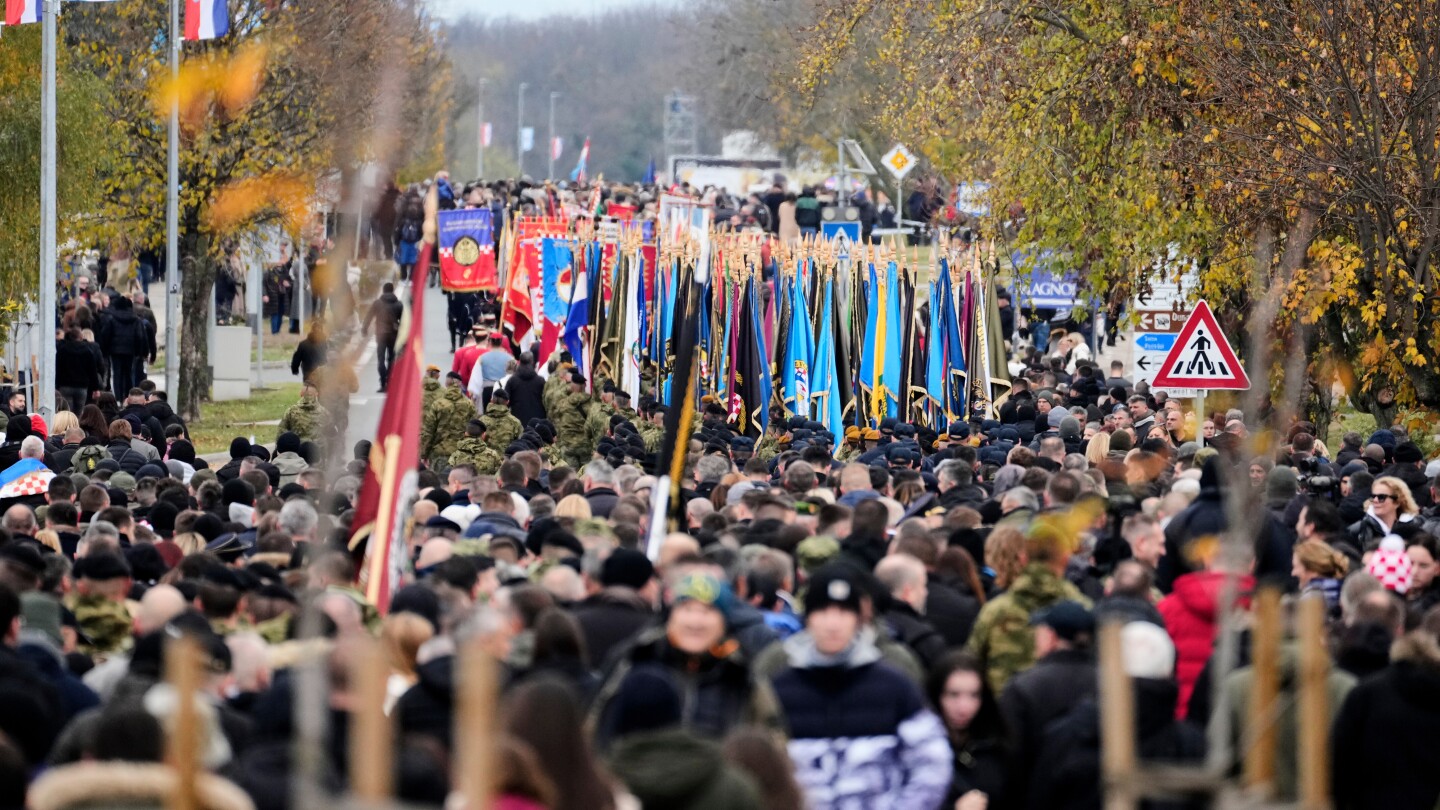
VUKOVAR, Croatia — On Tuesday, Croatia solemnly observed the anniversary of the fall of Vukovar, a pivotal event during the 1991-95 war when the Serb-led Yugoslav army devastated the town, turning it into a symbol of resilience and national solidarity. Senior officials joined thousands of citizens, many waving national flags and banners, in a silent march through the eastern town. Participants lit candles and laid flowers, continuing an annual tradition since the war’s end that underscores the event’s profound significance for the nation. The conflict erupted after Croatia declared independence from the Serb-dominated Yugoslav federation, sparking a rebellion by minority Serbs who seized large portions of Croatian territory. Vukovar endured an 87-day siege, during which relentless shelling reduced it to ruins. Hundreds perished after the town’s fall in November 1991, with their bodies buried in a mass grave at a nearby pig farm. The war concluded in 1995 after Croatia reclaimed most of the territories held by Serb rebels, prompting tens of thousands of Serbs to flee. Croatia, now a NATO member and EU state since 2013, continues to view Vukovar as a martyr in its struggle against what it terms ‘Serb aggression.’ Ethnic tensions persist both within Croatia and with neighboring Serbia, exacerbated by recent disruptions of Serb cultural events in Zagreb and Split. An ethnic Serb organization canceled an exhibition in Vukovar ahead of the commemoration, citing safety concerns.
Croatians commemorate the siege of Vukovar, a national symbol of the war of independence