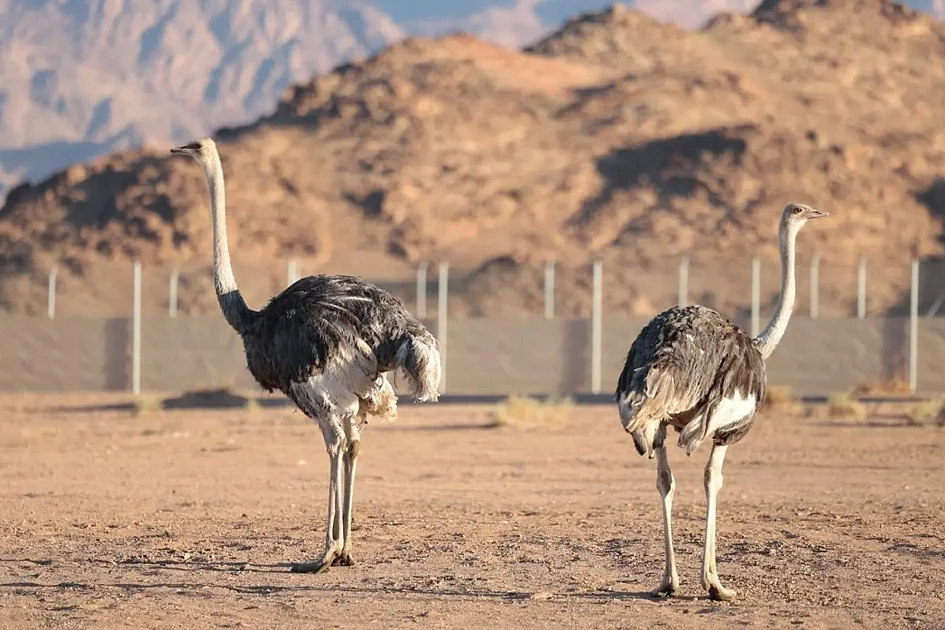
In a landmark conservation achievement, the Prince Mohammed bin Salman Royal Reserve has successfully reintroduced the critically endangered red-necked ostrich to Saudi Arabia’s deserts after nearly a century of absence. This ambitious initiative represents a biological replacement for the extinct Arabian ostrich, which vanished from the region in the early 20th century due to excessive hunting and habitat destruction.
The red-necked ostrich (Struthio camelus camelus), known historically as the ‘camel bird’ and genetically identified as the closest living relative to the Arabian subspecies, has been carefully selected for its remarkable adaptability to arid environments. With fewer than 1,000 individuals remaining worldwide—primarily scattered across Africa’s Sahel region—this reintroduction marks a critical intervention for the species’ survival.
This project forms part of a comprehensive ecosystem restoration strategy that has already reintroduced 12 of 23 historically occurring species, including the Arabian oryx, Persian onager, and various gazelle species. The 24,500 square kilometer reserve, spanning from the Harrat lava fields to the Red Sea, represents one of the Middle East’s most biodiverse protected areas, encompassing 15 distinct ecosystems while hosting over 50% of Saudi Arabia’s documented species.
The reintroduction program aligns with Saudi Arabia’s Vision 2030 and the Saudi Green Initiative, which commit to protecting 30% of the Kingdom’s terrestrial and marine territories by 2030. The royal reserve system, established by royal decree and overseen by Crown Prince Mohammed bin Salman, represents a significant national investment in environmental stewardship and biodiversity conservation.
Ostriches serve as essential ecosystem engineers, contributing to seed dispersal, insect population control, and maintaining healthy rangeland habitats. Their return promises to restore ecological functions lost with the extinction of the Arabian ostrich, while reviving cultural connections to a species celebrated in ancient Arabic poetry and depicted in sandstone petroglyphs throughout the region.