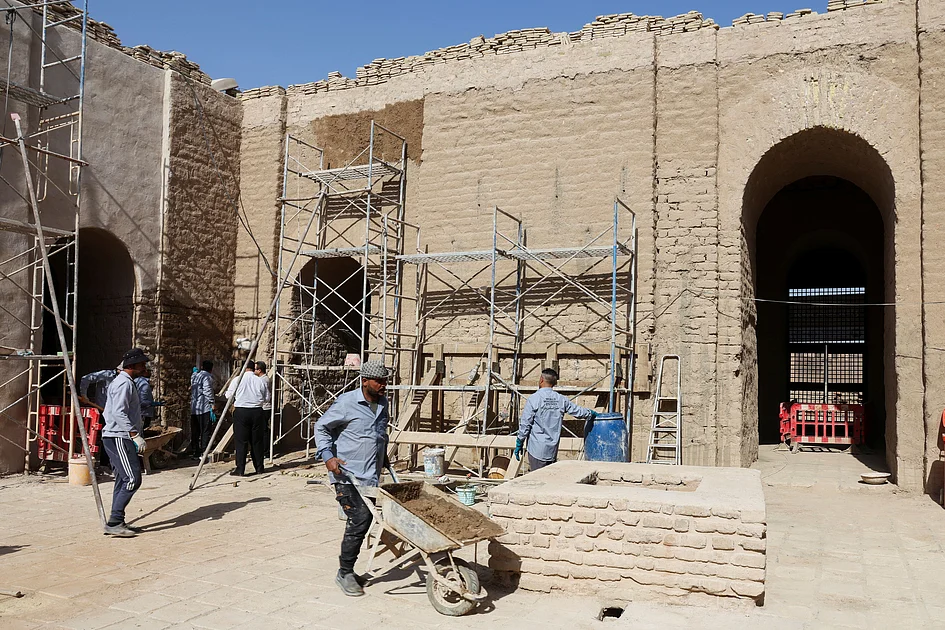
Iraq, often referred to as the cradle of civilisation, is facing a dire threat to its archaeological heritage due to the escalating impacts of climate change. Rising soil salinity, exacerbated by harsh and dry weather conditions, is accelerating the deterioration of ancient sites such as Ur, the birthplace of the Biblical patriarch Abraham, and Babylon, once the magnificent capital of empires. Experts warn that these historical treasures, which have stood for thousands of years, are now at risk of disappearing. The majestic Ziggurat of Ur, a 4,000-year-old stepped pyramid temple dedicated to the moon god Nanna, is particularly vulnerable. Sand dunes and wind are eroding its northern sections, while salt deposits are eating away at the mud bricks of the Royal Cemetery of Ur, discovered in the 1920s. Nearby, the ancient city of Babylon is also in peril, with high salinity levels threatening its clay-based structures adorned with Sumerian drawings. Improper restoration practices in previous decades have made these structures more susceptible to damage. Iraq’s Ministry of Culture and Tourism has highlighted the urgent need for restoration, but a lack of funding remains a significant challenge. The country, already scarred by decades of warfare, now faces a new battle against climate change, which is altering its ecosystem and endangering its historical footprint. Without immediate intervention, these ancient cities, which offer invaluable insights into the Sumerian empire and the world’s first civilisations, may be lost forever.