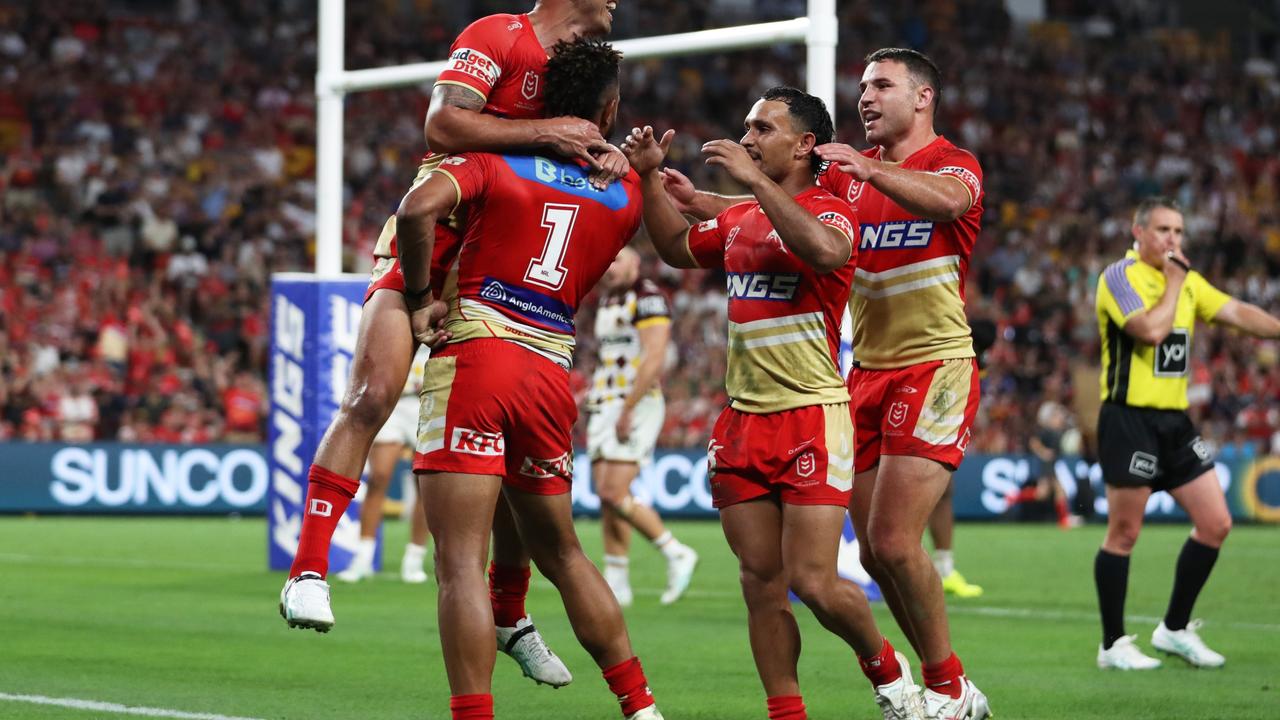
A positional dilemma within the Dolphins’ roster has reached its conclusion, yet opposing NRL teams now face an unprecedented tactical challenge. Coach Kristian Woolf has definitively appointed Hamiso Tabuai-Fidow as the club’s starting fullback, a decision that sidelines the exceptionally talented Trai Fuller. Despite being capable of starting for numerous other clubs, Fuller finds himself behind one of rugby league’s most electrifying players.
Fuller’s impressive performance during his four games at fullback last season—which included 32 tackle busts, two tries, and four try assists—demonstrated his starting caliber. However, Woolf’s unwavering commitment to Tabuai-Fidow has reshaped Fuller’s role. The coach’s transparent communication allowed Fuller to accept this secondary position gracefully, acknowledging the difficulty in disputing a spot held by a player of Tabuai-Fidow’s caliber.
The resolution of this selection debate coincides with a significant NRL rule modification: the introduction of an extended bench. This regulatory shift transforms Fuller from a sidelined talent into what may become the league’s most dangerous utility weapon. Rather than competing for a spot in a stacked back five featuring Herbie Farnworth, Jake Averillo, Selwyn Cobbo, and Jamayne Isaako, Fuller is now poised to exploit the new bench rules.
His potential impact lies in late-half appearances against fatigued defenses, where his explosive playmaking ability could prove devastating. Fuller himself recognizes how the extended bench ‘could work out a bit better for me,’ focusing on maintaining peak performance readiness for whenever his opportunity arises. This strategic adaptation positions the Dolphins to leverage the rule change more effectively than any other NRL franchise, turning a selection headache into a tactical advantage.