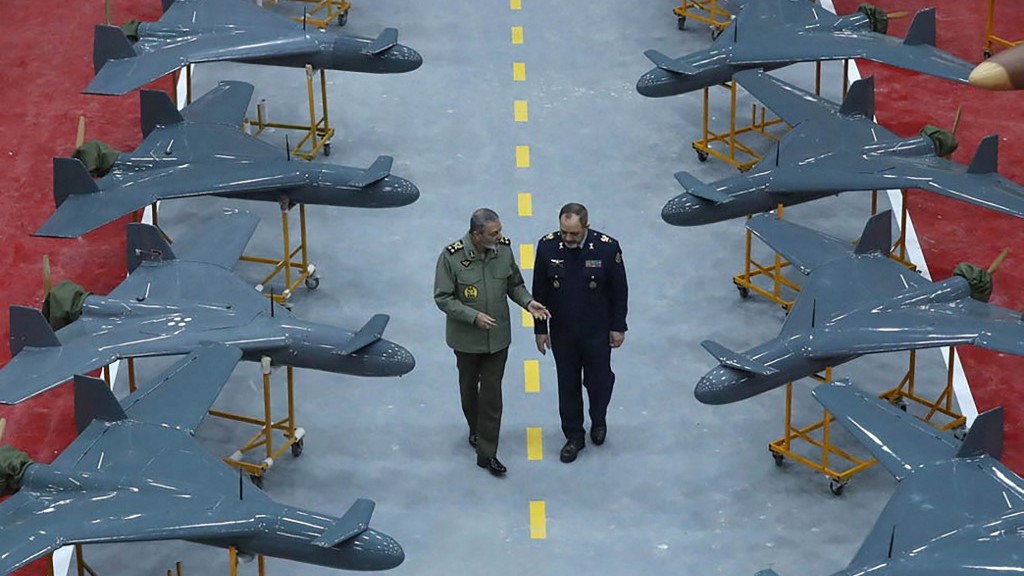
Azerbaijan has become the latest nation embroiled in the escalating US-Israeli military campaign against Iran following a drone attack on its Nakhchivan exclave. Four unmanned aerial vehicles struck the region on Thursday, causing infrastructure damage and injuring two civilians according to officials in Baku.
Initial reports indicate one drone targeted the terminal building at Nakhchivan International Airport, approximately 10 kilometers from the Iranian border, while another landed near a village school. Azerbaijani forces successfully intercepted a third drone, though a fourth impacted civilian infrastructure sites.
Iranian officials have categorically denied involvement in the incident. Deputy Foreign Minister Kazem Gharibabadi stated through Tasnim News Agency that ‘Iran did not carry out strikes against Azerbaijan,’ emphasizing Tehran’s policy exclusively targets military bases of enemies operating in the region that have been used for attacks against Iran.
The incident has exposed underlying regional tensions, with some Iranian analysts suggesting possible Israeli covert operations aimed at exacerbating Tehran-Baku relations. Seyed Emamian of Tehran Polytechnic University noted the possibility that ‘some Israeli agents are involved to make the Iran-Azerbaijan relationship very challenging’ during the current conflict.
This development occurs within the broader context of Iran’s asymmetric response strategy to the US-Israeli military campaign, which has included strikes against facilities in Qatar, Saudi Arabia, Kuwait, and the United Arab Emirates. Regional analysts suggest these operations aim to demonstrate that conflict consequences will extend beyond Iran’s borders, potentially undermining Gulf states’ perceived stability and challenging US security guarantees.
The attack has prompted significant responses from Azerbaijan, including closure of southern airspace for 12 hours and suspension of cargo transit through Iranian border crossings. President Ilham Aliyev has characterized the incident as ‘unprovoked act of terror and aggression’ and instructed armed forces to prepare retaliatory measures, though no military response has yet been implemented.
Underlying the tension is Azerbaijan’s substantial relationship with Israel, which includes energy cooperation, defense partnerships, and cybersecurity collaboration. Israel reportedly imports 40-50% of its oil from Azerbaijan through the Baku-Tbilisi-Ceyhan pipeline, while security cooperation remains largely opaque despite Aliyev’s acknowledgment of its significance.
The situation places Azerbaijan in a delicate geopolitical position, balancing its relationships with regional powers while managing the potential for escalated conflict. With over 15 million ethnic Azeris living in Iran, instability could create significant refugee challenges for Baku, potentially drawing Turkey into the conflict given Ankara’s strong support for Azerbaijan demonstrated during the 2020 Nagorno-Karabakh conflict.