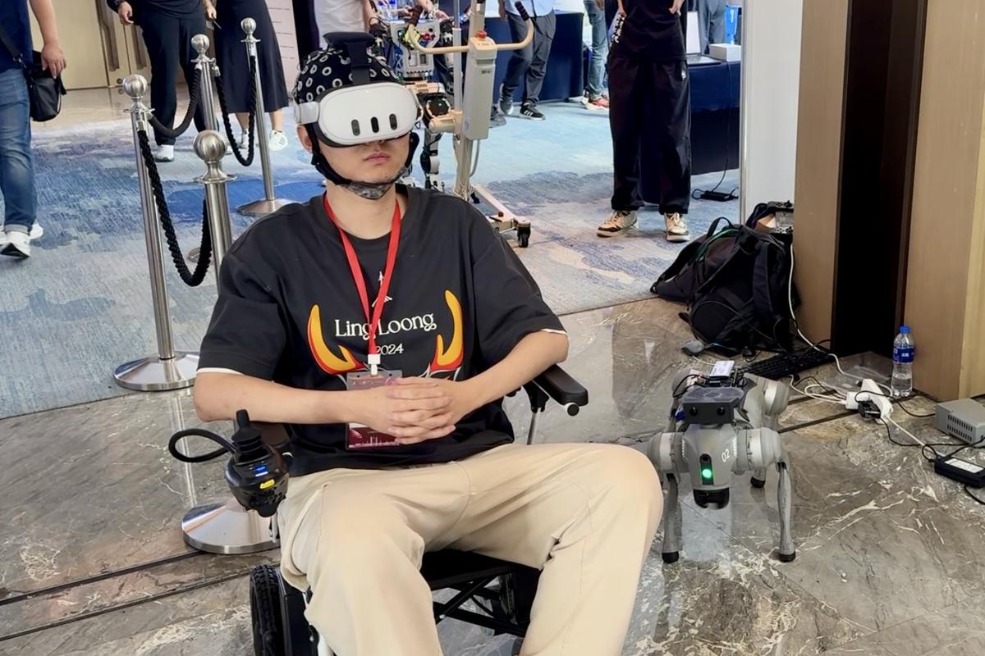
The convergence of neuroscience and technology is accelerating at an unprecedented pace as brain-computer interfaces (BCIs) transition from laboratory curiosities to industrial realities. When patients can control robotic limbs through mere thought, and immersive human-machine interaction systems become operational, it becomes evident that a technological revolution is underway. China has emerged as a significant catalyst in this transformation, leveraging policy coordination, clinical advancements, and substantial industrial investment to propel BCIs into the mainstream.
This rapid evolution raises a critical question: Does the current talent pool match the demands of this emerging industry? BCIs represent a fundamentally interdisciplinary field, integrating neuroscience, electrical engineering, artificial intelligence, biomedical engineering, clinical medicine, and materials science. The sector requires what experts term ‘boundary-spanners’—professionals capable of navigating multiple domains and synthesizing knowledge across traditional disciplinary lines.
The talent challenge necessitates a comprehensive rethinking of educational and professional development systems. Higher education institutions must abandon rigid disciplinary silos in favor of integrated degree programs that combine neuroscience, computing, materials science, and clinical practice. Such long-cycle training, from undergraduate through doctoral levels, cultivates researchers who can both innovate and translate discoveries into tangible products.
Industry-academia collaboration must evolve beyond occasional internships into deep, structural partnerships. Joint research centers, shared testing facilities, and co-supervised doctoral projects provide essential platforms for addressing real-world challenges. By embedding students in product development cycles, educational institutions can accelerate learning curves and produce graduates equipped to tackle commercialization barriers including manufacturability, clinical safety, and scalability.
Equally crucial is reforming talent evaluation systems that currently prioritize single-discipline publications over translational, cross-disciplinary work. Recognition must expand to include team science, regulatory milestones, and successful industry collaborations. Funding and promotion mechanisms should incentivize integrative projects and support early-career researchers engaged in high-risk translational work.
As an inherently international field, BCI development demands global engagement strategies. China must both attract leading international scientists and facilitate outward mobility for domestic researchers through joint PhD programs, multicenter clinical trials, and scholar exchanges. Such initiatives build not only expertise but also credibility within global standard-setting bodies.
Throughout this transformation, ethical considerations remain paramount. Training programs must incorporate rigorous coursework on medical ethics, data protection, informed consent, and societal implications of cognitive interfaces. Engineers and clinicians require shared fluency to embed safety, privacy, and social responsibility into system designs from inception.
The BCI revolution represents more than technological innovation—it tests a nation’s ability to reconfigure its talent ecosystem to meet complex, interdisciplinary challenges. Success demands educational innovation, deeper industry collaboration, reformed incentives, and international engagement. The foundation for an industrial BCI ecosystem exists; now the imperative is developing the human infrastructure to translate promise into reality across clinics, factories, and services worldwide.