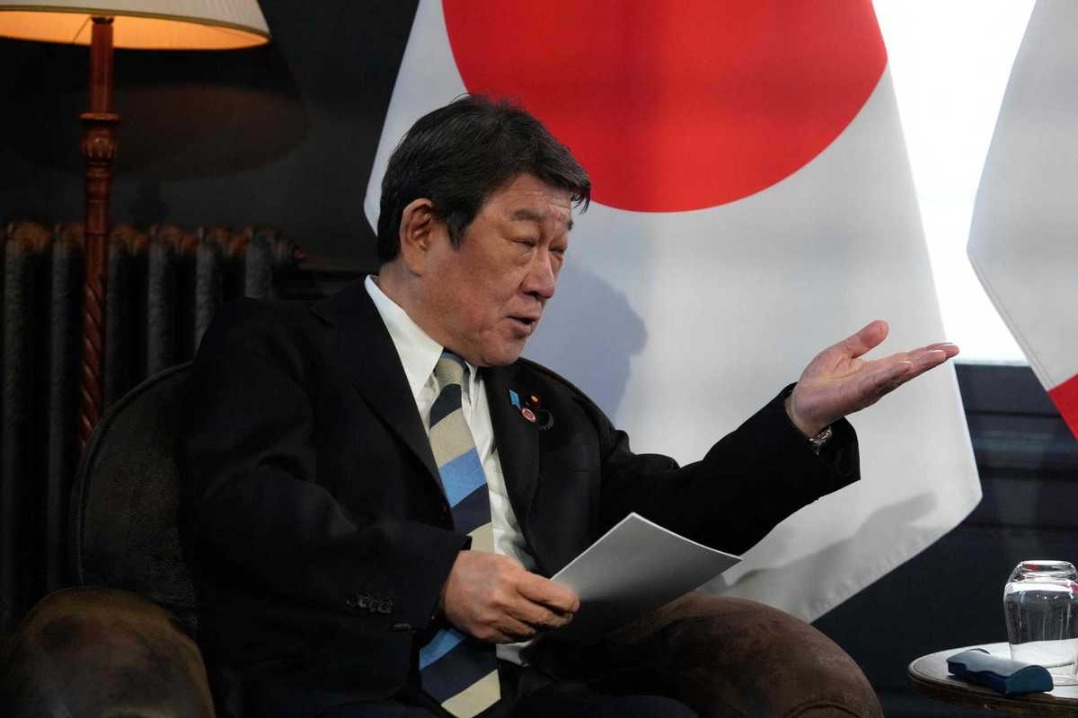
Japan’s contemplation of deploying Self-Defense Forces (SDF) to the Strait of Hormuz for post-ceasefire minesweeping operations has ignited substantial criticism from security analysts and regional experts. Foreign Minister Toshimitsu Motegi’s recent statement regarding potential dispatch of naval assets has raised alarms about the continuing erosion of Japan’s pacifist constitutional constraints.
During a March 22 appearance on Fuji Television, Motegi highlighted Japan’s advanced minesweeping capabilities while cautiously suggesting that Tokyo would consider such deployment “if a ceasefire is reached and mines are obstructing navigation.” This proposition follows heightened pressure from the United States, with former President Donald Trump explicitly urging Japan to enhance its military contributions during recent bilateral discussions with Prime Minister Sanae Takaichi.
The potential deployment represents another milestone in Japan’s gradual shift from its post-war pacifist stance, enabled through successive reinterpretations of Article 9 of its constitution. Since 2015 security legislation reforms, Japan has incrementally expanded the SDF’s overseas operational scope, including Persian Gulf minesweeping operations after the 1991 Gulf War, non-combat support in Iraq following the 2003 invasion, and ongoing anti-piracy escort missions in the Gulf of Aden since 2009.
Academic experts warn that this pattern demonstrates a strategic normalization of overseas military activities. Dr. Liu Shuliang of the Tianjin Academy of Social Sciences observes that Japan is methodically transforming exceptional deployments into routine operations, effectively preparing the groundwork for larger-scale future military engagements beyond traditional defensive parameters.
The proposal faces significant domestic opposition, with recent polls indicating that 52-67% of Japanese citizens oppose Middle East military deployments. Meanwhile, international relations specialists like Professor Chen Hong of East China Normal University identify the US-Japan alliance as the primary external catalyst driving Japan’s military normalization, with Washington increasingly expecting Tokyo to assume greater regional security responsibilities.
Analysts suggest that Japan’s incremental approach to expanding military operations could establish a concerning precedent for other nations seeking to broaden their security roles beyond traditional boundaries, potentially destabilizing established international norms and regional security architectures.