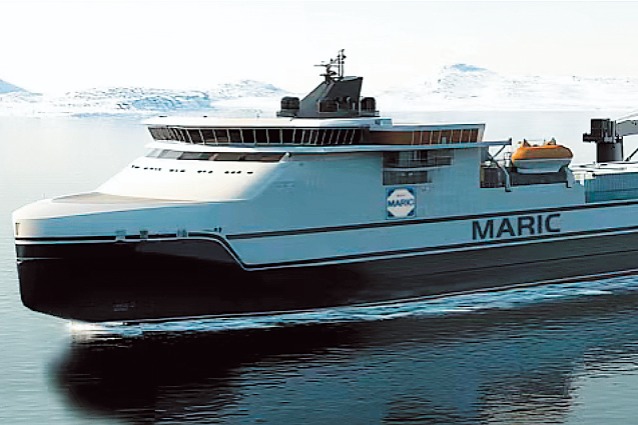
China State Shipbuilding Corporation (CSSC), the world’s largest shipbuilding conglomerate, has revealed a groundbreaking conceptual design for a nuclear-powered multirole icebreaker capable of transporting both passengers and cargo through Arctic waters. The innovative vessel received formal design validation through an “approval in principle” certificate issued by Italian classification society RINA.
Designed by CSSC’s Marine Design and Research Institute in Shanghai, the icebreaker measures approximately 165 meters in length with a 30-meter beam and displaces nearly 30,000 metric tons. The vessel is engineered for global operational capabilities with capacity for 150 polar tourists and maximum accommodation for 250 persons.
The icebreaker incorporates specialized polar environment adaptations including advanced cold insulation systems and sophisticated noise and vibration control technologies. These features, combined with high-standard ventilation, air conditioning, and luxury accommodations, are designed to create what engineers describe as a “luxurious, immersive and safe” polar travel experience.
Beyond passenger transport, the vessel demonstrates substantial cargo capacity with space for 300 standard 20-foot containers. Its flexible modular design enables transportation of oversized and irregularly shaped cargoes, enhancing its commercial versatility.
The icebreaker’s technical specifications include capability to break through 2.5-meter-thick ice at speeds of 3.7 kilometers per hour. Its propulsion system represents a significant technological advancement, utilizing molten salt reactor technology combined with supercritical carbon dioxide systems to enhance thermoelectric conversion efficiency and improve nuclear safety parameters. Design engineers confirm the vessel strictly adheres to international nuclear safety standards and regulations.
According to polar vessel engineer Cui Meng, the icebreaker is expected to play a crucial role in seasonal Arctic transportation, high-end polar tourism, and supply/emergency support operations in both Arctic and Antarctic regions. Researcher Yu Yun emphasized the strategic importance of Arctic routes, noting they can reduce voyage distances between Asia, Europe and North America by 30-40% compared to traditional Suez Canal routes, potentially shortening East Asia-Europe journeys by approximately 7,000 kilometers and reducing sailing time by 10-15 days.