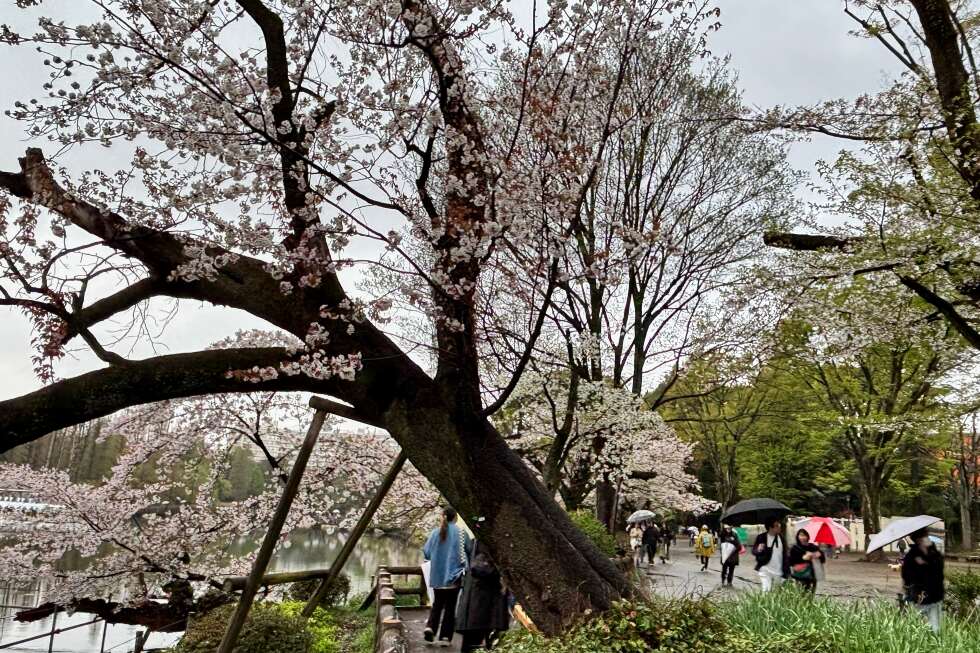
Every spring, millions of people across Japan flock to public parks and green spaces to take part in hanami, the beloved centuries-old tradition of cherry blossom viewing. But this year, a growing crisis surrounding Tokyo’s most iconic cherry trees is casting a shadow over the annual celebration: the most popular variety, the iconic Somei Yoshino cherry, is reaching the end of its lifespan, triggering urgent safety concerns for visitors.
Most of Tokyo’s famous Somei Yoshino cherry trees were planted in the 1960s, during Japan’s rapid post-World War II economic and urban expansion. Six decades later, these once-vibrant flowering trees have become old, weak, and increasingly prone to sudden collapse. On Thursday, two separate large Somei Yoshino trees fell in high-traffic Tokyo green spaces: one in the popular Kinuta Park in central Tokyo, and another along the scenic Chidorigafuchi greenway adjacent to the Imperial Palace. The Kinuta Park tree crashed into a perimeter fence, while the Chidorigafuchi tree nearly toppled into the historic palace moat. Miraculously, no one was hurt in either incident.
The Kinuta Park tree measured 18 meters tall with a 2.5-meter trunk diameter, and was counted among the park’s oldest specimens, estimated to be over 60 years old, according to Tokyo municipal officials. The collapse marks the second major falling tree incident at Kinuta Park since March, when another aging cherry tree fell and injured a passing visitor. Data from the Tokyo metropolitan government underscores the scale of the issue: last year alone, 85 trees fell across Tokyo’s public parks, injuring three people, and a large share of those fallen trees were aging cherry blossoms.
As the birthplace of the Somei Yoshino variety, Tokyo is home to more of these trees than any other region, and their widespread deterioration has put local officials on high alert during the peak hanami season, when thousands of picnicking visitors crowd under blooming canopies every day. Local officials and arborists point to multiple interconnected causes for the accelerating decline of the region’s cherry trees. Beyond advanced old age, internal fungal growth and gradual soil erosion are weakening tree structures from within. The trees are also facing growing stress from human-caused climate change, with increasingly extreme summer heat waves and extended dry seasons further sapping the strength of already aged specimens.
Hiroyuki Wada, a certified tree doctor who specializes in aging urban trees in Tokyo, explained that visible warning signs of high-risk trees include severe leaning, trunk cavities, and mushroom growth at the base of the trunk. Risk of collapse rises sharply after heavy rain, he added, when waterlogged trunks become far heavier than dry wood. Wada noted that the cherry tree crisis is part of a broader trend affecting all urban trees planted across Japan in the immediate postwar era. “Many trees that are part of our daily urban landscape were planted shortly after the war, and now 70 to 80 years later, they are growing weaker every year,” he said. “These cherry trees are such a powerful cultural symbol, I hope people see what’s happening to them and connect it to the larger changes happening to our climate.”
After the March injury incident at Kinuta Park, Tokyo municipal officials launched emergency tree health screenings across all major public cherry blossom viewing parks ahead of this year’s peak bloom. At Kinuta Park alone, inspectors have assessed more than 800 cherry trees, removing high-risk specimens and posting warning signs around trees that were deemed potentially dangerous but not immediately felled. Notably, the tree that fell this week had no posted warning signs, leaving officials acknowledging gaps in current safety protocols. Masakazu Noguchi, a Tokyo metropolitan official who oversees public park management, admitted that current interventions are only temporary, rather than a long-term solution. “At the moment, our measures are mostly temporary, not fundamental steps such as large-scale replanting,” Noguchi said. “We call on visitors to use constant caution, because we cannot guarantee that every park is completely safe even after our inspections.”
At Inokashira Park, another top hanami destination that draws millions of visitors annually, dozens of aging cherry trees and unstable branches have already been removed in recent years as part of a long-term regeneration and safety plan. The removals have sparked mild public outcry on Japanese social media, with visitors lamenting the empty gaps along the park’s central pond, once lined by a seamless ring of soft pink spring blooms.
Wada emphasized that a strategic, proactive regeneration plan is the only way to preserve both the cherry blossom landscape and visitor safety for future generations. Despite the growing safety concerns, many hanami visitors are still choosing to enjoy the annual bloom, which only lasts for one to two weeks each year. Lisa Suzuki, a Tokyo resident who visited Kinuta Park this week, said she was aware of the falling tree risk but still wanted to experience the bloom. “I’m a bit worried, but I guess it’s OK if we just stay away from the trunks,” she said. Akira Kamiyashiki, another visitor who came to the park with his daughter ahead of forecasted rain this weekend, said the visible safety signage reassured him. “Seeing the keep-off signs up, I now feel safe coming here to enjoy the blossoms,” he said.
For Japan, cherry blossoms hold far more than aesthetic value: the annual bloom marks the start of the country’s new school year and fiscal year for businesses, making it a symbolic time of new beginnings woven into the fabric of Japanese national identity.