Against the global backdrop of urgent carbon reduction and sustainable development, China is advancing its clean energy transformation at an unprecedented pace, with breakthrough projects and technological innovations reshaping the nation’s energy ecosystem from coastal waters to abandoned underground mines.
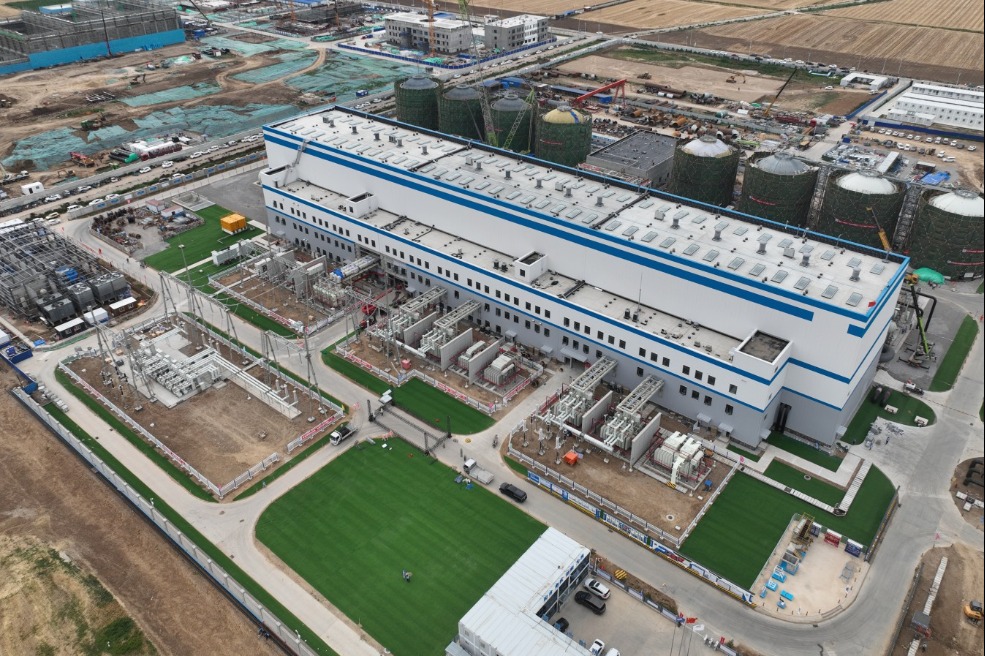
In Tai’an, a resource-dependent city in East China’s Shandong Province, a pioneering energy infrastructure project has breathed new life into a long-abandoned rock salt mine. What was once a void left by decades of extraction has been reborn as a large-scale compressed air energy storage facility, the first commercial project of its kind developed by China Energy Engineering Group Co. Liu Shaoyong, the project’s manager, outlined the facility’s impressive technical specifications: designed to store energy for eight hours and deliver four hours of continuous power generation, it can produce up to 460 million kilowatt-hours of electricity annually, enough to meet the annual residential demand of more than 200,000 households. The facility leverages existing underground salt caverns to create grid-scale energy storage, a solution that repurposes retired mining infrastructure while addressing one of renewable energy’s biggest challenges: inconsistent output. During periods of low grid demand, excess electricity is used to compress air and store it underground; when demand peaks, the compressed air is released to drive turbines, delivering reliable power to the grid.
This innovative storage project is just one example of the rapid progress China has made in renewable energy development in recent years. Driven by continuous technological innovation, renewable energy installations accounted for more than half of China’s total national power generating capacity by 2025, crossing a historic milestone that has accelerated the global clean energy transition. In Tai’an specifically, new renewable energy technologies are not only rolling out novel energy storage models, they are also strengthening the grid’s capacity to integrate variable renewable output, guaranteeing a stable and secure energy supply for local residents and industries. An official from the dispatching center of State Grid Tai’an Power Supply Company explained that the authority has streamlined grid integration services, actively monitoring demand fluctuations and providing end-to-end technical support for project commissioning and grid connection. Projections show that Tai’an’s total installed capacity of new-type energy storage will reach nearly 5 million kilowatts by 2030.
Across Shandong, another groundbreaking clean energy milestone went into operation late last year: the world’s largest 26-megawatt offshore wind turbine, fully independently developed by China’s Dongfang Electric Corporation, has been successfully connected to the grid in Shandong’s coastal waters. The turbine sets new global records for both single-unit power generation capacity and rotor diameter. Under full-load operation, a single rotation of the turbine produces 62 kilowatt-hours of electricity. At an average wind speed of 10 meters per second, one turbine can generate 100 million kilowatt-hours of clean power annually enough to supply 55,000 households with electricity. This output translates to an annual reduction of 30,000 metric tons of standard coal consumption and 80,000 metric tons of carbon dioxide emissions.
Beyond Shandong, similar integrated clean energy projects are emerging across China, including clean energy-powered data centers under development in the country’s northwest and southwest regions. These projects allow China to expand its fast-growing digital economy while simultaneously cutting carbon emissions, aligning two key national development goals.
China’s push for clean energy is guided by ambitious national climate pledges. In September 2025, China reaffirmed its commitment to cut net greenhouse gas emissions across the entire national economy by 7 to 10 percent below peak levels by 2035. To meet this target, the country has already passed a critical threshold: total installed capacity of renewable energy now exceeds that of coal-fired power.
As China builds out its domestic clean energy infrastructure, it is also sharing the benefits of its technological advancements with the global community. At the Solar and Storage Live Africa 2026 exhibition held in Johannesburg this past March, photovoltaic equipment and smart energy solutions developed by Chinese companies drew extensive international attention. Qhakazile Mathebula, general manager for digital energy at South Africa’s City Power, praised the contributions of Chinese firms to Africa’s ongoing energy transition. “We welcome the participation of Chinese renewable energy companies, whose investments and technologies are helping accelerate Africa’s shift toward cleaner and more sustainable energy,” Mathebula said, noting that China’s ability to deliver cost-effective, scalable solutions is particularly critical for African nations working to expand universal energy access and resolve persistent energy supply constraints.
From repurposed underground storage facilities to record-breaking offshore wind turbines, China’s accelerating clean energy transition is not only transforming its own energy landscape but also creating new opportunities for sustainable development across the globe.