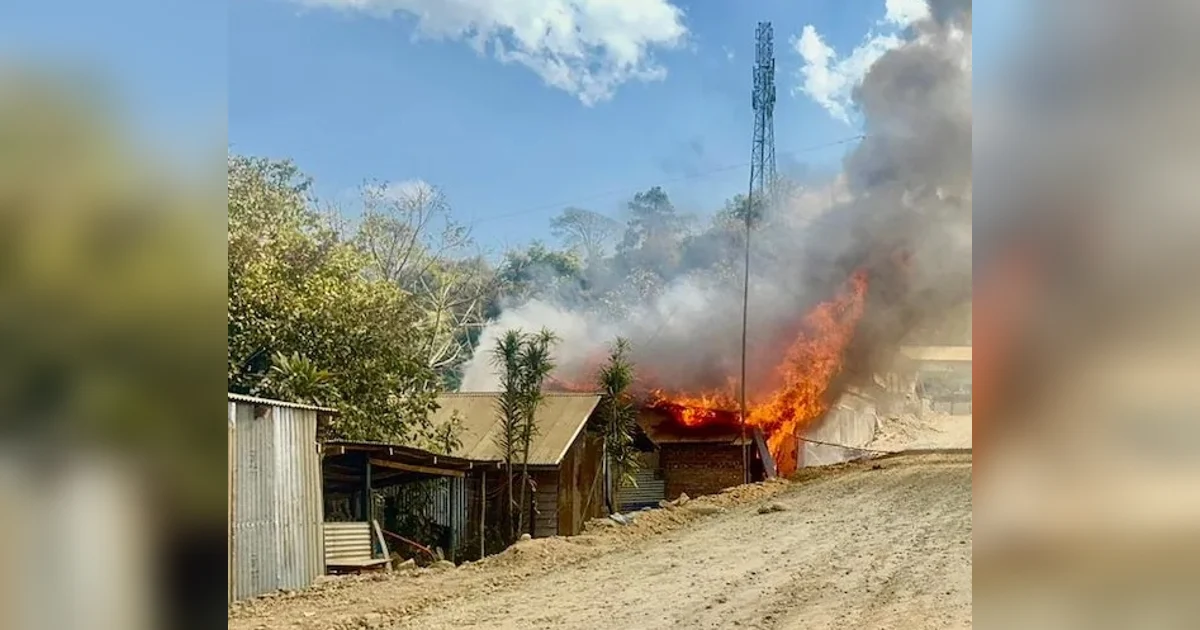
A state of heightened tension persists in Manipur’s Ukhrul district as renewed ethnic clashes between Tangkhul Naga and Kuki-Zo communities continue to destabilize the region. The violence, which erupted following a seemingly minor altercation, has exposed deeper socio-political fissures rooted in longstanding territorial disputes.
According to state government officials, the initial confrontation began as a drunken brawl on February 7th but rapidly escalated into organized violence. By Sunday evening, scores of residential and commercial properties in Litan village were deliberately set ablaze by unidentified arsonists. The district administration responded by implementing strict measures including a comprehensive ban on firearms display and suspension of internet services for five days as a preventive strategy.
Deputy Chief Minister Losii Dikho characterized the situation as being driven by isolated individuals rather than collective community animosity. “Both sides fundamentally desire peace and harmony,” Dikho stated to press representatives. “The government remains committed to apprehending those responsible and restoring normalcy.”
Civil society organizations from both ethnic factions convened with Chief Minister Yumnam Khemchand Singh on February 11th in a concerted effort to mediate tensions. Despite these diplomatic interventions, resolution remains elusive as underlying land disputes continue to fuel hostilities.
Community leaders expressed growing apprehension regarding the persistence of violence despite substantial security deployments. RS Jollyson, Vice President of Tangkhul Naga Long, highlighted concerns about safety within indigenous territories, while Ukhrul Kuki Students’ Organization representative Mercy Khongsai emphasized the tragic transformation of individual conflicts into collective suffering.
The regional government maintains that the internet suspension and weapon restrictions constitute necessary precautions to prevent further escalation and misinformation spread. Security forces continue monitoring sensitive areas while judicial processes advance against identified perpetrators.