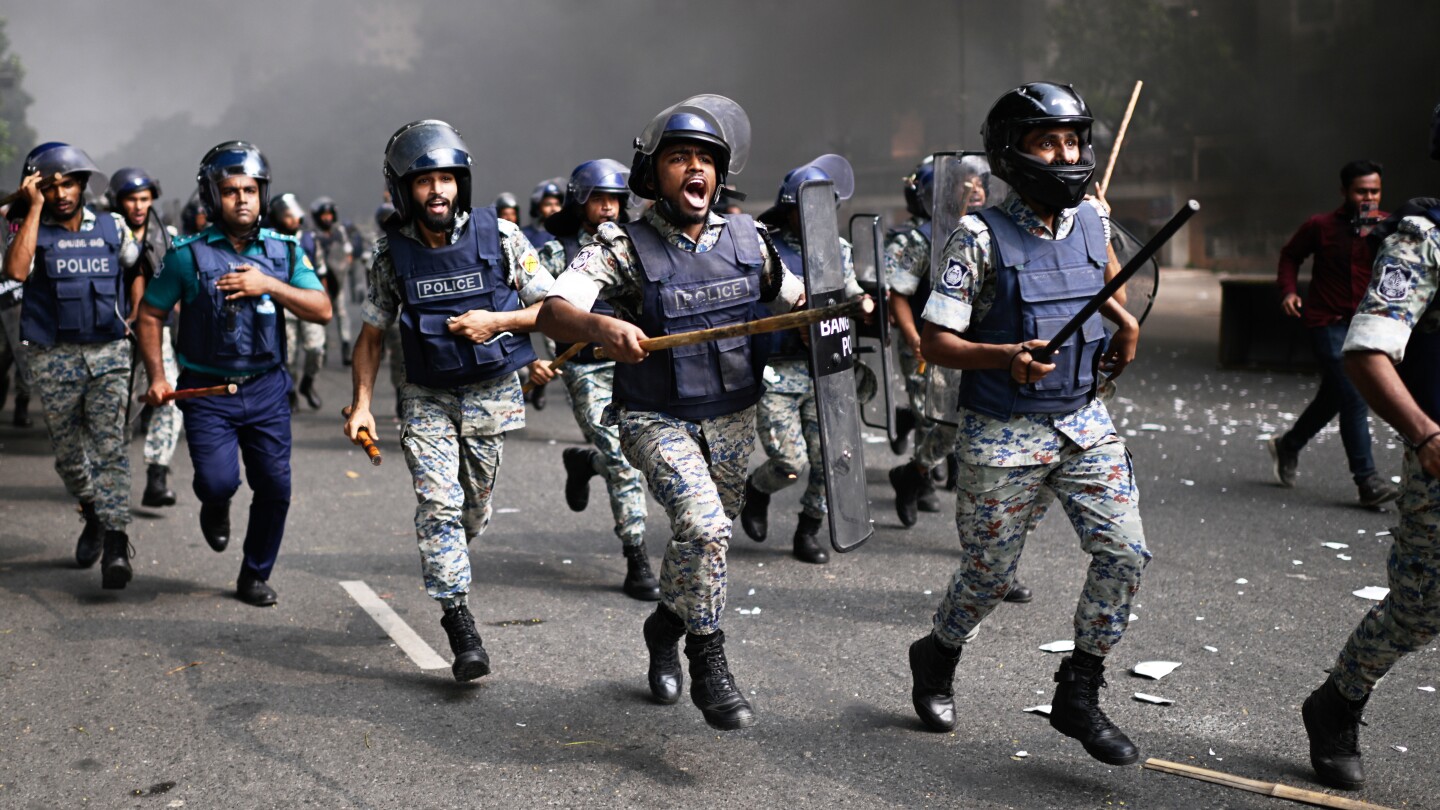
In a significant development in Bangladesh’s political landscape, major political parties endorsed a roadmap for political reforms proposed by the interim government on Friday. However, the signing ceremony was marred by violent clashes between police and protesters demanding greater recognition for activists who played a pivotal role in ousting former Prime Minister Sheikh Hasina in August 2024. The protests, centered outside the national Parliament building in Dhaka, saw police deploying tear gas, stun grenades, and batons to disperse demonstrators, resulting in injuries and property damage. The protesters, identifying themselves as part of the 2024 movement that ended Hasina’s 15-year autocratic rule, sought additional welfare guarantees and program provisions for movement participants. The interim government, led by Nobel Peace Prize laureate Muhammad Yunus, facilitated the signing of the ‘July National Charter,’ a nonbinding document aimed at introducing constitutional and legal reforms. The charter proposes measures to enhance checks and balances, impose term limits on legislators, and combat corruption and conflicts of interest. Notably, the Awami League, Hasina’s former party, was excluded from the process, raising questions about the inclusivity of the upcoming February elections. While the Bangladesh Nationalist Party and several other parties signed the charter, some left-wing and student-led groups abstained. Yunus hailed the signings as a step toward a ‘civilized society,’ but concerns persist over the exclusion of key political factions and the broader implications for Bangladesh’s democratic transition.
Clashes break out near Bangladesh parliament as major parties sign a roadmap for change