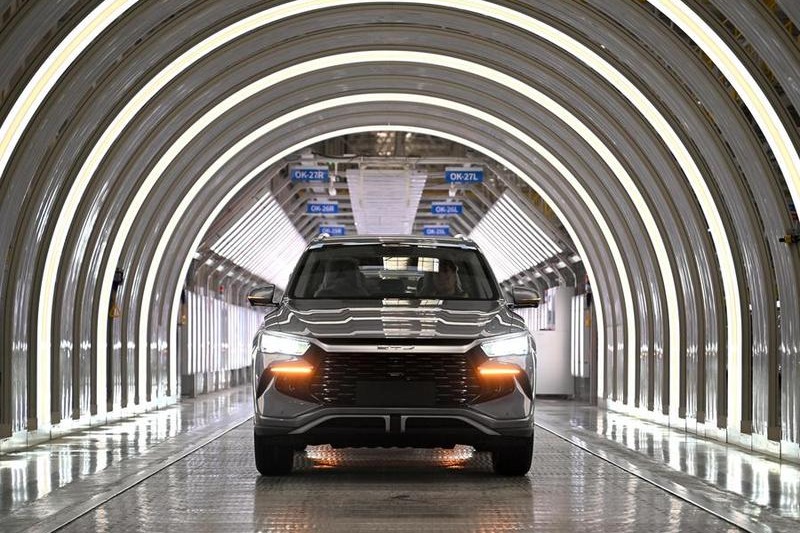
In a historic market shift, Chinese automotive manufacturers have overtaken Japan to become Australia’s primary source of new vehicles, ending nearly three decades of Japanese dominance in the sector. February sales data from the Australian Automotive Dealer Association (AADA) reveals China supplied over 22,000 units, propelled by competitive pricing, advanced technology, and compelling design offerings.
The broader Australian vehicle market experienced a slight contraction with 94,131 units sold in February compared to the same period last year. However, this overall softening masks a significant transformation in consumer preferences, with battery electric vehicles (EVs) now constituting over 11% of monthly sales—a trend accelerated by global economic pressures.
Speaking at an AADA event in Sydney, Australian Prime Minister Anthony Albanese connected the automotive market dynamics to broader geopolitical tensions. He noted that recent Middle East conflicts, including U.S. and Israeli operations against Iran, are disrupting global supply chains, driving fuel prices upward, and exacerbating inflationary pressures worldwide. “Even if this is a relatively short conflict, it will have a long economic tail,” Albanese stated, outlining government measures to enhance fuel security and accessibility.
The automotive sector remains a cornerstone of the Australian economy, with AADA figures showing 3,868 dealerships generating A$21.5 billion in economic activity and employing over 64,000 individuals, including thousands of apprentices.
Chinese brands Chery, GWM, and BYD are recording substantial gains, with EV manufacturers particularly benefiting from rising fuel costs. David Smitherman, CEO of EVDealer Group (Australia’s largest BYD network), reported a more than 50% increase in customer inquiries. “Some consumers have been thinking about transitioning to an EV and the additional costs have tipped them over the edge,” he observed, noting strong customer satisfaction with the technology, design, safety, and performance of Chinese EVs, supported by robust supply chains.
The Electric Vehicle Council has intensified calls for maintaining Australia’s electric car discount policy, arguing that global oil market volatility underscores the need for energy independence. CEO Julie Delvecchio emphasized that EVs shield households from global oil shocks since their ‘fuel’ comes from electricity—often available at lower off-peak rates or free through rooftop solar installations.