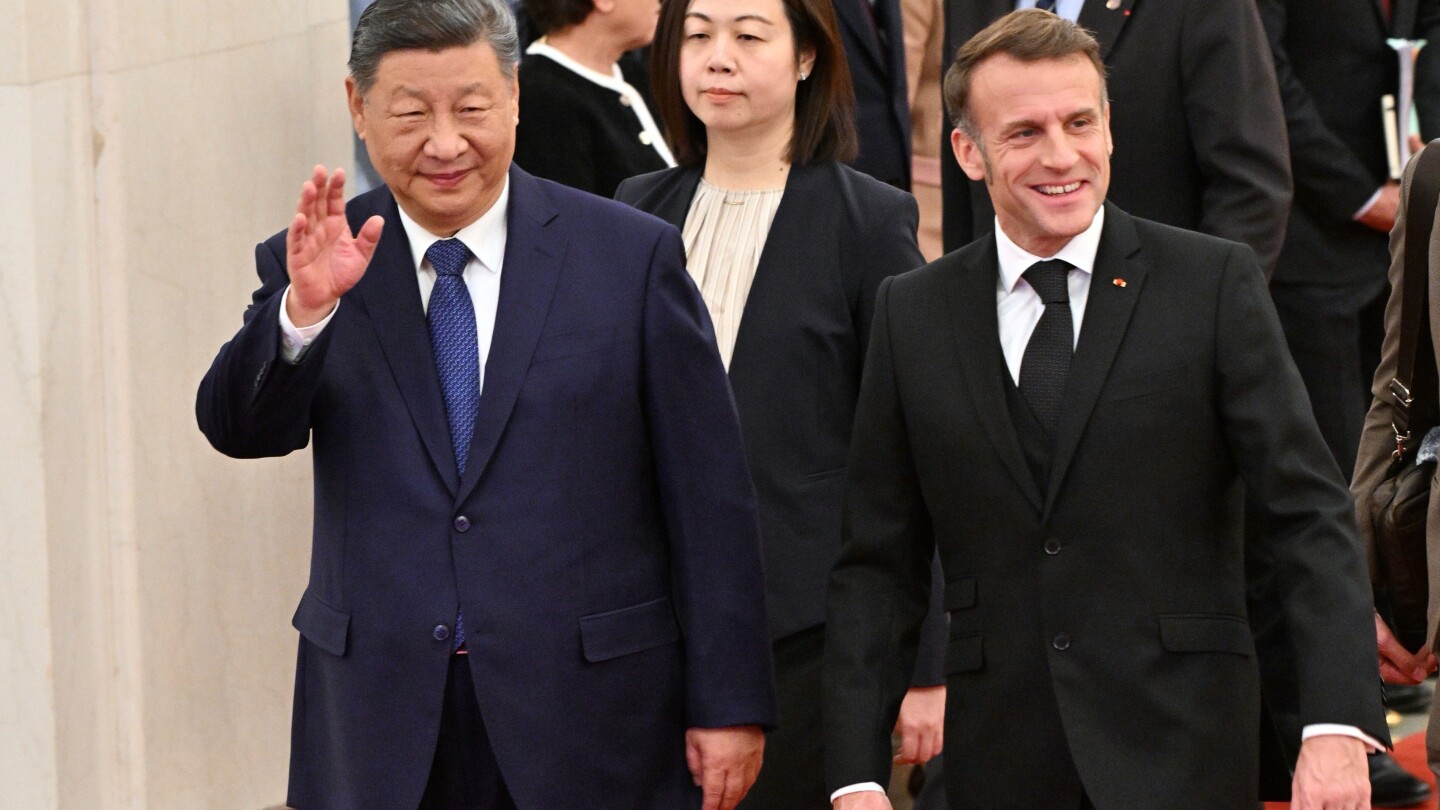
In a significant diplomatic engagement, Chinese President Xi Jinping and French President Emmanuel Macron convened in Beijing on Thursday, emphasizing strengthened bilateral cooperation amidst global geopolitical challenges. The high-level discussions, part of Macron’s three-day state visit, centered on two primary agendas: resolving the Ukraine conflict and rebalancing economic relations.
President Macron articulated the urgency of Sino-French collaboration in preserving international order, explicitly requesting China’s support for achieving an immediate ceasefire in Ukraine. “We confront the potential disintegration of the international order that maintained global peace for decades,” Macron stated. “In this context, Franco-Chinese dialogue becomes critically essential.” He specifically urged Beijing to endorse a moratorium on strikes targeting critical infrastructure in Ukraine.
While President Xi refrained from directly committing to France’s ceasefire appeal, he affirmed that “China endorses all peace-seeking endeavors” and advocated for a universally acceptable peace agreement. China maintains its position of providing substantial diplomatic and economic support to Russia since the invasion commenced.
Beyond Ukraine, the leaders announced concrete cooperation measures. President Xi pledged $100 million in humanitarian assistance for Gaza’s recovery and reconstruction. The nations signed twelve bilateral agreements spanning aerospace, nuclear energy, green industries, and artificial intelligence. Notably, the agreements included panda conservation initiatives and enhanced academic exchanges between higher education institutions.
The economic dimension revealed underlying tensions, with the European Union recording a €300 billion trade deficit with China last year. Despite the EU’s characterization of China as simultaneously “partner, competitor and systemic rival,” France secured exemptions for most cognac producers from recent trade investigations. President Xi committed to further market liberalization, stating China would “expand market access and open investment areas” to facilitate rational industrial and supply chain布局.
Analysts observed that China potentially seeks to strengthen bilateral ties with individual EU members like France, potentially at the expense of EU unity. The leaders emphasized strategic independence and multilateralism, with Xi noting that major powers should “demonstrate independence and strategic vision… on core matters and major critical issues.”
The French presidential delegation subsequently traveled to Chengdu, home to China’s premier panda conservation facility, symbolizing the cultural exchange dimension of the relationship.