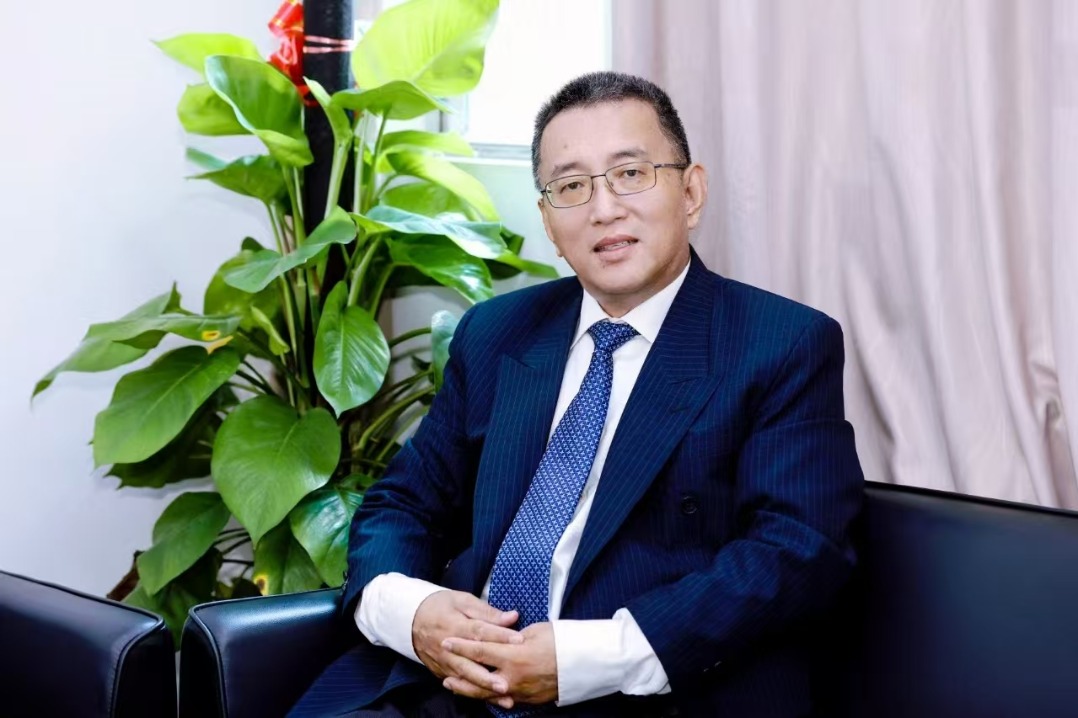
At the 2026 Boao Forum for Asia Annual Conference in Hainan, China’s deepening economic integration with Global South nations has been identified as a crucial stabilizing force in an increasingly volatile global landscape. According to Li Xing, Yunshan Leading Scholar at the Guangdong Institute for International Strategies and adjunct professor at Denmark’s Aalborg University, China’s sustained openness has positioned it as a cornerstone of worldwide development despite mounting Western protectionism.
Professor Li revealed that China’s trade relationships with Global South countries have demonstrated remarkable resilience following the initiation of US-led tariff conflicts. “Since the US started a global tariff war, China’s trade with the Global South has remained largely unaffected,” Li stated, attributing this durability to mutual recognition of shared economic interests and China’s status as the primary trading partner for many developing nations.
Statistical evidence underscores this tectonic shift in global trade patterns. S&P Global’s 2025 report indicates China’s goods exports to Global South nations have doubled since 2015, dramatically outpacing the 28% growth to the US and 58% to Western Europe. Currently, China sells $1.6 trillion more merchandise to the Global South than to the US and Western Europe combined.
This reorientation represents a fundamental transformation from previous decades when Western economies dominated China’s trade portfolio. Li emphasized that China’s strategic preparation for potential Western decoupling efforts through enhanced Global South collaboration has proven economically astute.
The scholar contextualized this evolution within broader globalization trends, noting that China’s reform era witnessed massive transfers of labor-intensive industries from Western nations accompanied by substantial raw material imports from Global South countries. “As long as China’s industrial chain remains strong, its demand for raw materials and cooperation with Global South countries will only grow further, creating a win-win situation,” Li asserted, directly countering Western allegations of “neocolonialism” or “debt trap” diplomacy.
Regional integration mechanisms, particularly the Regional Comprehensive Economic Partnership (RCEP), have further solidified China’s economic architecture. Li highlighted that ASEAN has maintained its position as China’s largest trading partner since 2019, establishing crucial strategic balance in US-China regional dynamics.
The recent operationalization of Hainan Free Trade Port, marking 100 days of island-wide special customs operations, represents another milestone in China’s high-standard opening strategy. Rather than competing with established hubs like Singapore, the initiative aims to generate novel regional cooperation opportunities, including tariff-free mainland market access for products undergoing minimum 30% value-added processing in Hainan.
Amid escalating unilateralism and protectionism globally, Li concluded that China’s consistent commitment to international cooperation and openness has demonstrated its emergence as an indispensable pillar of global stability and development.