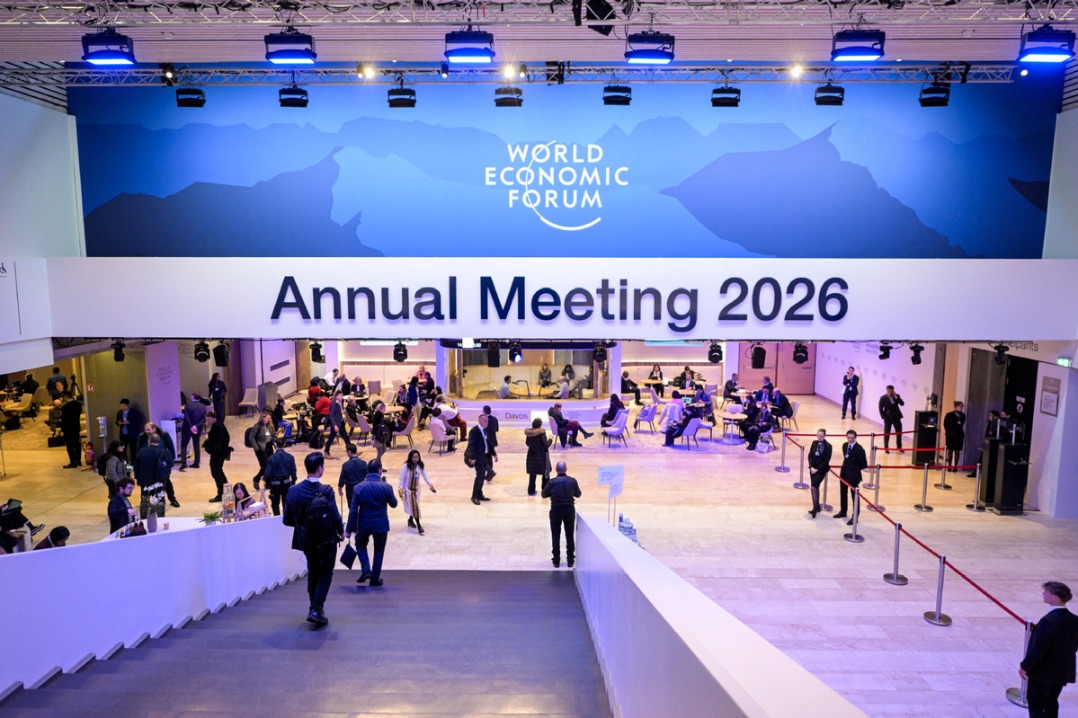
At the 56th World Economic Forum in Davos, Switzerland, Chinese Vice-Premier He Lifeng articulated China’s economic strategy, earning widespread international praise from experts and officials. The address, delivered on January 22, 2026, positioned China’s transition to high-quality development as a critical stabilizing force against growing global economic fragmentation.
Vice-Premier He, also a member of the Political Bureau of the Communist Party of China Central Committee, detailed three core propositions: advancing high-quality economic development, transforming China into both a manufacturing and consumption powerhouse, and deepening the nation’s commitment to reform and opening-up policies. He emphasized China’s role in fostering common prosperity through shared development opportunities, noting that China’s economy has expanded to over 140 trillion yuan ($20.1 trillion) with average annual growth rates of approximately 5.4%, contributing roughly 30% to global economic growth.
International response to the speech highlighted its strategic significance. Mehmood Ul Hassan Khan, President of the Center for Knowledge and Public Policy in Islamabad, described the address as “timely and positive,” noting that it promotes hope for greater global progress and prosperity. He specifically referenced China’s forthcoming 15th Five-Year Plan (2026-30) as focusing on structural reforms that would advance digitalization, green technologies, and a paradigm shift toward domestic consumption-driven growth.
Maroun Kairouz, Managing Director of the World Economic Forum, characterized China’s development transition as a strategic shift toward more sustainable and resilient growth. He noted that China’s reforms not only strengthen its own economic foundation but also create new global opportunities in clean energy, technology, and trade for 2026 and beyond.
Anna Malindog-Uy, Vice-President of the Asian Century Philippines Strategic Studies Institute, observed that the speech addressed fundamental global anxieties about uncertainty and fragmentation in the international economic system. She highlighted that China’s move toward high-quality, domestic-demand-driven growth transforms the nation from primarily a global supplier to a significant source of global demand, promoting more balanced worldwide economic development.
The address also briefed attendees on outcomes from the fourth plenary session of the 20th Communist Party of China Central Committee, reinforcing China’s commitment to expanding imports, strengthening industrial cooperation, and maintaining secure global supply chains.