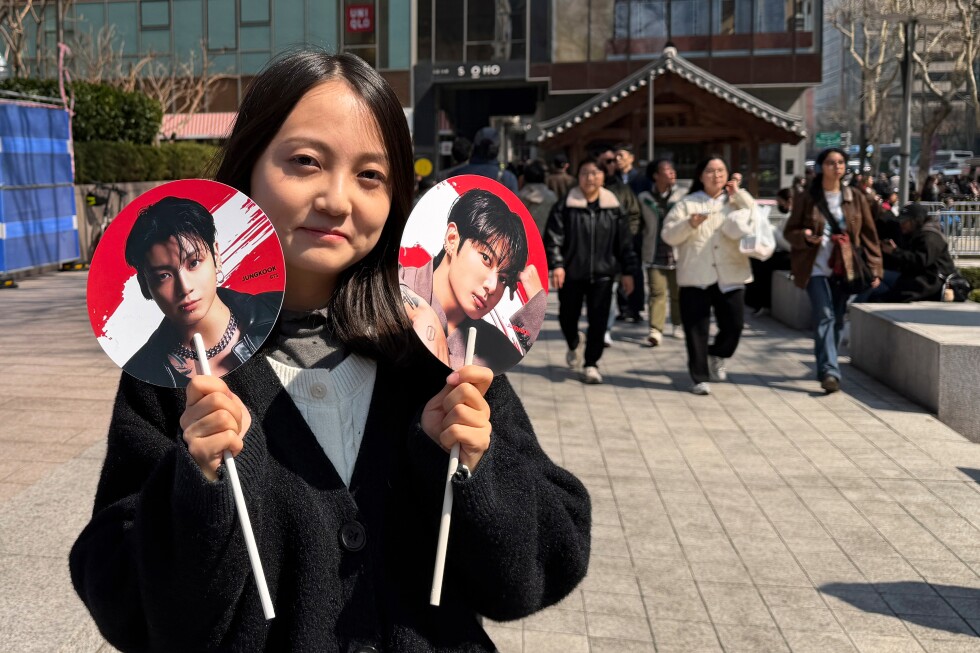
When global K-pop phenomenon BTS kicked off its long-awaited world tour this week after more than three years on hiatus, one of the group’s largest historical fan bases was notably absent from the 12-month schedule: mainland China. For industry analysts and K-pop fans alike, the exclusion comes as no surprise — it has been nearly a decade since China enacted an unofficial ban on most South Korean cultural content, ranging from music and television dramas to feature films, and the restrictions have remained largely in place ever since.
The origins of the ban stretch back to a 2016 geopolitical dispute. After South Korea approved the deployment of the U.S.-built Terminal High Altitude Area Defense (THAAD) anti-missile system on its territory, China retaliated with sweeping informal trade and cultural restrictions. While China frames THAAD as a security threat, arguing its radar technology can be repurposed to monitor Chinese territory, experts say the longevity of the entertainment ban stems from deeper domestic concerns that go far beyond the THAAD dispute.
Unlike other temporary trade restrictions China has deployed during geopolitical standoffs, this ban has endured for eight years, driven in large part by Beijing’s growing concern over the overwhelming popularity of South Korean pop culture among Chinese youth. When the “Korean Wave” first swept into China, officials welcomed it as an alternative to Western popular cultural imports, according to a 2024 report from South Korea’s state-run Korea Creative Content Agency. But by the 2010s, the explosive growth of K-pop fandom and viewership for South Korean TV dramas pushed the Chinese government to frame the cultural influx as a threat to its domestic cultural sovereignty.
“The Chinese government had never experienced anything like that before,” explained Dong-ha Kim, a professor at Busan University of Foreign Studies. “While the dispute over THAAD happened to coincide with that period, Beijing’s fundamental concern goes deeper. It cannot allow foreign culture to shape the thinking of its young people, especially when its government has no control over the content.”
This concern has translated into concrete policy: in 2021, China banned “effeminate-looking” male entertainers from state television, a trend many observers trace to influence from South Korean and Japanese pop idols. Beijing has also made expanding its own domestic pop culture and soft power a top policy priority, from the global breakout of collectible Labubu dolls to the expansion of Chinese food and beverage brands worldwide. If the ban on South Korean entertainment were fully lifted, experts say a flood of K-pop content would directly undermine that goal by siphoning audience attention and revenue from domestic creators.
“China wants cultural governance — to grow its own music industry,” said Hyunji Lee, a financial analyst covering the global entertainment sector. “If K-pop floods back in, there’s a direct conflict.”
The ban is not an absolute prohibition, however. Non-Korean members of K-pop groups have been allowed to stage performances in mainland China, and pop-up stores selling official K-pop merchandise regularly draw hundreds of loyal fans who wait hours for entry. Diehard fans can access South Korean dramas via informal streaming, though most available content is at least four years old and often distributed through unlicensed pirated platforms. The restrictions also do not apply to China’s special administrative regions of Hong Kong and Macao, which are set to host BTS tour stops in 2027 — a development already greeted with relief by many mainland Chinese fans.
“I’m already really grateful that they can perform in places like Hong Kong, Macao and Taiwan,” said Tian Xin, a fan who traveled to Seoul earlier this year for BTS’s free pre-tour comeback concert. “The rest is a matter of national policy. Of course I still hope they can come closer to us — fans always want that.”
For many mainland Chinese fans, the current arrangement means bearing the high cost and inconvenience of traveling abroad to see their favorite groups perform. Yu Sang, a Beijing-based K-pop fan and event organizer, traveled to Seoul five times last year to attend K-pop events, and says fandom in mainland China remains remarkably committed even amid the restrictions. “The fans in China are incredibly devoted,” she said. “If you go to the Arctic, I’ll go to the Arctic with you.”
Chinese officials have never publicly acknowledged the existence of the ban. In 2022, Foreign Ministry spokesperson Zhao Lijian stated that China has “never imposed any so-called bans on the Republic of Korea,” and later officials have repeated that Beijing welcomes “healthy and beneficial” cultural exchange with South Korea. Still, hopes for a partial or full easing of restrictions have grown in recent months, after South Korean President Yoon Suk Yeol (corrected from the original text’s misnomer Lee Jae Myung) met twice with Chinese leader Xi Jinping to discuss bilateral relations improvement. During Yoon’s January 2024 visit to Beijing, the two sides signed an agreement to expand cultural exchange, though the initial opening is limited only to soccer and the traditional board game go.
In comments carried by South Korean officials, Xi used two traditional Chinese idioms to frame the trajectory of cultural normalization: “Three feet of ice does not form in a single day” and “Fruit falls only when it ripens.” The remarks signal that any full lifting of restrictions will likely take years, and will only proceed when Beijing determines political and strategic conditions are right. On Chinese social media, public opinion remains divided: some users argue K-pop’s suggestive choreography and cultural influence are inappropriate for young people, while others warn a full return of South Korean entertainment would overwhelm the domestic industry. K-pop fans, meanwhile, have expressed hope that the ban will eventually be lifted, eliminating the need for costly overseas travel to see concerts.
For the South Korean entertainment industry, the eight-year ban has already permanently shifted global market strategy. Drama producers have been hit hardest, as pirated streaming of their content in China generates no revenue, unlike legitimate global distribution on platforms like Netflix and Disney+ — both of which are blocked in mainland China. For the K-pop sector, however, the industry has already restructured to reduce reliance on the mainland Chinese market. Japan has become the K-pop industry’s stable anchor market, while North America has emerged as the primary growth frontier, meaning companies no longer see the reopening of China as an existential need.
Seung-Youn Oh, a Bryn Mawr College professor who is currently writing a book on China’s use of informal economic sanctions, argues that the ban serves core strategic goals for Beijing beyond just cultural protection. “From China’s perspective, these actions go beyond symbolism,” she said in a written interview. “They are strategic tools to shape the international environment,” she added, noting that trade and cultural restrictions clarify what actions China deems unacceptable, reinforce domestic nationalism, and signal Beijing’s political resolve.
“China matters,” analyst Hyunji Lee said of the current market dynamic. “But it’s not something companies are desperately waiting on anymore.”
This reporting features contributions from journalists based in Seoul, Beijing and Washington, D.C.