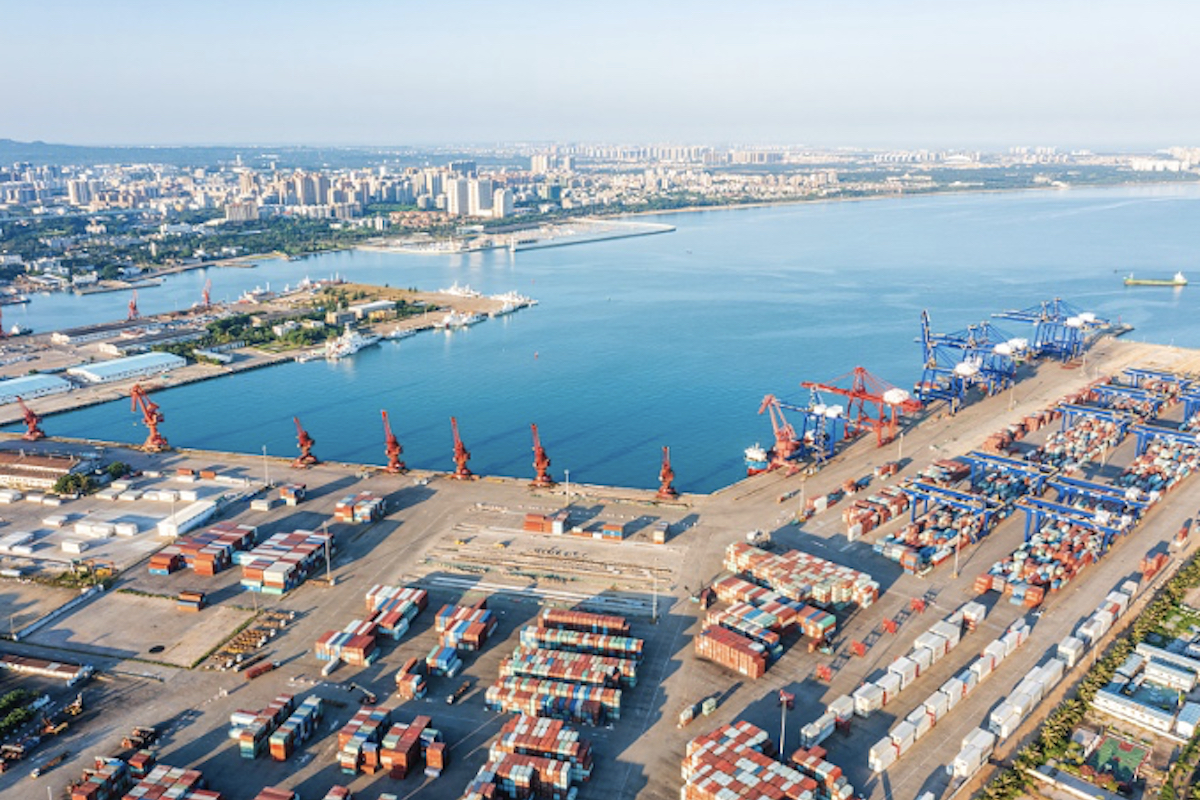
While global trade faces increasing protectionism, China is charting an opposite course through its ambitious Hainan Free Trade Port initiative. The tropical island has undergone a remarkable transformation since December 18, when China launched special customs operations across its entire 35,000 square kilometers—creating what represents the nation’s most extensive experiment in economic openness to date.
Unlike China’s 22 existing free trade zones confined to specific urban areas, Hainan operates as a comprehensive free trade port with its own customs, tax, and regulatory systems. This unprecedented scale—over 70 times larger than China’s 156 bonded zones combined—provides international companies with unparalleled access and flexibility within the Chinese market.
The port’s innovative policies include a massive expansion of zero-tariff goods from 21% to approximately 74% of all tariff lines, covering nearly all production equipment and key raw materials. The groundbreaking ‘30% value-added rule’ allows products processed in Hainan with substantial local value addition to enter mainland China duty-free, encouraging genuine manufacturing and supply-chain development rather than mere goods transfer.
Corporate incentives are equally compelling. Qualifying companies in encouraged industries benefit from a ‘double 15%’ tax advantage—corporate income tax capped at 15% compared to 25% on the mainland—while eligible professionals enjoy personal income tax capped at 15% versus mainland China’s top rate of 45%.
Early results demonstrate tangible benefits. Jingrun Pearl, established in 1994, became an early beneficiary, saving approximately $248,000 in taxes on a $1.67 million pearl purchase. These savings translated to consumer price reductions of up to 20% on some products.
Hainan’s strategic vision extends beyond immediate economic gains. As an island, it provides a controlled environment for testing sensitive reforms in offshore finance, cross-border data flows, and internationalized medical services. The initiative serves as both a stress test for domestic industries and a signal of China’s commitment to opening amid global uncertainty.
International response has been robust, with foreign investment growing over 40% in the first three quarters of this year, attracting companies from 176 countries and regions. By facilitating the simultaneous movement of goods, capital, people, and data, Hainan is positioning itself as an international economic crossroads rather than a traditional special zone.