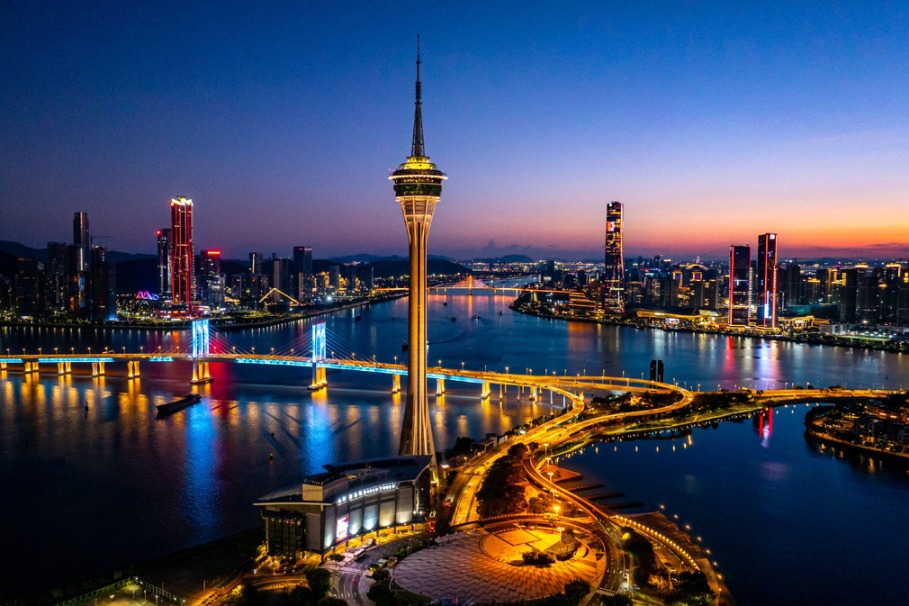
The Guangdong-Hong Kong-Macao Greater Bay Area (GBA) is rapidly transforming into a world-class city cluster, driven by unprecedented connectivity and technological innovation. Spanning 56,000 square kilometers and home to over 80 million people, the GBA is set to host the 15th National Games, a symbolic event that underscores the region’s collaborative spirit and economic prowess. The games’ road cycling race will traverse the Hong Kong-Zhuhai-Macao Bridge, showcasing the GBA’s integrated infrastructure and co-host model for major events. The GBA’s economy has surged to 14.79 trillion yuan ($2.09 trillion) in 2024, surpassing both the New York and San Francisco Bay Areas, and positioning it among the world’s leading economic hubs. Enhanced connectivity, including thousands of kilometers of expressways and harmonized standards across 36 fields, has significantly reduced travel times and streamlined cross-border cooperation. The region’s technological innovation is equally impressive, with institutions like the Shenzhen Institute of Advanced Technology producing an average of 4.7 patents daily and the establishment of 31 Guangdong-Hong Kong-Macao joint labs. The GBA’s rise is a testament to China’s broader development strategy, aiming to create a global hub for technology, innovation, and cultural exchange.
China’s Greater Bay Area builds world-class city cluster through connectivity, innovation