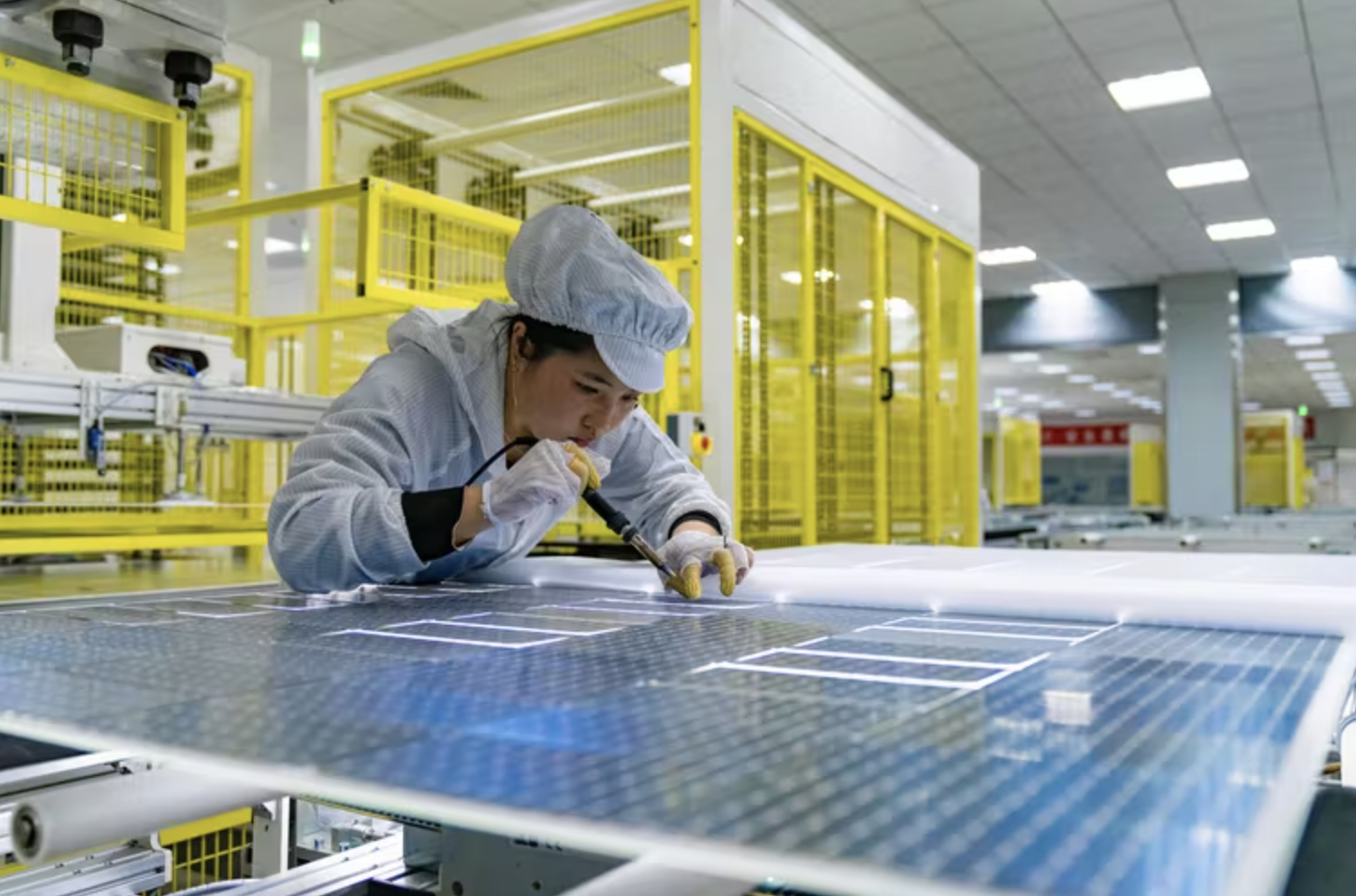
As COP30 commences in Belem, Brazil, the global climate discourse remains centered on pledges and targets. However, the tangible shift in the clean energy transition is already evident in global markets, with China emerging as the epicenter of this transformation. China has seamlessly integrated its climate ambitions into a robust industrial strategy, leading the charge in solar, wind, battery, electric vehicle, and grid technology sectors. Its influence now extends to global cost structures, supply chains, and market expectations. By the end of 2024, China had exceeded its 2030 target for installed wind and solar capacity, reaching approximately 1,400 gigawatts, according to the National Energy Administration. This year marked a historic milestone as renewable capacity surpassed fossil fuel power for the first time. The International Energy Agency projects that China will account for nearly 60% of all new global renewable power capacity installed through 2030. This expansion has fundamentally altered energy economics, with industrial scale driving down the costs of solar modules, wind turbines, and batteries to levels that make clean power competitive without subsidies in most regions. China now controls over 80% of the global solar manufacturing supply chain and dominates electric vehicle and storage battery production. These developments are reshaping the global cost base, influencing corporate margins, trade balances, and valuations across continents. Equity markets are adjusting to this new energy reality, with overcapacity in solar manufacturing leading to fierce price competition within China. The ripple effect outside China is supporting suppliers of critical materials like copper, lithium, nickel, and rare earths, as well as grid operators and logistics companies serving new energy infrastructure. Credit markets are evolving in parallel, with green and transition bonds linked to Chinese exports multiplying. Emerging market issuers are financing renewable projects built with Chinese technology, creating a new layer of investable debt and strengthening balance sheets tied to the energy transition. Private equity and infrastructure funds are positioning accordingly, with Belt and Road energy projects shifting focus from coal to solar and wind. Regional developers are securing Chinese components to meet domestic decarbonization targets, transforming clean power from a cost to a growth engine across multiple regions. Despite these advancements, challenges remain. China’s grid struggles to absorb the rapid expansion in renewable generation, some provinces face curtailment, and local debt constraints slow new approvals. Coal remains an important stabilizer of power sources, yet the percentage of clean power generation continues to rise, with policy direction remaining consistent and focused. The investment implications are clear: China’s dominance has made clean energy the world’s most powerful source of cost deflation in real assets, driving new cycles of industrial demand, commodity use, and infrastructure spending. Exposure to this transformation can take many forms, including listed renewables, metals critical to electrification, utilities integrating advanced storage, and the financing structures that link these sectors. While many governments view China’s rise through a political lens, markets perceive it through a structural one. Industrial ecosystems of this scale cannot be duplicated quickly, representing decades of accumulated capital and experience. Energy security, competitiveness, and productivity will increasingly depend on access to China’s clean energy ecosystem. Economies that hesitate to match this approach risk losing growth and influence in the decades ahead. The clean energy transition is no longer an aspiration but a functioning global market with China at its core. The combination of technology, capital, and industrial discipline emerging from Beijing, Shanghai, and Shenzhen is setting the direction of economic opportunity across Asia, the Middle East, and Africa. Ignoring this shift won’t shield capital from its consequences but would mean missing one of the defining sources of sustainable return in the contemporary global economy.