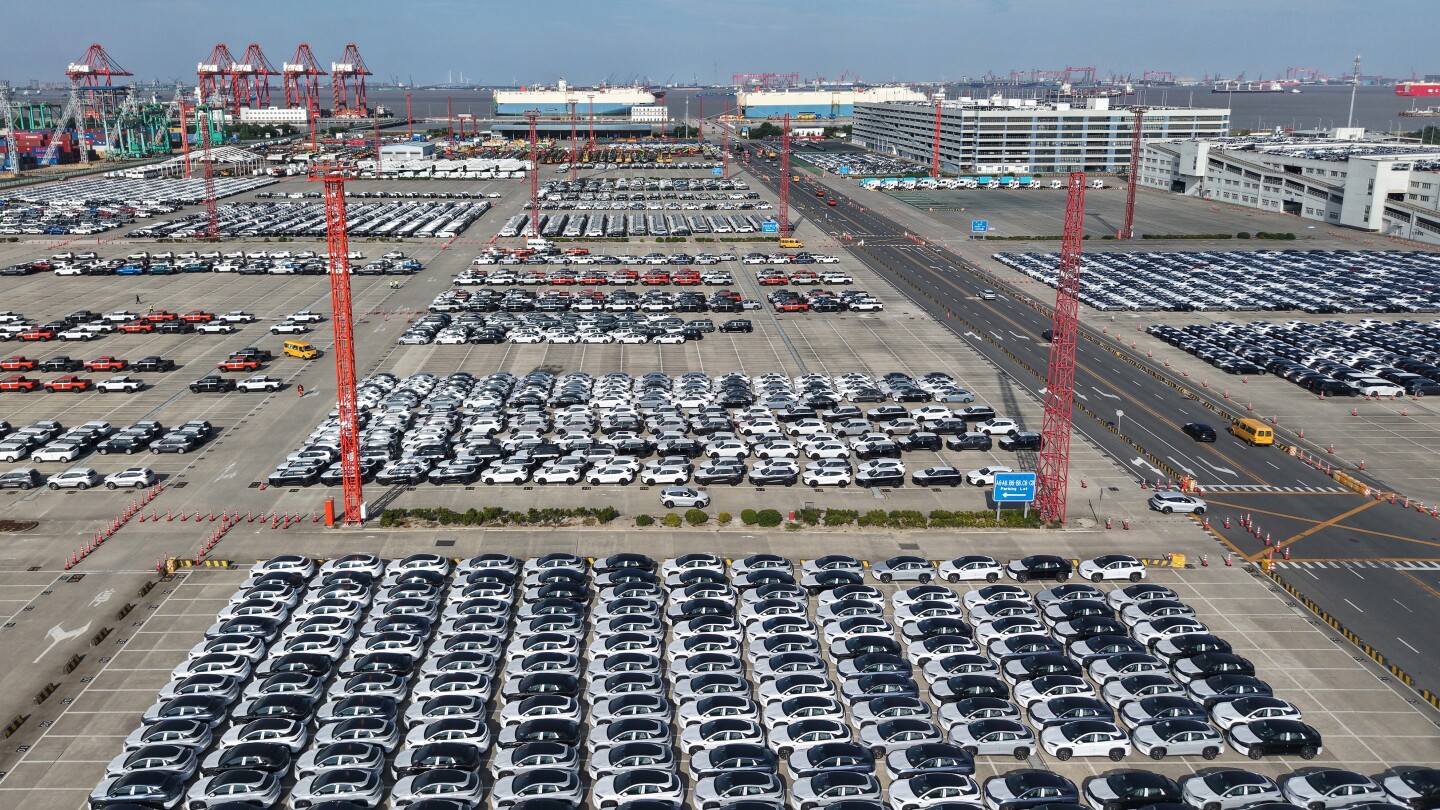
China’s automotive industry demonstrated remarkable export performance in 2025, achieving a 21% year-on-year increase in vehicle shipments despite weakening domestic demand. According to the China Association of Automobile Manufacturers, this growth was primarily driven by a dramatic doubling of new energy vehicle exports, including electric vehicles and plug-in hybrids, which reached 2.6 million units.
The export surge comes as Chinese automakers increasingly look to international markets to counter intense competition and price wars at home. Total vehicle exports surpassed 7 million units, reflecting strategic global expansion efforts. While domestic passenger car sales showed modest annual growth of 6% to 24 million units, December 2025 witnessed an 18% year-on-year decline, signaling concerning domestic market trends.
International analysts project continued expansion, with Deutsche Bank forecasting a 13% increase in passenger vehicle exports for 2026. The European Union’s recent agreement with China on resolving EV import disputes is expected to further accelerate export growth to European markets. Industry experts predict Chinese EV exports to the EU will grow approximately 20% annually between 2026 and 2028.
Key export regions include Russia, Latin America, the Middle East, Europe, and Southeast Asia, collectively representing about 70% of 2025 export volumes. However, Chinese manufacturers face significant barriers in premium markets like the United States and Canada, where substantial EV tariffs remain in effect.
The competitive landscape shifted notably in 2025 as BYD surpassed Tesla to become the world’s largest EV manufacturer, though the Chinese company reported an 18% year-on-year delivery decline in December 2025. Analysts from UBS and S&P Global Ratings anticipate continued domestic market challenges in 2026, particularly for vehicles priced below 150,000 yuan ($21,510), as government subsidy structures transition from flat rates to price-based systems.