A fresh chapter in US-China trade relations has opened with Beijing issuing a stern warning of potential retaliatory measures. This development follows former President Donald Trump’s signaling of new Section 301 investigations targeting critical Chinese sectors, including electric vehicle batteries, rare earth minerals, and advanced AI chips.
The geopolitical friction intensified after the US Supreme Court’s February 20 ruling that the International Emergency Economic Powers Act (IEEPA) does not grant presidential authority to impose such duties. In response, China’s Ministry of Commerce spokesperson articulated Beijing’s consistent opposition to unilateral tariff increases, emphasizing that trade wars ultimately yield no victors.
While conducting a comprehensive assessment of the judicial decision, Chinese officials highlighted that US unilateral measures—including reciprocal and fentanyl-related tariffs—not only violate international trade norms but also contravene domestic American law. The spokesperson underscored that cooperative engagement benefits both nations, whereas confrontation proves mutually detrimental.
In the ruling’s aftermath, Trump executed a strategic pivot by invoking Section 122 of the Trade Act of 1974. This move authorized a temporary 10% global tariff for 150 days, subsequently increased to 15%, citing balance-of-payments concerns. Concurrently, the administration directed officials to initiate new Section 301 investigations under separate legal frameworks.
Analysts identify three primary legal instruments remaining at the administration’s disposal: Section 122 for rapid response measures, Section 232 for national security-based restrictions, and Section 301 for addressing perceived unfair trade practices. The strategic framing of tariffs under national security justifications—particularly targeting EV batteries, rare earths, and AI chips—aims to establish a more durable legal foundation resistant to judicial challenges.
The immediate effect reduces Chinese exporters’ tariff burden from 20% to 15%, though they continue facing average duties of approximately 25% since the 2018 trade war inception. Other Asian exporters including Malaysia, Cambodia, and Indonesia may benefit from lowered rates compared to their previous tariff levels.
Supply chain realignment continues accelerating, with companies like Learning Resources Inc. relocating production from China to Vietnam and India despite significant operational costs. This trend may intensify if additional Section 301 investigations materialize, potentially reshaping regional manufacturing landscapes.
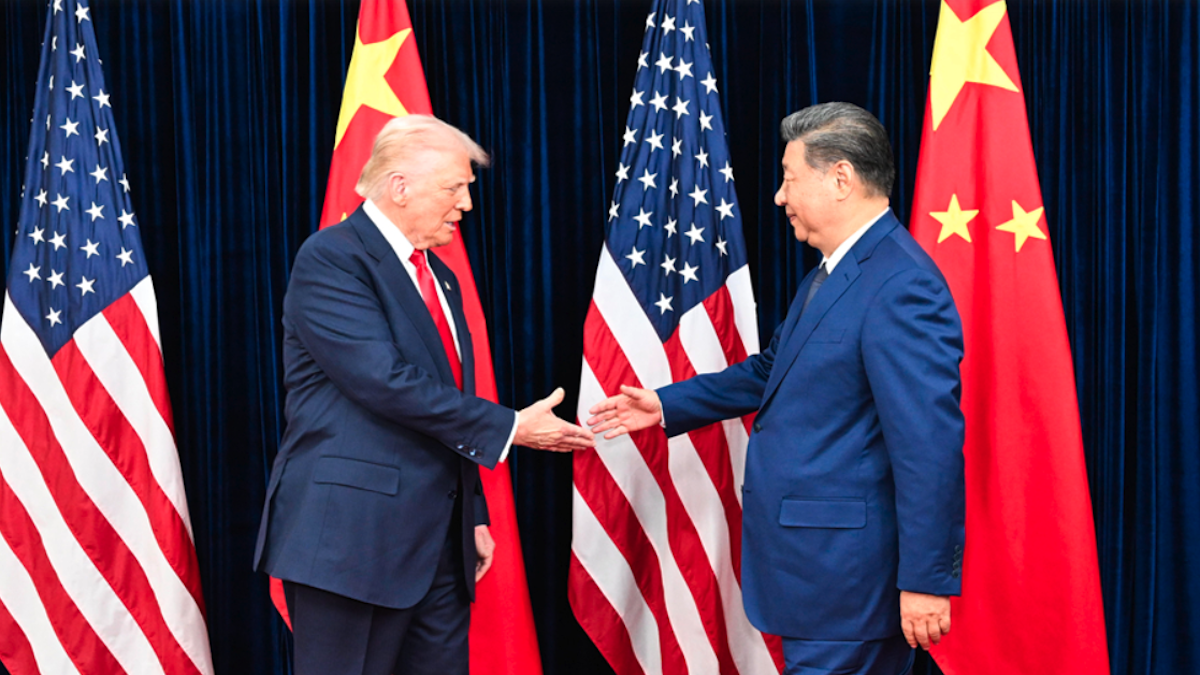
With Trump scheduled to meet President Xi Jinping in April, the diplomatic engagement occurs against a complex backdrop of legal maneuvering, economic posturing, and strategic competition that will define the next phase of US-China trade relations.