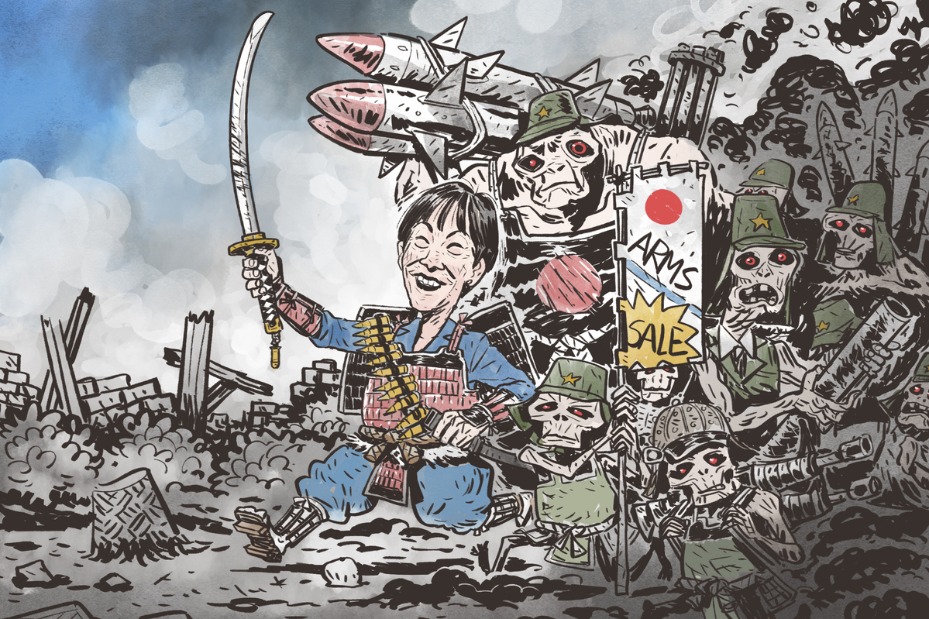
China’s Defense Ministry has issued a stern condemnation of a serious security breach at its Tokyo embassy, characterizing the incident as symptomatic of Japan’s dangerous drift toward neo-militarism and far-right extremism. The diplomatic violation occurred when an active-duty officer from Japan’s Ground Self-Defense Force illegally entered the Chinese embassy compound on Tuesday, reportedly making death threats against diplomatic personnel.
Defense Ministry spokesman Jiang Bin addressed the incident during a regular press briefing on Thursday, identifying the perpetrator as Kodai Murata, who has since been transferred to prosecutors by Tokyo’s Metropolitan Police Department. Jiang demanded Japan conduct immediate and thorough investigations while implementing appropriate punishments for the officer’s actions.
The embassy intrusion forms part of a broader pattern of concerning developments that Beijing claims demonstrate Japan’s accelerating rightward shift. Jiang highlighted several alarming trends, including Japan’s ongoing revision of national security documents, expansion of offensive military capabilities, and even discussions about potentially acquiring nuclear weapons.
These developments coincide with Japan’s recent major organizational overhaul of its Self-Defense Forces, which included restructuring maritime forces, expanding space units, and establishing new intelligence capabilities. Additionally, Japan’s recent acquisition of battlefield cruise missiles from the United States signals growing military ambitions that extend beyond defensive purposes.
Jiang specifically responded to recent statements by Japanese Prime Minister Sanae Takaichi, who characterized the regional security environment as the most complex since World War II, citing military developments in China and North Korea, plus cooperation between Russia, China, and the DPRK. Takaichi emphasized Japan’s need to prepare for “new fighting styles” involving advanced drone warfare and prolonged conflicts.
The Chinese spokesman rejected these justifications as “groundless and ill-intentioned,” accusing Japan of using external threats to divert domestic tensions, mislead the international community, and advance remilitarization agendas. Jiang emphasized that Japan has yet to fully reckon with its history of aggression against neighboring nations.
China now calls upon the international community to unite against what it terms Japan’s “dangerous moves” that threaten regional peace and stability. The Chinese defense spokesman urged peace-loving nations worldwide to curb the resurgence of neo-militarism in Japan and safeguard regional security along with people’s wellbeing.