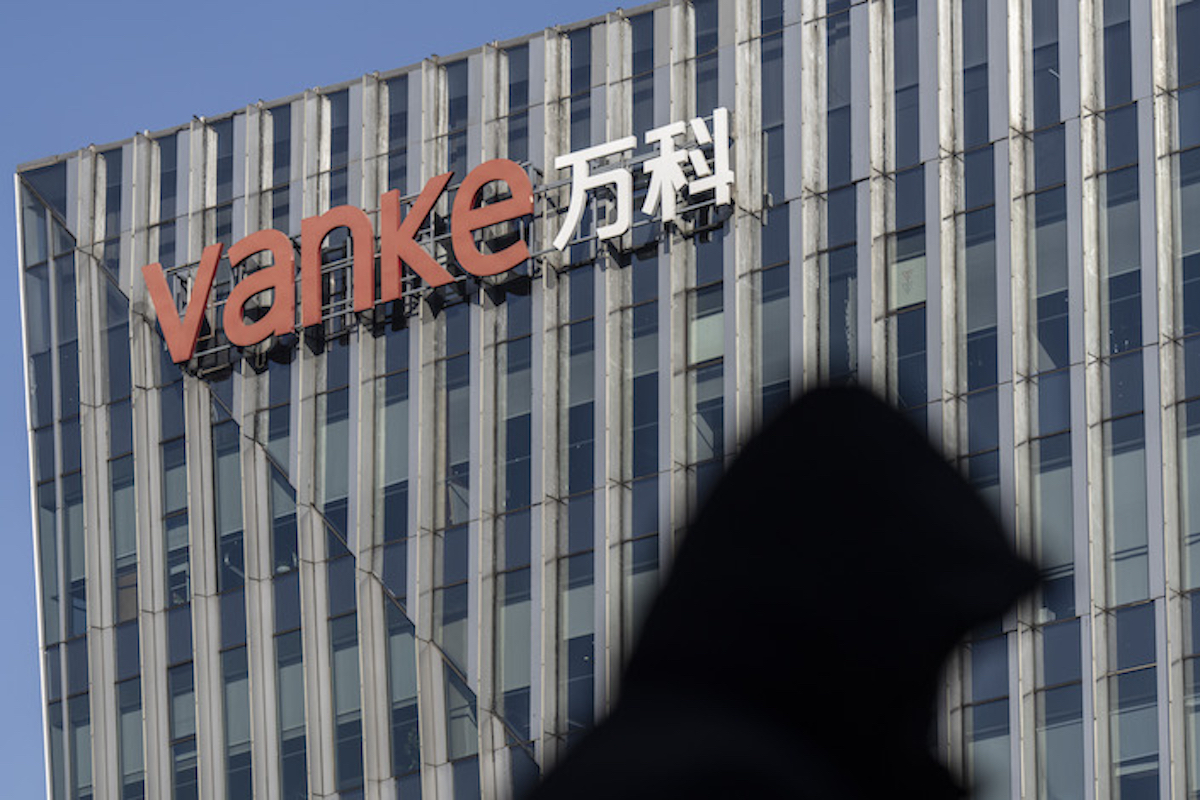
As 2025 concludes, Fitch Ratings has delivered a stark warning to China investors with its downgrade of property giant China Vanke Co to ‘C’ status from ‘CCC-‘. This move highlights escalating pressures on one of China’s last major surviving developers amid a prolonged property sector crisis, raising fresh concerns about potential default risks.
The deteriorating situation coincides with concerning November economic indicators showing broad-based momentum loss across China’s economy. New home sales in China’s 70 largest cities declined 0.39% from October, while prices dropped 0.45%—the sharpest monthly decrease in twelve months. These developments occur despite ambitious government pledges to stabilize the property market and as China enters its fourth consecutive year of deflation.
Economic analysts express growing concerns about China’s trajectory. Capital Economics China economist Zichun Huang notes that while policy support might drive partial recovery in coming months, growth is likely to remain weak throughout 2026. Barclays economist Yingke Zhou warns that persistent deflation pressures could exacerbate trade tensions with non-US economies as China continues relying on export-led growth.
The situation draws uncomfortable parallels with Japan’s economic stagnation since the 1990s, though comparisons remain imperfect. The property sector’s collapse—historically accounting for 25-33% of China’s annual growth—has sparked ‘Japanification’ concerns that will likely continue into 2026.
Compounding these challenges, China faces a 47.5% US tariff that poses significant threats to its export-dependent economy. Despite this, China recorded its first-ever $1 trillion trade surplus in November, achieved through strategic market diversification to Southeast Asia and Europe since the Trump administration’s initial trade war.
This massive trade surplus masks underlying domestic weaknesses. While exports grew 5.9% year-on-year in November, imports increased only 1.9%, reflecting Chinese households’ reluctance to spend their $22 trillion in savings. The return of default risks among major developers could further undermine consumer confidence.
Paradoxically, global investors are returning to Chinese stocks, attracted by technology sector optimism and China’s latest Five-Year Plan (2026-2030) emphasizing high-quality growth, capital market reforms, and technological self-reliance. The plan’s focus on structural upgrades to boost domestic consumption through enhanced social safety nets has also improved market sentiment.
However, household perspectives differ markedly from investor optimism. Chinese consumers face persistent trade tensions, weak wage growth, near-record youth unemployment, declining property values, and perceived insufficient government action. Many question the authenticity of official economic data, particularly the ‘around 5%’ growth target that appears disconnected from provincial-level realities.
The Vanke situation presents particular concerns given its reputation as China’s best-managed developer. Its potential default could trigger approximately $50 billion in debt vulnerabilities. While few anticipate a ‘Lehman moment’ given previous defaults by larger developers like Evergrande and Country Garden, Vanke’s stumble significantly damages confidence in China’s property sector recovery.
Deutsche Bank economist Yi Xiong highlights additional risks from China’s substantial dollar-denominated debt—approximately $750 billion in outstanding bonds, with one-third maturing within two years. How authorities handle Vanke’s crisis could set the tone for China’s 2026 economic approach, potentially reducing Beijing’s willingness to let market forces play a ‘decisive role’ in property price-clearing.
Fitch Ratings analyst Tyran Kam notes that authorities appear to see limited systemic risk from Vanke’s situation, with policymakers prioritizing completion of unfinished housing projects over bailouts for non-state-owned developers. However, banks’ continued reluctance to lend reflects pessimistic outlooks for housing sales recovery, which Fitch expects to decline 7-8% in 2026.
The fundamental challenge remains convincing Chinese households to increase spending amid persistent property sector uncertainty. As 2026 approaches, Chinese leadership faces critical decisions about embracing market forces and implementing structural reforms that could determine whether China avoids Japan’s prolonged economic stagnation.