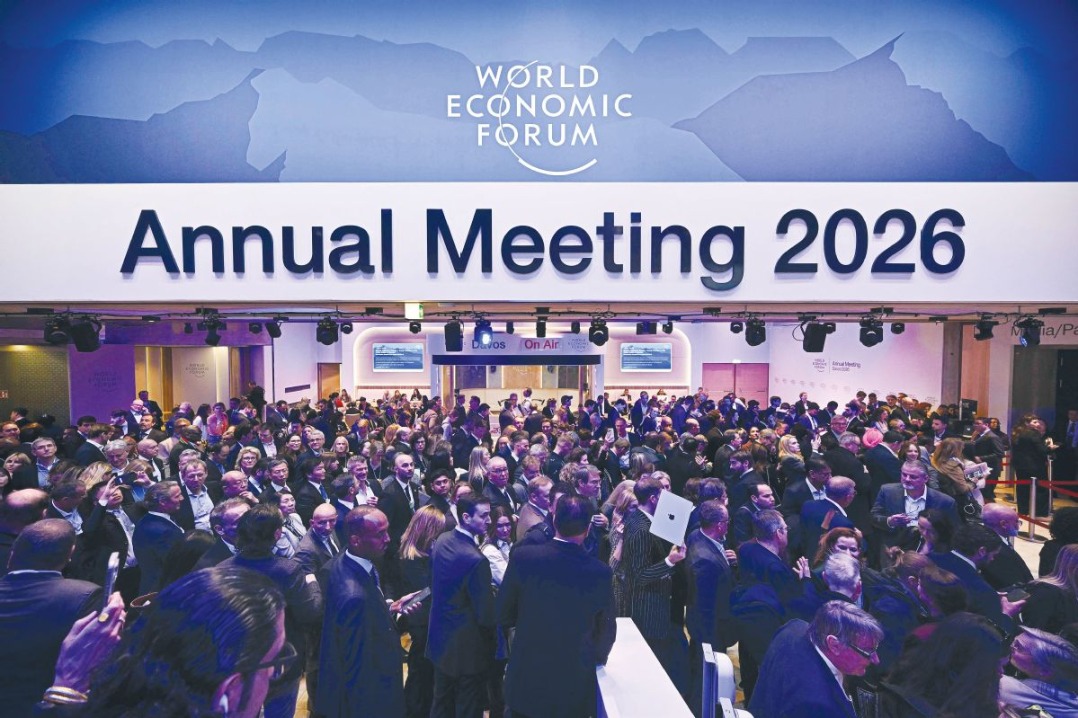
The 56th World Economic Forum in Davos became a stage for contrasting visions of global leadership as China and the United States presented fundamentally different approaches to international cooperation. Chinese Vice-Premier He Lifeng articulated Beijing’s commitment to multilateralism and inclusive economic globalization, while US President Donald Trump emphasized nationalist priorities and questioned longstanding alliances.
He Lifeng’s address positioned China as a stabilizing force in global affairs, advocating for cooperative solutions to shared challenges. “The world must not return to the law of the jungle, where the strong will eat the weak,” He stated, directly addressing concerns about rising unilateralism and protectionism. The Chinese delegation emphasized economic interdependence, noting that China had imported over $15 trillion in goods and services during the past five years while generating substantial tax revenue and employment opportunities abroad through overseas investments.
The vice-premier outlined China’s domestic policy focus on boosting consumption and incomes, explicitly inviting international businesses to access the Chinese market. He further committed to cooperation in technology innovation, artificial intelligence governance, and climate action, reiterating China’s dedication to its carbon neutrality timeline.
In stark contrast, President Trump’s appearance highlighted America’s reconsideration of traditional alliances. During his hour-long address, the president questioned NATO’s funding structure, criticized European energy policies, and revisited his controversial proposal to acquire Greenland from Denmark for security purposes. Trump asserted that European allies owed the United States for decades of protection, claiming without American intervention, Europeans “would all be speaking German and a little Japanese.”
European leaders responded cautiously to Trump’s remarks, with French President Emmanuel Macron and European Commission President Ursula von der Leyen both emphasizing the necessity of strategic autonomy and effective multilateralism. Von der Leyen characterized current geopolitical shifts as creating “a necessity to build a new form of European independence.”
Analysts observing the forum noted that the divergent presentations reflected broader transformations in global power dynamics. McKinsey’s China chairman Joe Ngai observed that China’s consistent messaging at recent Davos meetings positions it as a advocate for stable global order, while the US appears to be reevaluating its traditional international responsibilities.