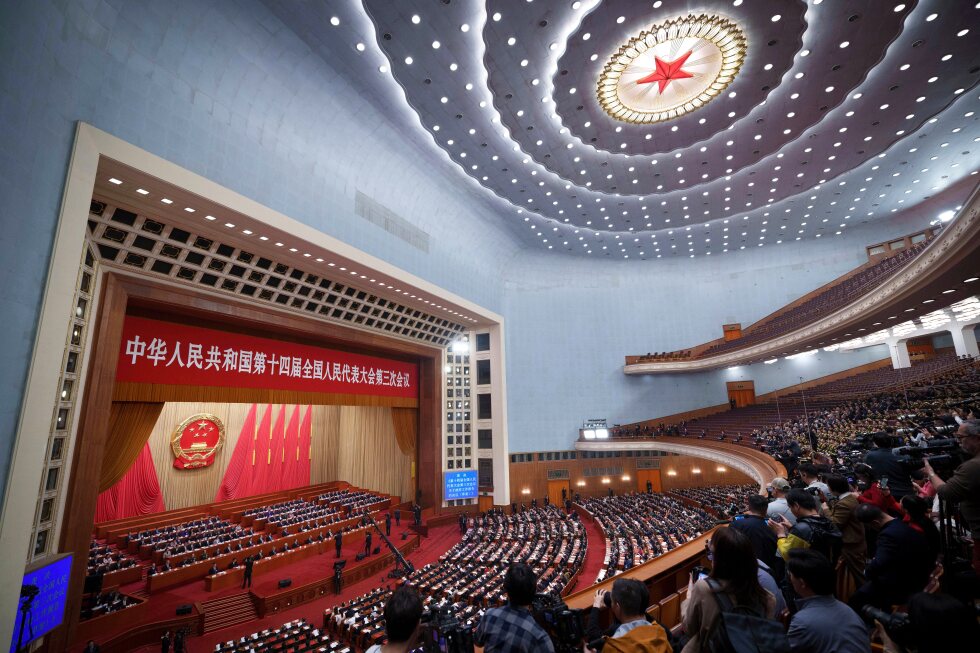
BEIJING — China’s annual political gathering, known as the Two Sessions, commenced Thursday with the National People’s Congress (NPC) and Chinese People’s Political Consultative Conference (CPPCC) convening in the capital. The meetings, which set the nation’s policy agenda and economic objectives for the coming year, occur against a backdrop of economic headwinds and increasingly scripted political proceedings.
The NPC, comprising nearly 3,000 delegates, serves as China’s legislative body that formally ratifies decisions already determined by Communist Party leadership. While technically performing voting procedures, the assembly consistently demonstrates near-unanimous approval of party directives. The parallel CPPCC gathering brings together elite members of Chinese society—including business leaders, athletes, and minority representatives—though this advisory body wields minimal influence on substantive policy matters.
Under President Xi Jinping’s leadership, these once-contentious forums have transformed into carefully orchestrated events with diminished room for genuine debate. “Historically, these sessions served as venues for substantive policy deliberation, including controversial discussions,” noted Alfred Wu, public policy professor at the National University of Singapore. “They have now evolved into predominantly ceremonial showcases for propaganda purposes.
Economic priorities dominate this year’s agenda, with Premier Li Qiang expected to announce China’s GDP growth target and other key economic indicators. Observers particularly await details regarding the 15th five-year plan, initially drafted in October, which emphasizes technological advancement and self-sufficiency—a continuation of China’s planned economy legacy through five-year planning cycles.
The Chinese economy faces significant challenges including elevated youth unemployment, depressed housing markets, sluggish domestic consumption, and ongoing trade tensions with the United States. Economic analysts suggest Beijing must navigate a complex balancing act between advancing technological manufacturing capabilities in robotics, renewable energy, and artificial intelligence, while simultaneously stimulating consumer spending amid widespread financial pressure among ordinary citizens.
Policy experts at the Asia Society project China may establish its lowest-ever growth target, signaling a strategic pivot from rapid expansion toward qualitative economic development. Meanwhile, recent personnel changes within military ranks—including the dismissal of 19 legislative members and high-profile military officials—have drawn attention, though no significant leadership announcements are anticipated during the current sessions. President Xi has reportedly removed approximately 100 senior PLA officials over the past four years, with January witnessing the prominent dismissal of General Zhang Youxia.