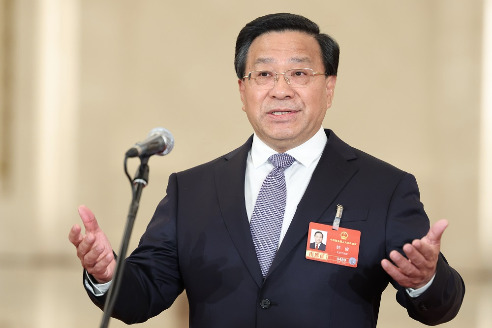
China has announced ambitious plans to accelerate comprehensive rural revitalization and agricultural modernization throughout its forthcoming 15th Five-Year Plan period (2026-2030). The announcement came from Minister of Agriculture and Rural Affairs Han Jun during ministerial interviews following the second plenary meeting of the fourth session of the 14th National People’s Congress in Beijing.
Minister Han emphasized the government’s commitment to aligning development initiatives with rural residents’ aspirations for improved quality of life. “We need to align with farmers’ aspirations for a better life by leveraging resources and tailoring measures to local conditions to build livable and prosperous rural communities,” Han stated during the high-profile government session.
The ministry has established a sophisticated nationwide monitoring and assistance system designed to prevent regression into poverty. This system, which operates across all previously impoverished villages and counties, utilizes advanced data sharing capabilities among government departments. Through on-site inspections and big-data analytics, the mechanism enables precise identification of poverty risks, ensuring early detection and targeted intervention.
Employment generation remains a cornerstone of China’s rural development strategy. Currently, approximately 70% of income for formerly impoverished households derives from employment opportunities. In the previous year, 32.8 million people from these households secured employment, with over 14 million finding work within their home provinces and counties. The ministry plans to intensify skills training programs and employment services to maintain job stability and income security for vulnerable populations.
Concurrently, all 832 counties that have emerged from poverty have developed distinctive local industries over the past five years. The government now aims to enhance the quality and efficiency of these industries, particularly by strengthening entire industrial chains to maximize income generation for rural communities. This industrial development approach forms part of China’s broader strategy to achieve sustainable rural development and prevent widespread return to poverty through development-based assistance and enhanced social security systems.