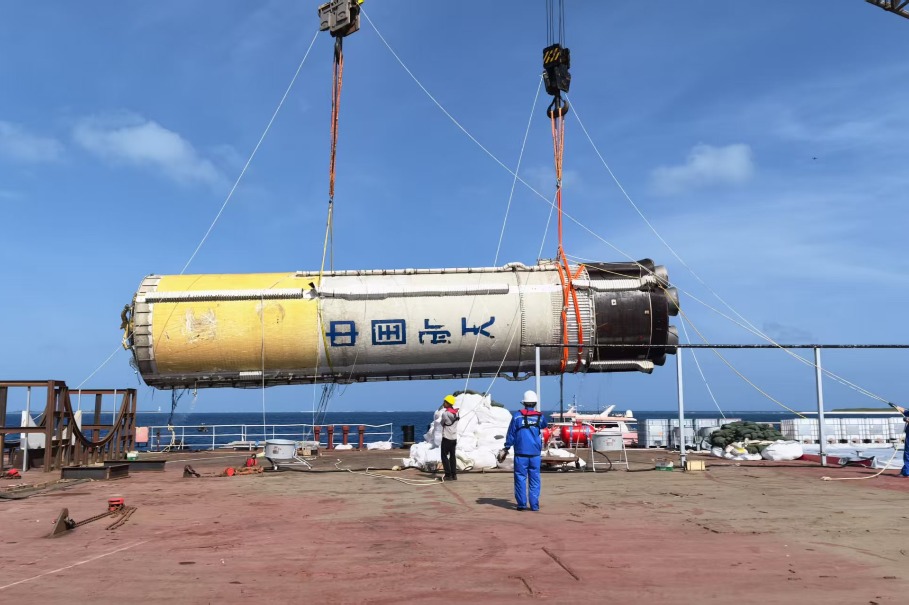
China has reached a significant milestone in its space exploration program by successfully retrieving the first-stage booster of its Long March 10 launch vehicle from maritime waters. This unprecedented achievement represents the nation’s first successful sea recovery operation for a rocket’s primary propulsion component.
The recovery operation, conducted by China’s specialized maritime search and retrieval team, demonstrates substantial advancements in rocket reusability technology—a critical factor in reducing space mission costs and increasing launch frequency. The successful retrieval from sea conditions presents additional technical challenges compared to land-based recoveries, requiring precise trajectory prediction, marine navigation capabilities, and specialized recovery equipment.
This accomplishment directly supports China’s ambitious manned lunar mission program, for which the Long March 10 rocket serves as a primary launch vehicle. The recovered booster will provide valuable engineering data for researchers analyzing performance characteristics, structural integrity, and potential refurbishment requirements for future reusable rocket systems.
The technological breakthrough positions China among a select group of nations capable of marine rocket recovery operations, potentially transforming the economic model of space access through reusable launch systems. This achievement follows recent successful flight tests related to China’s manned lunar exploration objectives, indicating accelerated progress in the country’s space capabilities.