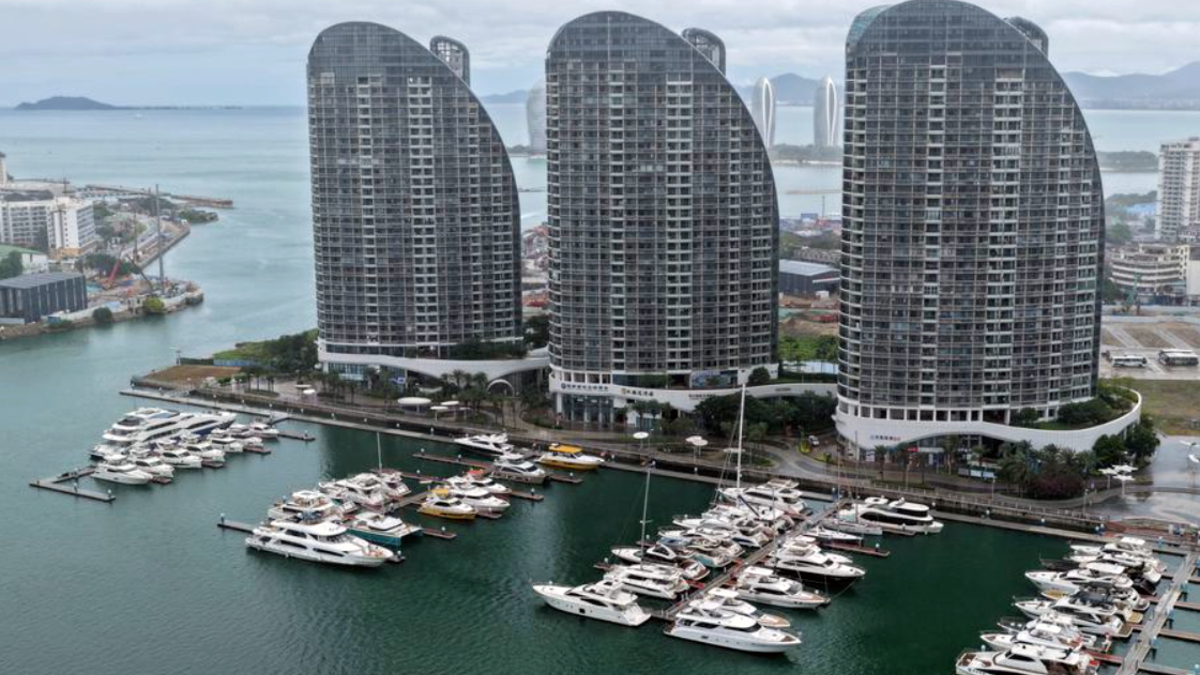
China has initiated a transformative economic experiment by establishing Hainan Island as a fully operational free trade port (FTP), implementing a groundbreaking customs framework that has generated contrasting interpretations among analysts worldwide. The scheme, activated on December 18, introduces a sophisticated three-tier model characterized as “opening the front line, controlling the second line, and enabling free internal movement.”
The strategic architecture establishes Hainan’s external boundary as the ‘front line’ where zero-tariff policies apply for imported raw materials and production equipment. Meanwhile, the ‘second line’ constitutes the customs border with mainland China, featuring enhanced monitoring mechanisms to prevent market disruption. Internally, the island facilitates unrestricted movement of people, creating a unique economic ecosystem.
Manufacturers operating within Hainan now benefit from tariff-free importation of materials, with finished products qualifying for mainland market access provided they achieve 30% local value-added content. The initiative simultaneously expands Hainan’s duty-free shopping privileges, allowing both domestic and international consumers with recent overseas travel records to purchase luxury goods tax-free, subject to an annual spending limit of 100,000 yuan (approximately $14,000).
Chinese authorities have outlined a comprehensive development timeline: establishing fundamental policy frameworks by 2025, maturing institutional systems by 2035, and achieving international recognition as a high-standard free trade port by mid-century. Proponents argue the FTP will attract foreign direct investment, stimulate external trade, and position Hainan as a strategic gateway connecting China with global markets, particularly ASEAN nations.
Professor Yu Fenghui of Huazhong University of Science and Technology emphasizes the scheme’s distinctive approach: “This isn’t merely replicating Singapore or Dubai. The critical differentiation lies in second-line control mechanisms, where authorities have established ten regulatory ports implementing smart inspections achieving clearance within approximately two minutes—creating an arbitrage firewall while maintaining openness.”
The policy has expanded zero-tariff coverage from 21% to 74% of imported items, significantly reducing production costs. Industry analysts anticipate major benefits for high-end manufacturing, modern services, and digital economy sectors, with aircraft maintenance, renewable energy vehicles, healthcare, education, and data-driven industries identified as primary beneficiaries.
However, international commentators express skepticism regarding the initiative’s viability amid deteriorating China-West relations. Canada-based analyst Ngan Shun-kau notes: “Beijing’s assertive diplomacy has precipitated widespread deterioration of external relationships. American and advanced economy capital is disengaging, foreign enterprises are departing, and China’s external trade is diminishing—precisely the elements a free trade zone requires to succeed.”
Geopolitical dimensions further complicate the assessment, as the Hainan FTP represents China’s strategic response to evolving trade dynamics following US tariff implementations. Some observers note that manufacturers serving US markets are more likely to relocate to Southeast Asia than Hainan, while established industrial hubs in the Pearl and Yangtze River Deltas retain competitive advantages.
Long-term objectives include using Hainan as a testing ground for high-standard international trade agreements like the Comprehensive and Progressive Agreement for Trans-Pacific Partnership (CPTPP) and Digital Economy Partnership Agreement (DEPA). Experts emphasize that Hainan must enhance its service sectors and align more closely with global regulatory standards to fulfill its potential as China’s experimental frontier in economic liberalization.