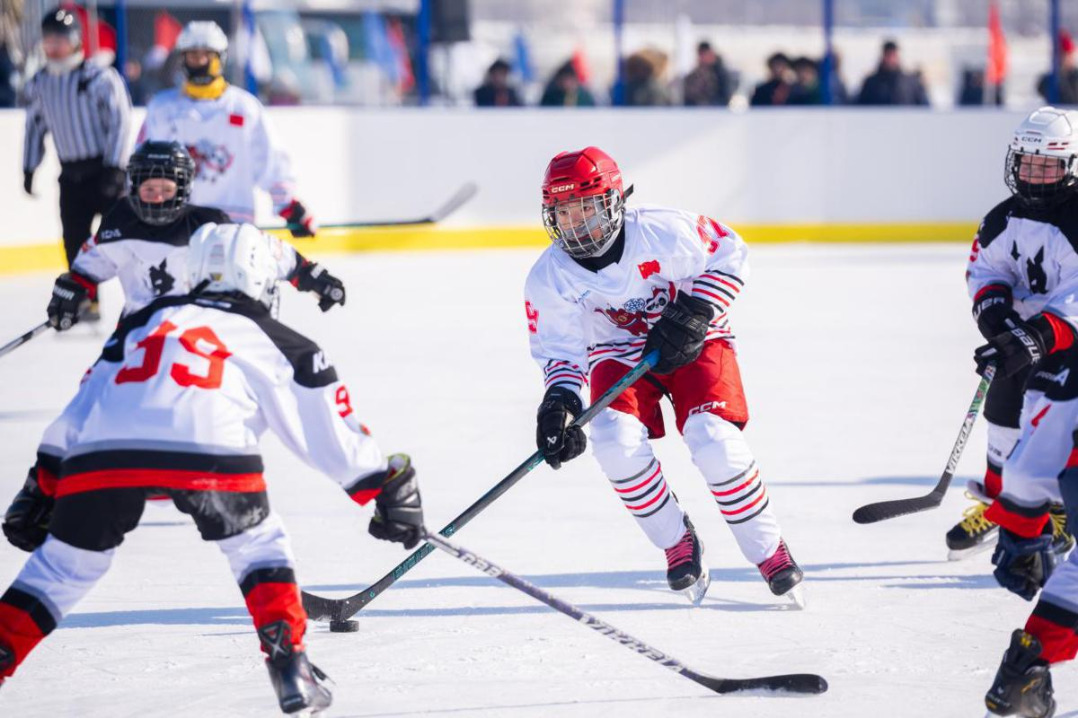
The frozen expanse of the Heilongjiang River transformed into a vibrant arena of international camaraderie as the 2026 China-Russia International Winter Sports Series commenced this past Saturday. Spanning the natural border between Heihe in China’s Heilongjiang province and Russia’s Blagoveshchensk, the two-day spectacle showcased an impressive array of winter athletic competitions and cultural performances that drew participants and spectators from both nations.
The opening ceremony featured mesmerizing displays of athletic artistry, with young Chinese figure skaters executing graceful routines on the natural ice surface. Russian dance troupes complemented these performances with vibrant cultural presentations, creating a symphony of cross-border artistic exchange. The event, forming part of the broader Heilongjiang Ice and Snow Sports Super League, immediately transitioned to competitive action with a fiercely contested friendship ice hockey match between Chinese and Russian athletes.
Beyond traditional winter sports, the festival introduced adrenaline-fueled innovations including an International Ice and Snow Auto Race that saw modified vehicles executing precision drifts on specially prepared frozen tracks. The roaring engines and spectacular maneuvers created a striking contrast against the serene winter landscape. Winter swimming enthusiasts braved the frigid waters while artists demonstrated ice painting techniques, transforming the river into a dynamic canvas of human achievement and creativity.
Heihe, strategically positioned as a border city, has consistently leveraged sports diplomacy to strengthen Sino-Russian relations. This event continues a tradition of cross-border initiatives that previously included the China-Russia Cultural Fair, swimming crossings of the Heilongjiang River, and international marathon events. The frozen river, typically a symbol of geographical separation, temporarily became a platform for mutual understanding and shared passion for winter sports, demonstrating how athletic competition can transcend political and cultural boundaries.