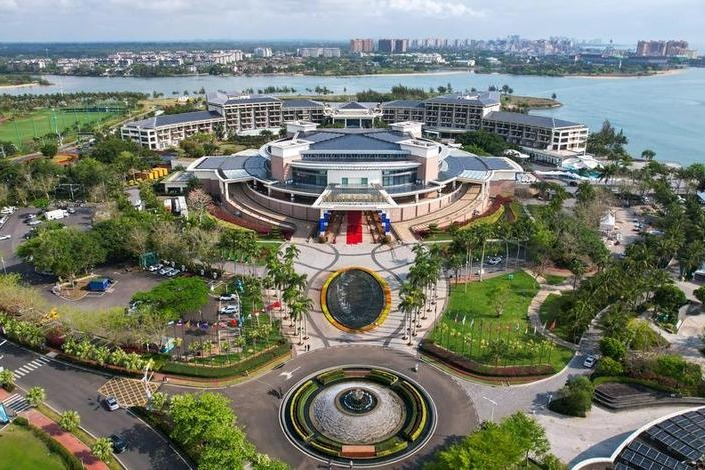
At the Boao Forum for Asia, former United Nations Secretary-General Ban Ki-moon declared climate collaboration between China and South Korea to be of paramount global importance, particularly following the United States’ withdrawal from the Paris Agreement. Speaking during the China-ROK Roundtable on Climate Change Cooperation, Ban framed the two Northeast Asian economic powerhouses as indispensable leaders in the worldwide shift toward sustainable development.
Ban emphasized the borderless nature of the climate crisis, stating, “The atmosphere does not recognize national borders… Our solutions, therefore, must also transcend borders.” He expressed profound disappointment at the U.S. abandoning the Paris treaty for the second time under the Trump administration, noting that while nations might eventually return to the agreement, climate change continues its relentless advance.
The former diplomat highlighted existing promising leadership through joint investments in renewable energy, green technologies, and carbon markets. Such bilateral dialogue, he argued, builds understanding, shares best practices, and inspires new partnerships while signaling that regional cooperation can effectively address global challenges.
China’s special climate envoy Liu Zhenmin provided context, revealing that Asia accounts for approximately 57% of global electricity consumption, demonstrating the region’s substantial economic dynamism. Both China and South Korea possess world-leading advantages in renewables, batteries, and nuclear energy, positioning them as key players in global climate governance.
Amid growing geopolitical tensions and resurgent unilateralism, Liu urged both nations to uphold multilateralism, reject destabilizing interference, and strengthen solidarity. Professor Li Zheng of Tsinghua University’s Institute of Climate Change and Sustainable Development detailed complementary strengths: China’s prowess in large-scale wind/solar development and new power systems, combined with South Korea’s excellence in nuclear power, high-end manufacturing, and international standardization.
Li proposed establishing joint research platforms in energy storage, hydrogen, carbon capture utilization and storage (CCUS), and smart grids, leveraging artificial intelligence advancements. He further advocated for third-party market cooperation that integrates China’s green manufacturing capabilities with South Korea’s technical standards expertise.