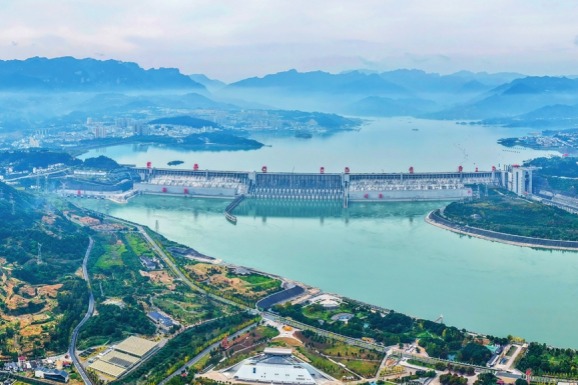
China’s Yangtze River Economic Belt has demonstrated remarkable progress in both economic expansion and environmental restoration over the past decade, according to official reports. National Development and Reform Commission Vice Chairman Wang Changlin revealed at a State Council Information Office briefing that the region’s economic output has more than doubled since 2015 while simultaneously achieving dramatic improvements in water quality.
The comprehensive data shows water quality rated ‘fairly good’ (Grade III or above) surged from 67% in 2015 to an impressive 96.5% by 2025. This ecological transformation occurred alongside substantial economic growth, with the belt’s contribution to national GDP expanding from 42.2% to 47.3% during the same period.
This progress coincides with the tenth anniversary of President Xi Jinping’s landmark 2016 Chongqing conference, where he established the principle of “prioritizing well-coordinated environmental protection and avoiding excessive development” along the vital waterway. President Xi emphasized the Yangtze’s unique ecosystem requires careful stewardship, stating that ecological restoration must take precedence over large-scale development projects.
The economic belt encompasses nine of the eleven regions through which the Yangtze flows, plus additional provinces containing its tributaries. Through concerted efforts addressing industrial, agricultural, and shipping pollution, officials have essentially eliminated black and odorous water bodies in prefecture-level cities along the river.
Most notably, the main stream of the Yangtze has undergone a complete transformation from containing sections of Grade V (lowest quality) water to maintaining consistent Grade II quality throughout its entire course—a testament to China’s successful integration of economic development and environmental conservation.