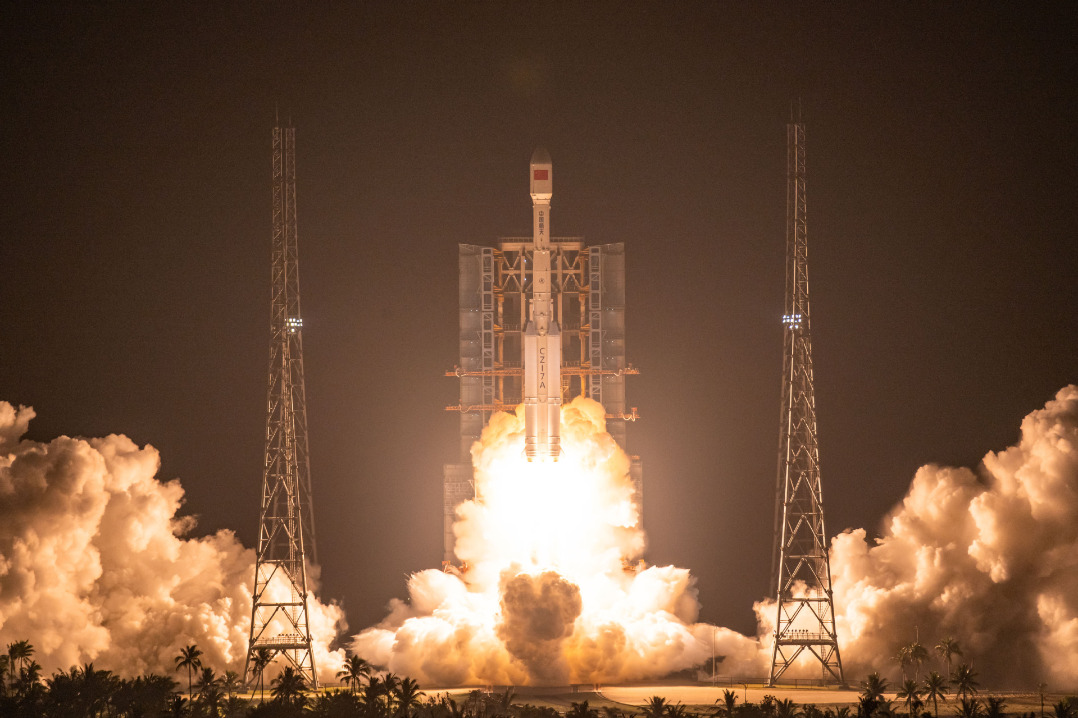
China has marked a significant milestone in its space technology program with the successful deployment of two advanced demonstration satellites. The launch occurred at 6:40 AM on December 31, 2025, utilizing a Long March 7A carrier rocket that ascended from the Wenchang Space Launch Center in Hainan province.
The mission, orchestrated by China Aerospace Science and Technology Corp (CASC), delivered the Shijian 29A and Shijian 29B satellites into their predetermined orbits. These sophisticated spacecraft represent cutting-edge advancements in space-based technology, with both satellites specifically designed to demonstrate innovative methodologies for space-based target detection systems.
The Shijian 29A satellite was developed by the Shanghai Academy of Spaceflight Technology, a subsidiary of CASC, while its counterpart, Shijian 29B, was engineered by the Innovation Academy for Microsatellites, operating under the Chinese Academy of Sciences. This collaborative effort highlights China’s integrated approach to space technology development.
The Long March 7A rocket, manufactured by the China Academy of Launch Vehicle Technology, boasts impressive technical specifications with a liftoff weight of 573 metric tons and a core-stage diameter of 3.35 meters. This launch vehicle demonstrates substantial payload capacity, capable of delivering spacecraft weighing up to 7 tons to geosynchronous transfer orbit.
This mission represents China’s 93rd space endeavor of the year and the 623rd overall flight of the Long March rocket series, underscoring the nation’s consistent and growing presence in space technology development and orbital operations.