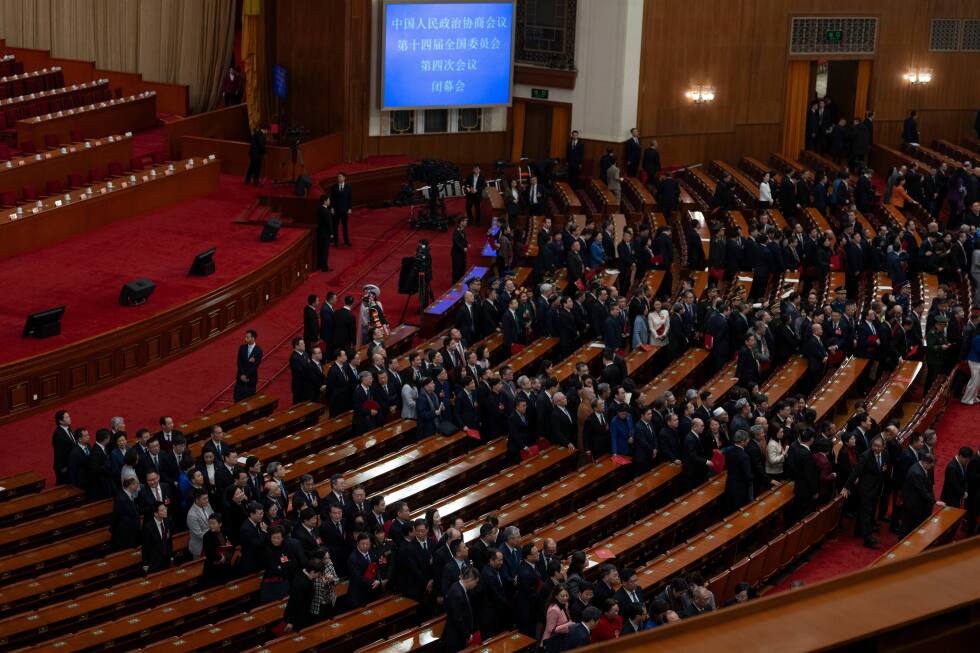
As international tensions escalate in the Middle East, China has demonstrated unwavering focus on its domestic agenda, using its recently concluded National People’s Congress to reinforce its commitment to technological advancement and economic transformation. The annual legislative gathering, which serves as China’s premier political event, formally approved a comprehensive five-year plan prioritizing cutting-edge innovation over immediate consumption stimulus.
The blueprint, passed with near-unanimous support (2,758 votes for, one against, and two abstentions), positions artificial intelligence, robotics, and other emerging technologies as central to China’s strategy for achieving superpower status in the 21st century. While acknowledging the need to boost domestic spending, the plan maintains technology development as the primary allocation for government resources, with consumption measures expected to evolve gradually through expanded social security and healthcare benefits.
Concurrent with its technological push, the legislature enacted several significant laws, including controversial ethnic unity legislation that critics argue promotes assimilation over cultural autonomy. The government maintains these measures foster national cohesion and shared economic development among ethnic groups.
Environmental targets within the plan drew international scrutiny for their conservative approach, focusing on reducing emissions intensity rather than absolute carbon reductions. The 17% intensity reduction target could permit overall emissions to increase by approximately 3% as the economy expands—a departure from global practices favoring absolute reduction commitments.
The Congress also addressed workplace reform, with proposals for enhanced ‘right to rest’ protections gaining substantial social media traction. These included measures to limit after-hours work communications and increase minimum statutory leave from five to ten days, reflecting concerns about intense workplace competition while potentially stimulating domestic consumption through increased leisure time.
Amid these developments, Chinese officials characterized their steady development approach as providing ‘stability and certainty’ to a turbulent global landscape, with Foreign Minister Wang Yi declaring China is ‘forging ahead at full speed in building a great country.’