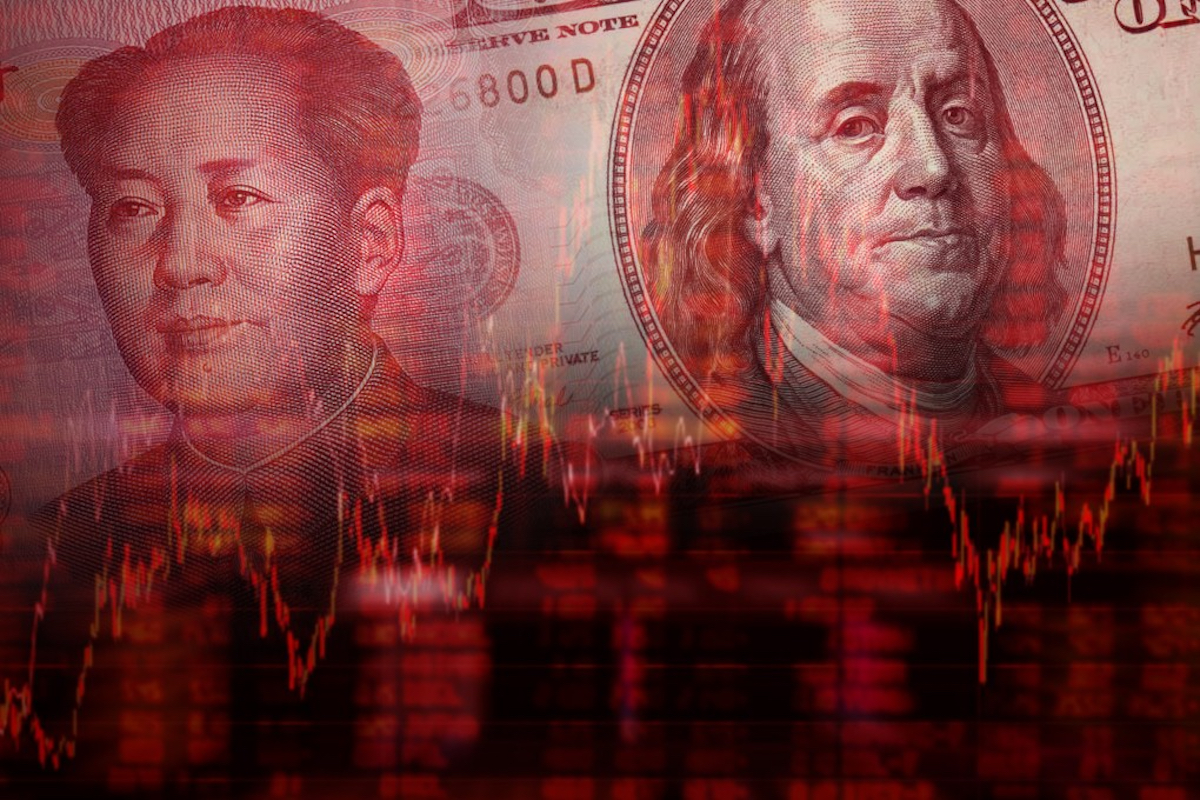
Chinese financial regulators have issued directives to the nation’s largest commercial banks to curtail their exposure to US Treasury securities, signaling a strategic shift in how Asian capital perceives American debt instruments. This measured intervention into global finance mechanisms reveals growing regional concerns about concentration risks emanating from Washington.
According to financial sector sources, Chinese authorities have verbally instructed major banking institutions to avoid increasing their already substantial positions in US government debt and to gradually reduce holdings where exposure is deemed excessive. Notably, these guidelines contain no specific targets or deadlines and explicitly exclude China’s official state foreign exchange reserves.
As of September, Chinese banks held approximately $298 billion in dollar-denominated bonds, though the exact Treasury allocation remains unspecified. The regulatory move reflects concerns about volatility rather than creditworthiness, highlighting emerging doubts about the stability of what was long considered the world’s safest financial asset.
For decades, Asian financial institutions treated US Treasuries as foundational assets—highly liquid, deeply traded, and presumed insulated from political manipulation. They served as critical balance sheet stabilizers during periods of market stress throughout the region from Tokyo to Singapore.
The transformation stems not from changes in the instruments themselves but from evolving perceptions of their issuer. The current US administration has pursued more openly political fiscal policies, embraced expansionary deficits as permanent features rather than temporary necessities, and discussed the dollar as a tactical instrument for advancing domestic priorities including tariff implementations.
When volatility metrics for US Treasuries recently fell to multi-year lows, Chinese regulators recognized the historical pattern where periods of unusual stability often precede sharp market repricing. This understanding has triggered a recalibration of risk assessment frameworks across Asian financial institutions.
While foreign holdings of US Treasuries reached a record $9.4 trillion in November and auctions remain well-subscribed, China’s influential position as Asia’s largest capital allocator means its risk reassessment sends powerful signals throughout the region. Japanese banks, Southeast Asian sovereign funds, and regional insurers typically incorporate such directional shifts into their own stress testing models and investment assumptions.
The strategic adjustment represents a quiet but significant evolution in global capital flows—not through dramatic exits but through marginal buyers stepping back, concentration being trimmed at the edges, and accumulation slowing gradually. This measured approach ultimately reshapes demand more effectively than wholesale divestment ever could.