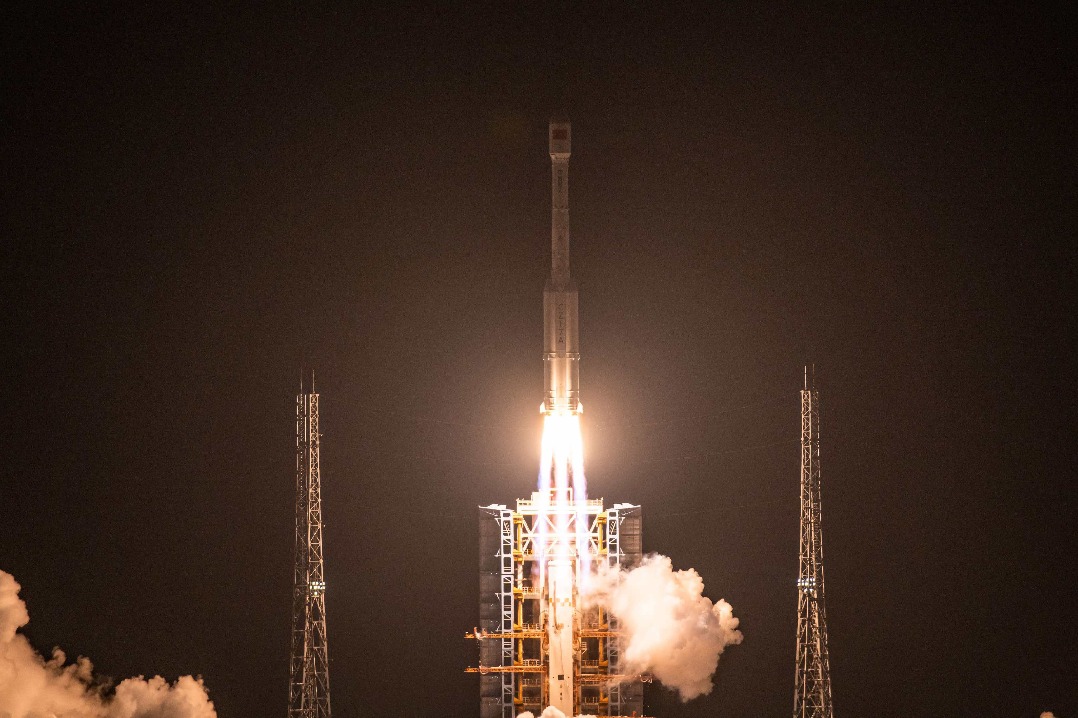
China’s aerospace program has marked another significant achievement with the successful deployment of two advanced technology demonstration satellites. On Wednesday, December 31, 2025, at precisely 6:40 AM Beijing Time, a Long March 7A carrier rocket roared to life from the Wenchang Space Launch Site in Hainan province, carrying the Shijian-29A and Shijian-29B satellites into predetermined orbits.
The newly launched satellites represent China’s continued advancement in space-based monitoring systems, specifically designed for experimental verification of cutting-edge space target detection technologies. This mission underscores China’s growing capabilities in space domain awareness and orbital monitoring applications.
This launch constitutes the 623rd flight mission within the Long March rocket family, demonstrating the reliability and frequent launch cadence of China’s space transportation system. The coastal Wenchang facility continues to serve as a strategic launch site for China’s ambitious space program, leveraging its geographical advantages for orbital deployments.
The successful mission adds to China’s expanding constellation of specialized satellites, enhancing the nation’s technological footprint in space while contributing to the development of next-generation space surveillance infrastructure. The experimental nature of these satellites suggests they will serve as testbeds for future operational systems in China’s comprehensive space strategy.