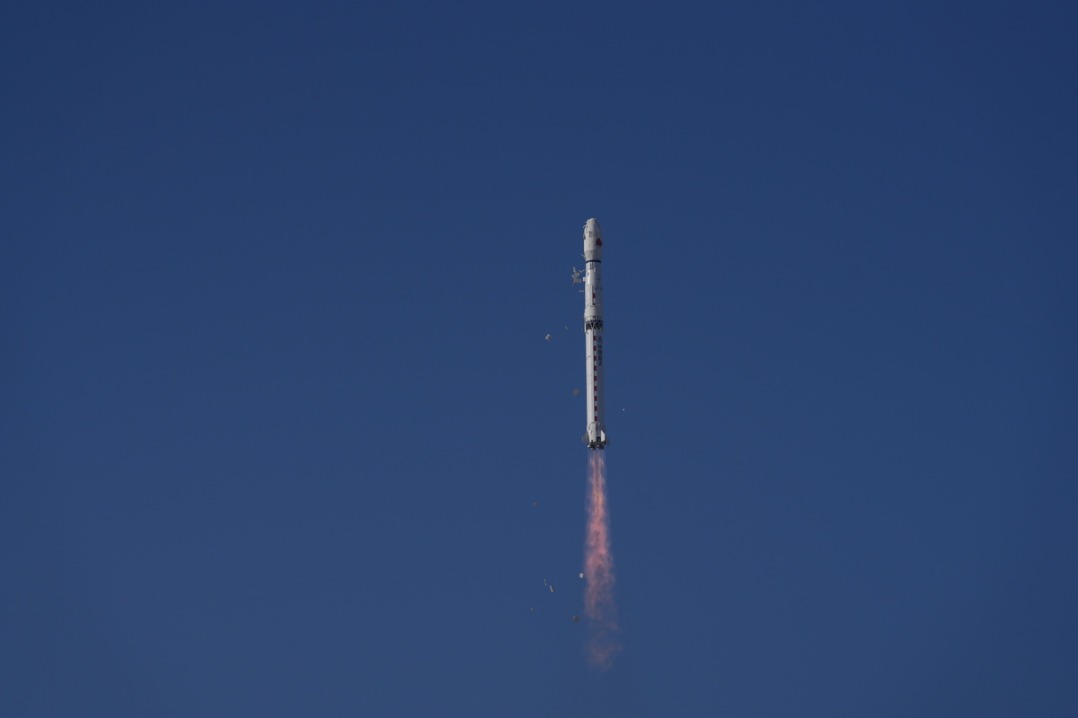
China has successfully deployed its latest Earth observation satellite, marking another milestone in the nation’s ambitious space program. The Ziyuan III 04 spacecraft ascended into orbit aboard a Long March 4B rocket at precisely 11:17 am Beijing Time on December 16, 2025, from the Taiyuan Satellite Launch Center in Shanxi Province.
This launch represents the 617th mission in the storied history of China’s Long March rocket series, demonstrating the program’s remarkable consistency and technical maturity. The Ziyuan (which translates to ‘Resources’) satellite family specializes in high-resolution terrestrial imaging with applications spanning environmental monitoring, urban planning, agricultural assessment, and disaster mitigation.
The Taiyuan facility, situated in northern China’s mountainous region, has established itself as a premier launch site for polar-orbiting satellites. The successful deployment continues China’s pattern of regular space missions that support both scientific research and practical Earth observation needs. Space technology experts note that the Ziyuan series contributes significantly to global environmental monitoring efforts while advancing China’s capabilities in remote sensing technology.
This achievement occurs within the broader context of China’s expanding space infrastructure, which includes navigation satellites, communication networks, and crewed space stations. The continuous development of space assets reflects China’s strategic commitment to technological sovereignty and its growing role in space exploration and Earth sciences.