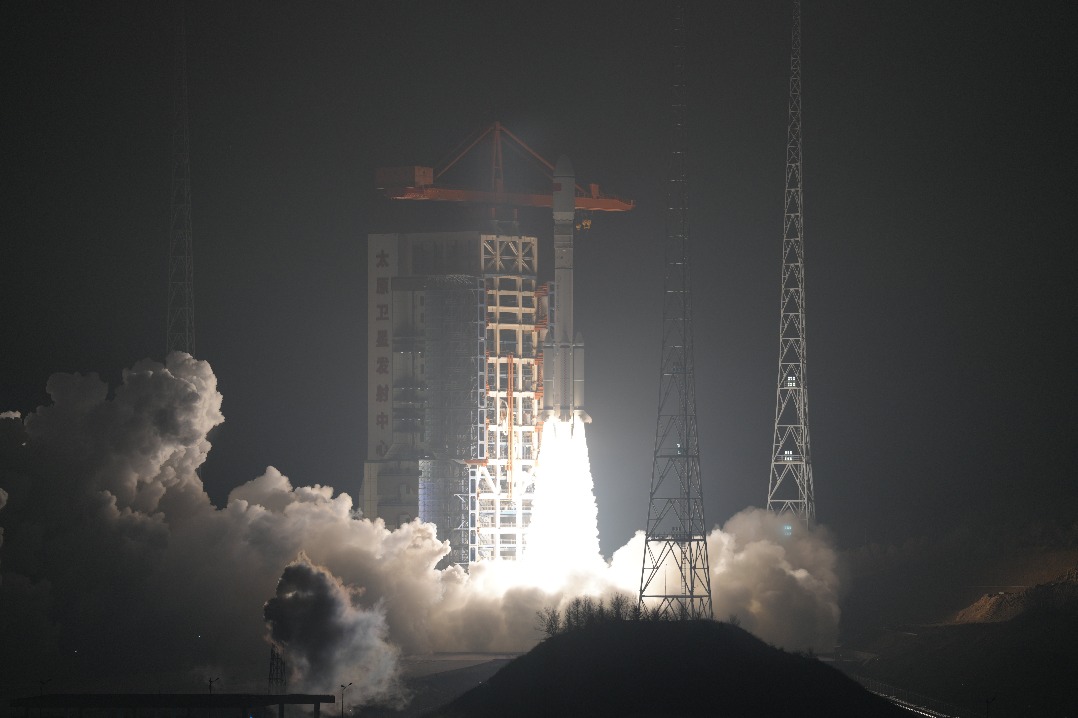
On the morning of April 9, 2026 Beijing time, China successfully carried out a new orbital launch mission at the Taiyuan Satellite Launch Center located in northern China’s Shanxi Province, sending a freshly developed batch of low-orbit internet satellites into their pre-planned operational orbit. The mission utilized an upgraded variant of the Long March 6 carrier rocket, a workhorse of China’s domestic commercial and scientific launch fleet that has been repeatedly modified and optimized over years of operational use to improve payload capacity and launch reliability for low-orbit satellite constellation deployment. This specific satellite cluster marks the 21st batch of satellites launched for China’s expanding low-orbit internet constellation, a infrastructure project designed to deliver global high-speed internet coverage, particularly to remote and underserved regions that lack access to consistent terrestrial connectivity. The launch also marks a key milestone for China’s entire Long March carrier rocket program, standing as the 637th flight mission completed by the Long March series, the country’s most long-serving and versatile family of launch vehicles. Since the first Long March launch in 1970, the rocket series has supported nearly all of China’s space initiatives, from crewed space missions and lunar exploration to commercial satellite deployment, cementing its reputation as a reliable foundation for the country’s growing space sector. This latest launch continues China’s steady cadence of low-orbit satellite deployment, as countries around the world expand their space-based internet infrastructure to meet growing global demand for connectivity from aviation, maritime, remote industrial, and rural user bases.