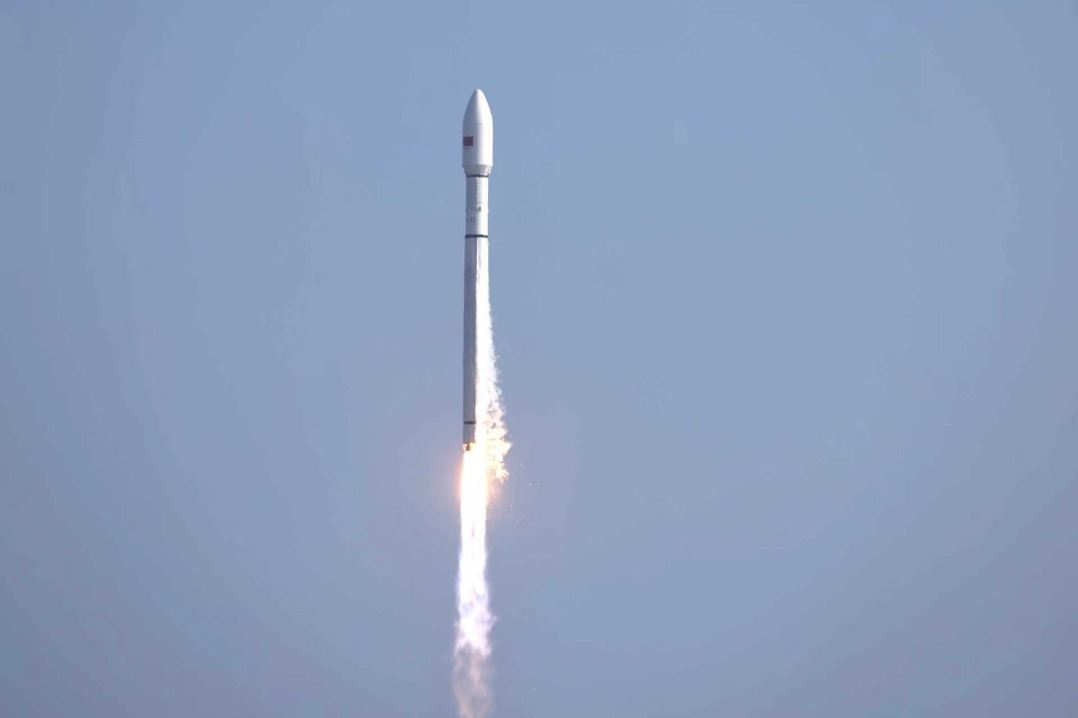
China has advanced its ambitious space-based internet network with the successful deployment of a new satellite cluster via the Long March 12 carrier rocket. The launch occurred at 3:48 PM local time on Monday from the Hainan International Commercial Aerospace Launch Center in Wenchang, marking a significant milestone in China’s commercial space capabilities.
Beijing-based GalaxySpace, the satellite manufacturer, confirmed the successful orbital insertion of what constitutes the 19th batch of low-orbit hardware for China’s national space internet initiative. The newly deployed satellites feature sophisticated technology including advanced phased array systems, millimeter-wave antennas, and integrated electronics, enhancing the network’s communication capabilities.
This launch expands China’s operational satellite constellation to over 150 units in low Earth orbit. The complete system, designed to provide global internet coverage, is projected to eventually comprise approximately 13,000 satellites, positioning it as a direct competitor to SpaceX’s Starlink network.
The mission also showcased the technical prowess of the Long March 12, developed by the Shanghai Academy of Spaceflight Technology. Notably, the rocket features a 3.8-meter diameter—breaking from China’s standard 3.35-meter rocket design established in the 1960s. Standing at 62.6 meters, it ranks as the second tallest rocket in China’s fleet, surpassed only by the Long March 5 at 62.8 meters.
This achievement represents China’s seventh space mission of 2026 and the 628th overall flight of the Long March rocket series, demonstrating the country’s accelerating pace in space infrastructure development.