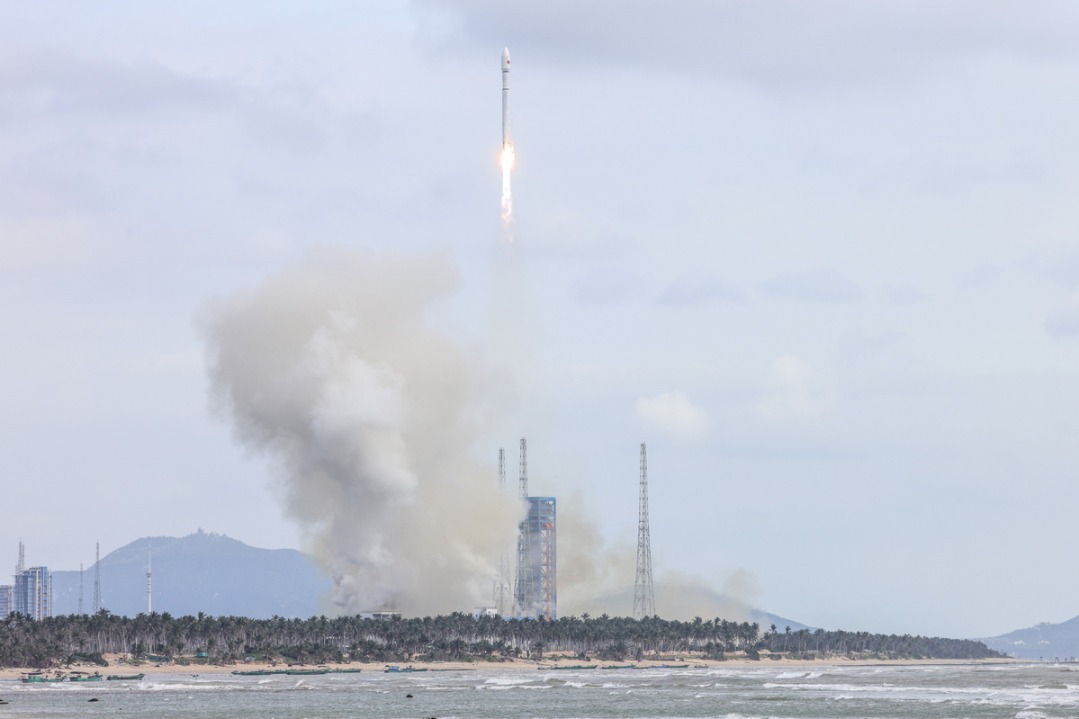
China has successfully deployed its 13th group of low Earth orbit (LEO) internet satellites, marking another significant step in the development of its expansive space-based internet network. The launch took place on November 10, 2025, at 10:41 am from the Hainan International Commercial Aerospace Launch Center in Wenchang, Hainan province. The satellites were carried into orbit by the Long March 12 carrier rocket, a state-of-the-art model designed by the Shanghai Academy of Spaceflight Technology, a subsidiary of China Aerospace Science and Technology Corp (CASC).
The Long March 12, the 22nd member of the Long March family, stands out as the first Chinese rocket with a diameter of 3.8 meters, breaking away from the traditional 3.35-meter standard established in the 1960s. Standing at 62.6 meters tall, it is the second tallest rocket in China’s fleet, only slightly shorter than the Long March 5. This launch represents the 72nd space mission for China and the 607th flight of the Long March rocket series.
This latest deployment is part of China’s ambitious plan to create a mega-constellation of approximately 13,000 satellites in low Earth orbit, aimed at providing global internet coverage. Often compared to SpaceX’s Starlink, this project underscores China’s growing capabilities in space technology and its commitment to enhancing global connectivity. With 12 batches of satellites already launched this year, China is rapidly advancing toward the completion of its space-based internet system.