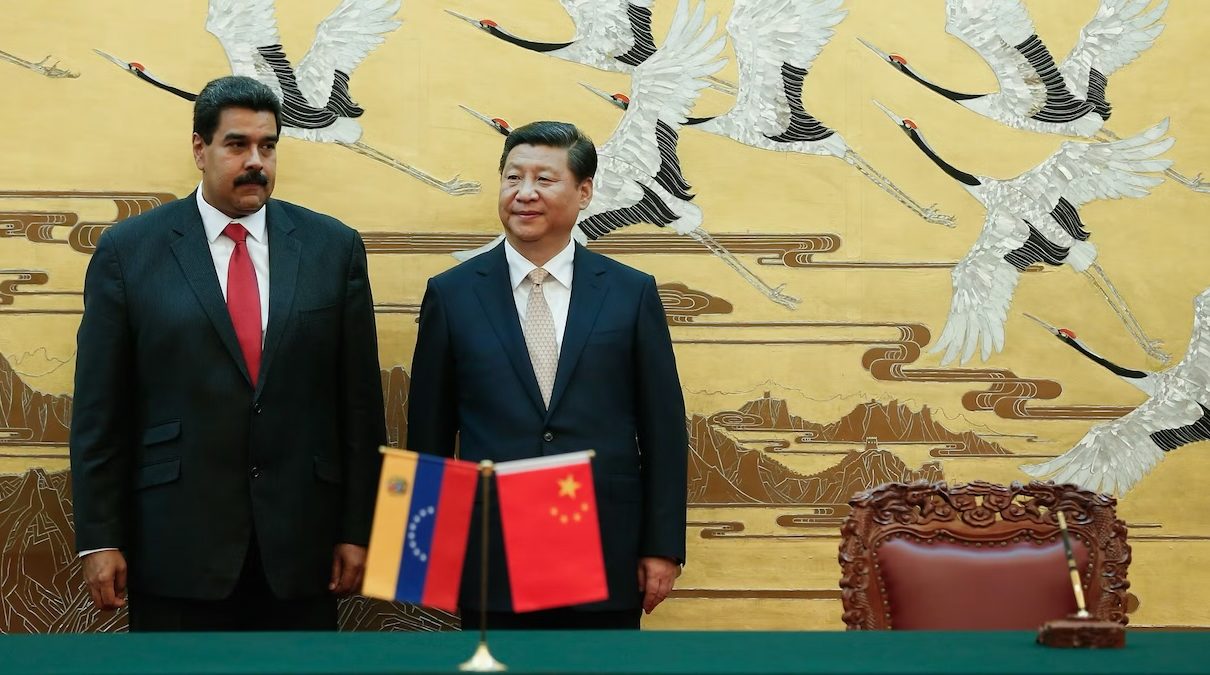
The Trump administration’s escalating campaign against Venezuela has reached a critical juncture with the U.S. president declaring the nation’s airspace ‘closed’—a move historically associated with impending military interventions. This development has triggered significant geopolitical repercussions, particularly from China, which has firmly opposed the declaration as a violation of international norms and national sovereignty.
Chinese Foreign Ministry spokesperson Lin Jian articulated Beijing’s position on December 3, emphasizing rejection of any pretext for interfering in Venezuela’s internal affairs. This stance aligns with China’s broader strategy to expand its influence across Latin America, a region traditionally dominated by U.S. interests. The Trump administration’s threats potentially jeopardize China’s substantial economic and political investments throughout the hemisphere.
China’s deepening ties with Latin America represent a decades-long expansion, with Brazil exemplifying this strategic partnership. Despite initial expectations that President Jair Bolsonaro’s right-wing government would align with Washington, China emerged as Brazil’s largest trading partner by 2020, accounting for over 30% of its exports. This relationship has only strengthened under Bolsonaro’s successor, Luiz Inácio Lula da Silva, particularly as the U.S.-China trade war made Brazil a crucial alternative source of agricultural products like soybeans.
Venezuela itself has become increasingly dependent on Chinese markets, with China becoming the primary destination for Venezuelan oil. Current estimates suggest China purchases approximately 268,000 barrels daily, though actual figures may be higher due to mislabeling practices aimed at circumventing U.S. sanctions. This energy relationship supports China’s efforts to diversify its natural resource sources and maintain manufacturing advantages.
The White House’s December 2 statement reaffirming commitment to the Monroe Doctrine—and introducing a new ‘Trump Corollary’ emphasizing U.S. control in the hemisphere—signals a deliberate challenge to Chinese influence. However, China’s primarily economic engagement in Latin America remains transactional rather than alliance-based, creating potential strains with regional partners who might expect stronger support during crises.
Despite military non-interventionism, China stands to benefit from increased regional tensions through expanded arms sales. Venezuela already purchases Chinese military equipment ranging from riot gear to missiles, with other nations including Argentina, Bolivia, Ecuador following similar paths. As the Trump administration recalibrates U.S. military presence per its National Security Strategy, China carefully monitors developments that could affect its carefully cultivated influence in Latin America.