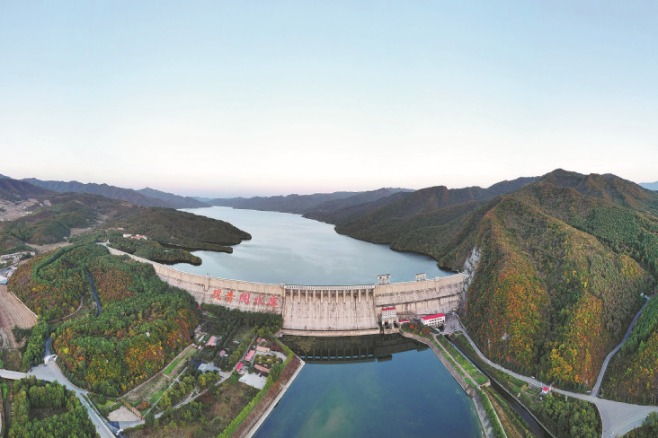
China has channeled an unprecedented 5.68 trillion yuan ($800 billion) into water conservancy projects throughout its 14th Five-Year Plan period (2021-2025), marking a transformative investment in national water security and economic stabilization. The substantial funding represents four consecutive years of exceeding the trillion-yuan threshold in annual water management investments.
Vice-Minister of Water Resources Chen Min, speaking at a State Council Information Office press conference in Beijing, highlighted the dual economic and infrastructural benefits of this massive undertaking. The investments have served as a powerful economic stabilizer while simultaneously addressing critical water security challenges across the nation.
In 2025 alone, water conservancy initiatives generated 3.15 million employment opportunities through 1.28 trillion yuan in allocated funding. This job creation aspect has proven particularly valuable in maintaining employment stability during periods of economic transition.
The strategic allocation of resources has yielded tangible improvements in China’s water infrastructure network. Authorities have successfully reinforced 17,998 aging and high-risk reservoirs while implementing comprehensive river management programs across 3,741 small and medium-sized waterways.
These enhancements have produced measurable results: a 31.8 billion cubic meter expansion in national water supply capacity, 22.3 billion cubic meters in additional reservoir storage, and irrigation access extended to over 3.5 million hectares of agricultural land. The improvements significantly bolster China’s flood control capabilities while addressing water scarcity concerns in various regions.
The sustained investment reflects China’s commitment to building climate-resilient infrastructure and ensuring water security amid increasing climate volatility. The comprehensive water network development aligns with broader national strategies for agricultural stability, urban water supply reliability, and disaster prevention.