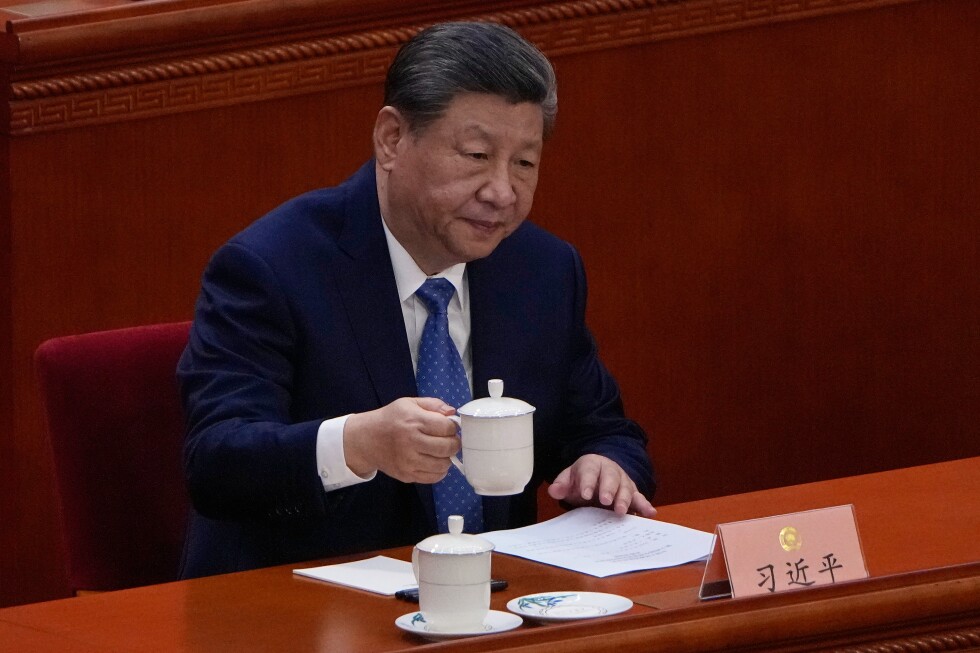
WASHINGTON — As the United States grapples with escalating tensions in the Middle East, China has adopted a strategically nuanced position regarding President Trump’s request for assistance in reopening the critical Strait of Hormuz. Analysts suggest Beijing is leveraging the geopolitical situation to its advantage while carefully managing diplomatic relations.
The ongoing military engagement in Iran, now entering its third week, has created significant challenges for Washington as oil shipments through the vital waterway remain suspended. Despite appeals to allies, the U.S. finds itself increasingly isolated in its efforts to secure the strait, raising concerns that America’s principal strategic competitor stands to gain from the prolonged conflict.
Ali Wyne, senior research and advocacy adviser for U.S.-China relations at the International Crisis Group, observed: “President Trump’s decision to postpone his long-awaited summit with President Xi Jinping reveals a fundamental miscalculation of Operation Epic Fury’s consequences. What was intended as a demonstration of U.S. power has instead exposed limitations in American influence, compelling Washington to seek assistance from its chief geopolitical rival in managing a self-created crisis.”
The Chinese Foreign Ministry offered a deliberately ambiguous response regarding potential assistance with the strait, instead reiterating calls for “all parties to immediately cease military operations, prevent further escalation of tensions, and avoid additional disruption to the global economy from regional instability.”
Beijing, which had never formally confirmed Trump’s planned March 31 state visit, has indicated willingness to reschedule through diplomatic channels while clarifying that the postponement was unrelated to the Hormuz request. This careful positioning allows China to maintain diplomatic decorum while advancing its strategic interests.
According to Sun Yun, director of the China program at the Stimson Center, “The Iranian request has diminished in urgency for Chinese leadership.” Meanwhile, Chinese diplomats have actively engaged with Middle Eastern nations, promising constructive involvement in tension reduction and peace restoration efforts. Beijing has already provided $200,000 in humanitarian aid to Iran through Red Cross and Red Crescent organizations, specifically designated for families affected by the bombing of Shajarah Tayyebeh elementary school in Minab.
Brett Fetterly, managing principal in the China practice at The Asia Group, noted that the delay benefits both nations: “The current political climate makes international travel challenging for a commander-in-chief overseeing military operations. For China, additional time allows for better assessment of President Trump’s objectives and negotiation positions.”
The strategic implications extend beyond immediate diplomacy. Military asset transfers from the Indo-Pacific region to the Middle East, including rapid-response units and anti-missile defense systems, have raised concerns about American distraction from its stated Asia-focused priorities.
Zack Cooper, senior fellow at the American Enterprise Institute specializing in U.S. Asian strategy, warned: “Prolonged engagement in the Middle East, coupled with continued resource diversion from Asia, will exacerbate allies’ concerns about American distraction and capability limitations.” The postponed summit may also delay controversial arms sales to Taiwan, a persistently sensitive issue in U.S.-China relations.
Cooper added: “Chinese leadership likely welcomes the visit’s postponement and the opportunity to benefit from renewed U.S. entanglement in Middle Eastern conflicts. Most Chinese analysts and officials believe America is undermining its own position, requiring Beijing merely to avoid interference in the process.”