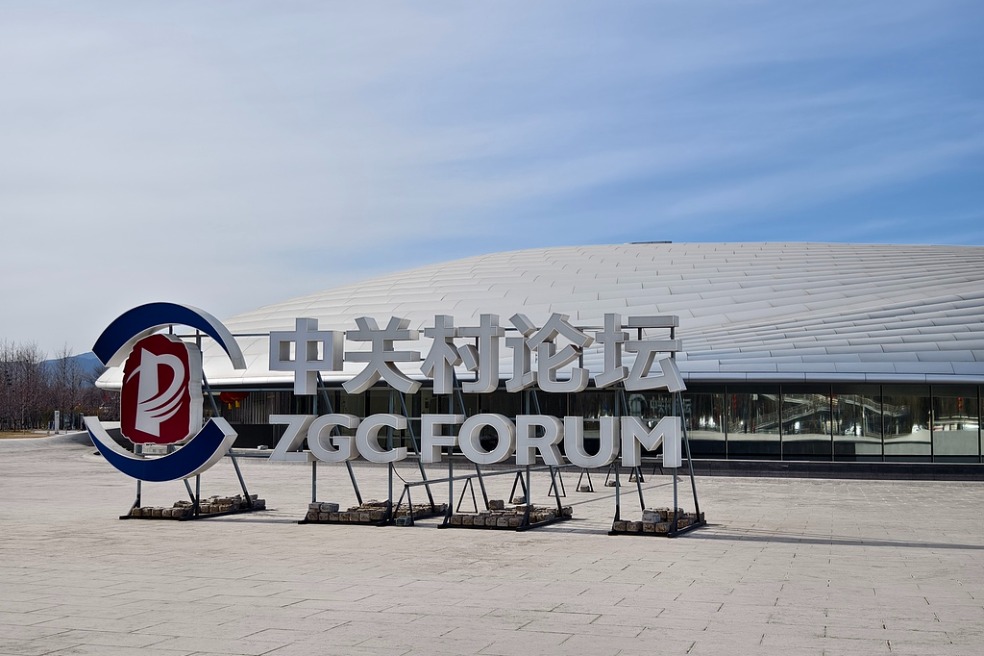
Beijing is poised to showcase its expanding role in global scientific innovation as it prepares to host the prestigious Zhongguancun Forum from March 25-29. The event will emphasize international cooperation and China’s commitment to opening its scientific facilities and research achievements to the world community.
At a recent press conference, Lin Xin, Vice-Minister of Science and Technology, outlined how the forum will highlight Beijing’s evolution from a national innovation center to the anchor of the broader Beijing-Tianjin-Hebei innovation hub, designed to foster deeper industrial collaboration throughout the region.
The forum will feature specialized sessions examining cutting-edge technological fields including 6G communications, brain-computer interface technology, and advanced cell and gene therapies. Significant announcements planned for the event include China’s list of top 10 scientific advancements and the unveiling of an international cooperation action plan.
To accelerate the commercialization of scientific breakthroughs, the forum will host frontier technology competitions and technology trade conferences. Beijing’s substantial investment in technological development was highlighted by Jin Wei, Vice-Mayor of Beijing, who noted that over 6% of government spending is allocated to foster industrial clusters exceeding 1 trillion yuan ($145.4 billion) in sectors including information technology, pharmaceuticals, healthcare, and scientific services.
The integration of the Beijing-Tianjin-Hebei innovation hub has already demonstrated remarkable progress, with technology contract transactions reaching over 320 billion yuan during the 14th Five-Year Plan period (2021-25), representing a 1.7-fold increase from the previous five years.
The Huairou National Comprehensive Science Center has emerged as a cornerstone of this innovation ecosystem, having developed 37 scientific facility platforms with 29 currently operational. These facilities have provided 1.77 million hours of shared machine time for global researchers, resulting in 439 significant scientific breakthroughs.
Ahead of the forum, Luo Minmin, Director of the Chinese Institute for Brain Research, emphasized the critical importance of international collaboration in neuroscience. The institute will introduce the new Beinao-2 model at the event, with Luo noting that while the United States maintains a longer history in brain-computer interface research and Europe is making substantial progress, China is focusing specifically on developing invasive BCI technologies with potential applications for paralyzed individuals and stroke victims.
The collaborative spirit extends beyond China’s borders, as evidenced by recent agreements between the University of Manchester and both Peking University and Tsinghua University. Duncan Ivison, President of the University of Manchester, expressed particular interest in addressing global challenges including climate change, clean energy technology, and healthcare through these partnerships.