China’s National Climate Center has issued an official forecast confirming the development of a strong to super El Niño event through the 2026 summer and autumn months, a climate phenomenon that will elevate risks of extreme weather across the country, from prolonged flooding to record-breaking heat waves, with impacts expected to linger well into 2027.
Since the start of June, sea surface temperatures in the central and eastern equatorial Pacific — the key monitoring region for El Niño activity — have climbed at a faster-than-anticipated rate. As of the latest update, the temperature anomaly in this zone has reached 1.6°C, marking a 0.64°C increase from measurements recorded in May. Climate center analysts project this warming trend will continue, culminating in the formation of an eastern Pacific-style strong to super El Niño that will peak during the warmest months of the year.
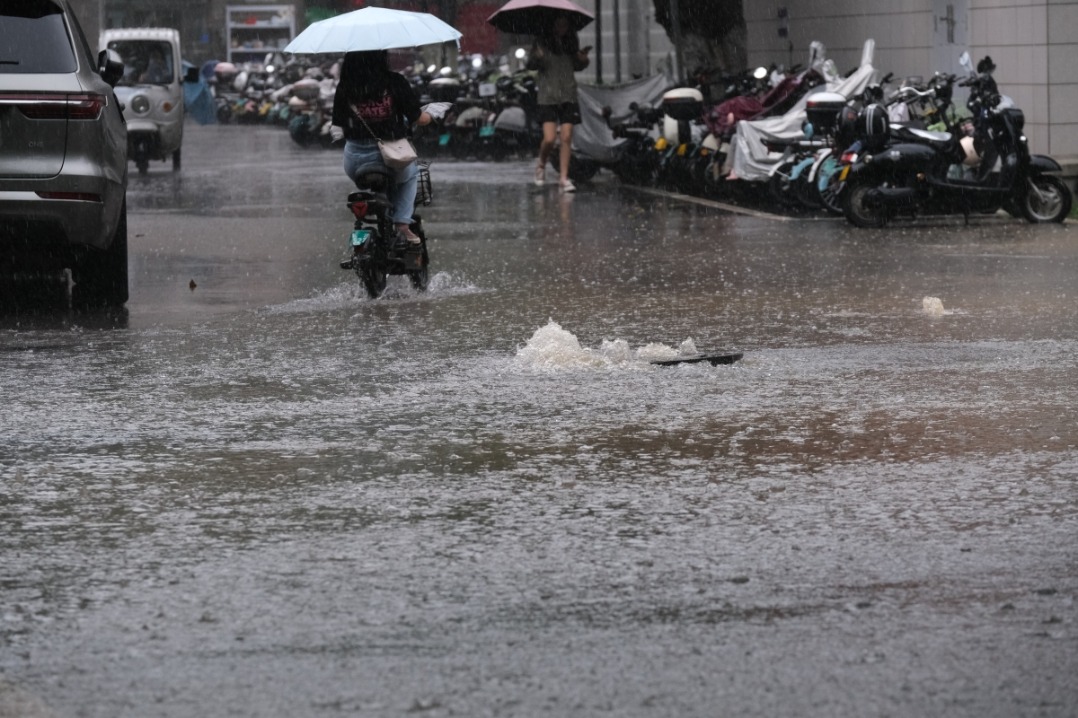
For the peak summer period of July and August, experts warn that a combination of El Niño-driven atmospheric patterns and overlapping climate signals will bring a suite of dangerous weather hazards to the forefront. Torrential downpours, flash flooding, extended meteorological drought, unrelenting heat waves, and intense rainfall associated with typhoon landfalls are expected to be the most common and disruptive events across the country this summer.
As El Niño reaches its full maturity during the 2026–2027 autumn and winter seasons, southern China — particularly the South China region and the Yangtze River basin — is projected to see precipitation levels well above the long-term seasonal average. At the same time, nearly all parts of China are expected to experience consistently higher-than-normal temperatures through this period.
Even as El Niino is forecast to weaken and fully dissipate by the spring and summer of 2027, residual climate impacts will keep flood risks elevated. Wide swathes of China are still expected to record above-average rainfall, increasing the probability of widespread flooding across multiple major river basins, most notably the Yangtze River. Most of the country is also projected to face significantly above-normal temperatures in 2027, with heat waves that are both stronger in intensity and cover a larger geographic area than typical seasonal events.
To help regional stakeholders prepare, the National Climate Center has issued targeted guidance for key regions. Major grain-producing hubs in northeastern and northern China have been urged to pre-empt potential damage to agricultural output from excessive rainfall and flood events. In contrast, arid and semi-arid regions in northwestern China, including the Xinjiang Uygur Autonomous Region, have been instructed to reinforce drought preparedness infrastructure to cope with hotter, drier than average conditions.
Tan Zhemin, an academician of the Chinese Academy of Sciences and president of Nanjing University, emphasized that the impacts of a strong El Niño are not limited by regional or sectoral boundaries, and often appear with a notable time lag that can catch communities off guard. To build effective resilience against the coming event, he called for national and local governments, as well as private sector stakeholders, to step up investment in climate forecasting and early warning systems, improve cross-sector coordination for emergency response, and strengthen risk management protocols across global and domestic supply chains.