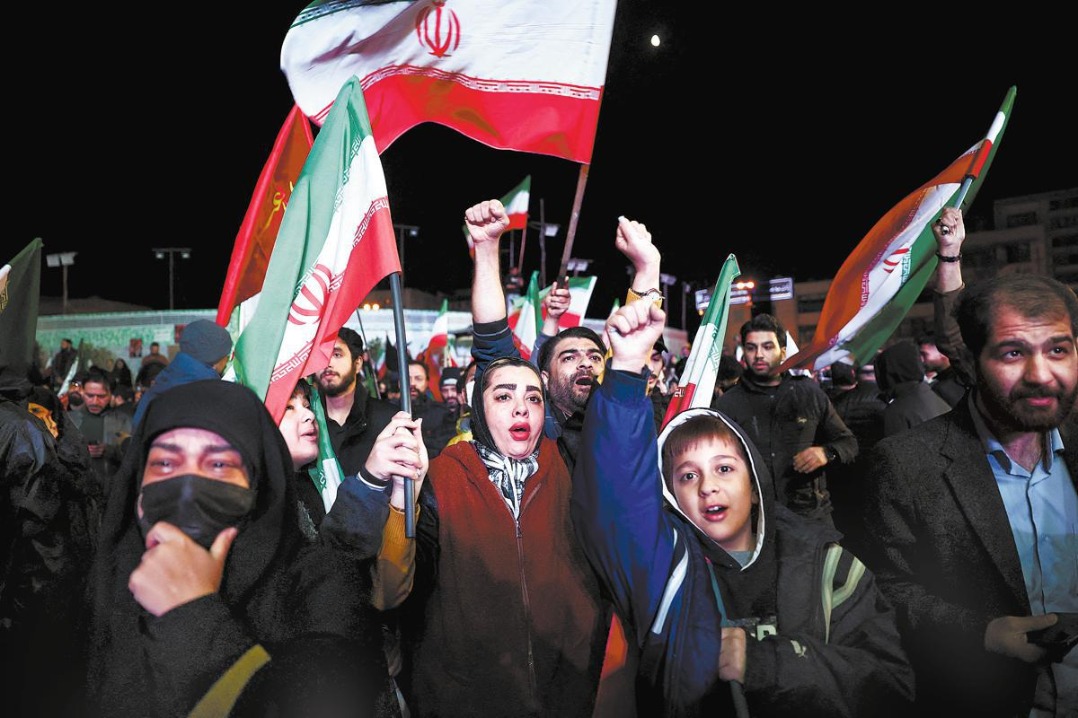
On Wednesday, the international community greeted a landmark diplomatic breakthrough for Middle East peace, after Iran, the United States, and Israel reached a two-week ceasefire agreement mediated by Pakistan. This truce pauses a six-week-long conflict that has claimed hundreds of lives and thrown global energy markets into chaos. The last-minute deal came together after U.S. President Donald Trump withdrew his earlier threat to destroy “a whole civilization,” while Iranian authorities agreed to temporarily reopen the Strait of Hormuz — the critical global shipping chokepoint through which roughly one-fifth of the world’s total oil exports pass. Pakistan confirmed that formal negotiations for a permanent peace agreement could kick off as early as this Friday in Islamabad, with all involved parties signaling willingness to participate. That said, there is still no clarity on core procedural details for the upcoming talks, leaving room for uncertainty moving forward. Even ahead of formal negotiations, the truce announcement already triggered tangible shifts in global financial markets. Crude oil prices plummeted in response to the news of reopened shipping lanes: U.S. West Texas Intermediate crude fell by nearly 20%, while Brent crude dropped as much as 16%. Global stock markets also rallied on the optimism. China’s Shanghai Composite Index closed up 2.69% at 3,995 points, while major markets across the Asia-Pacific, including Sydney, Bangkok, Manila, Jakarta, Singapore, and Wellington, all recorded sharp gains. Middle Eastern equity markets also surged: Dubai’s main index jumped 8.5% in intraday trading, marking its largest single-day gain since December 2014, according to Bloomberg data. Both China and the European Union publicly welcomed the ceasefire in formal statements on Wednesday. At a daily press briefing in Beijing, Chinese Foreign Ministry spokesperson Mao Ning noted that the Strait of Hormuz is a vital corridor for global trade and energy flows, and protecting its stability serves the shared interests of the entire international community. She added that China will continue to play a constructive role in advancing lasting peace across the region. EU High Representative for Foreign Affairs Kaja Kallas framed the truce as a critical “step back from the brink,” saying it opens a “much-needed” window for further diplomatic negotiations. United Nations Secretary-General António Guterres also issued a statement welcoming the ceasefire, calling on all conflict parties to uphold their obligations under international law and strictly adhere to the truce terms to clear a path for a lasting, comprehensive regional peace. Iranian Foreign Minister Abbas Araghchi confirmed that Iran will uphold its end of the bargain, guaranteeing safe passage for all vessels through the Strait of Hormuz for the two-week truce period so long as the U.S. and Israel honor their commitments. “If attacks against Iran are halted, our powerful armed forces will cease their defensive operations,” he said in a statement issued on behalf of Iran’s Supreme National Security Council. Even as it joined the ceasefire, Iran reaffirmed its core non-negotiable demands: permanent sovereign control over the Strait of Hormuz, implementation of a $2 million transit fee per passing vessel (with a commitment to share generated revenue with Oman), international recognition of its peaceful nuclear enrichment program, full lifting of all primary and secondary U.S.-led sanctions against the country, and a complete withdrawal of U.S. military forces from the broader Middle East region. Shipping data confirmed that vessel traffic through the strait resumed within hours of the ceasefire announcement. Ship-tracking service MarineTraffic reported via social media that the Greek-owned bulk carrier NJ Earth and Liberia-flagged tanker Daytona Beach were the first commercial vessels to complete transits of the waterway, with more movements now being tracked. For his part, Trump said U.S. negotiators are “very far along” in hammering out a long-term agreement with Iran, which has already submitted a 10-point proposal that Trump called a “a workable basis for negotiation.” Israeli Prime Minister Benjamin Netanyahu announced his government’s support for the ceasefire between the U.S. and Iran, but issued a key clarification: the truce does not apply to Israeli military operations against the Hezbollah militant group in southern Lebanon. Netanyahu’s remark directly contradicted Pakistan’s earlier statement that the ceasefire terms explicitly cover Israeli strikes in Lebanon. Even amid the celebratory diplomatic news, fresh security alerts underscored just how fragile the breakthrough remains. On Wednesday, the same day the ceasefire was announced, missile warnings were activated across the United Arab Emirates, Saudi Arabia, Bahrain, and Kuwait. Iranian state media reported an attack on an oil refinery on the country’s Lavan Island, Kuwait reported drone strikes targeting its power infrastructure, and UAE officials confirmed their air defense systems intercepted incoming Iranian missiles. Since the U.S. and Israel launched joint military operations against Iran on February 28, core disputes over Iran’s nuclear program, its ballistic missile development, and its network of regional proxies have remained unresolved. With no sign those gaps have been closed, it remains unclear whether the two-week ceasefire will hold through its full term, or what will happen once the truce expires if no long-term deal is reached.