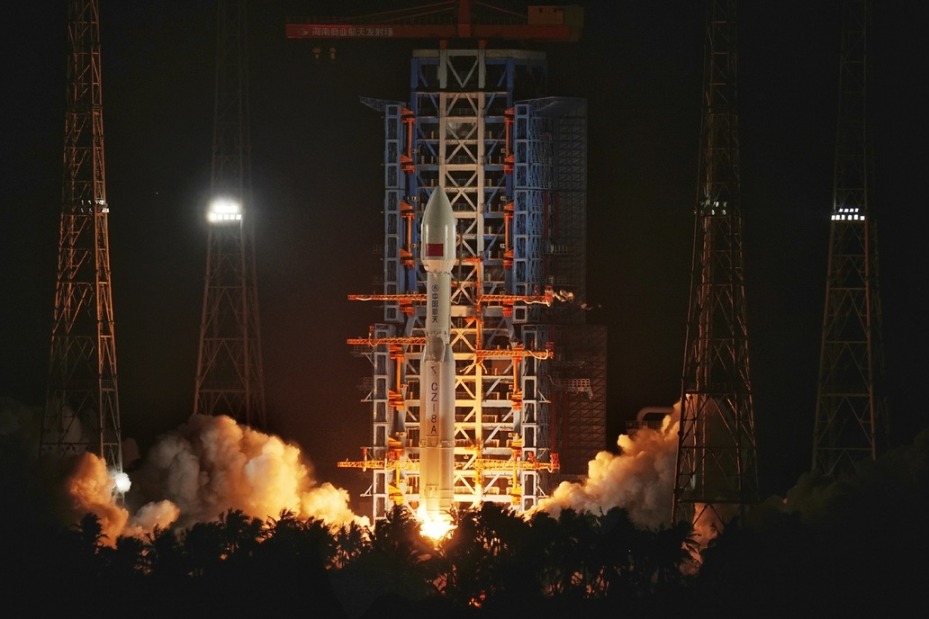
China has successfully expanded its ambitious space-based internet infrastructure with the deployment of its twentieth satellite cluster into low-Earth orbit. The milestone launch occurred in the early hours of March 13, 2026, utilizing the Long March 8A carrier rocket from the Hainan International Commercial Aerospace Launch Center.
The mission, which commenced at 3:48 AM local time, represents China’s eighth dedicated launch for its burgeoning satellite internet network. The newly deployed satellites, manufactured by the Shanghai-based Innovation Academy for Microsatellites under the Chinese Academy of Sciences, bring the constellation’s operational count to approximately 160 satellites.
This expanding network, frequently compared to SpaceX’s Starlink system, represents a strategic initiative to establish global internet coverage from space. Upon completion, the mega-constellation is projected to comprise roughly 13,000 satellites operating in low-Earth orbit.
The Long March 8A vehicle, developed by the China Academy of Launch Vehicle Technology, demonstrated its capabilities with this mission. Standing 50.5 meters tall with a liftoff weight of 371 metric tons, the rocket features a core booster augmented by two side boosters, generating approximately 480 tons of thrust at launch. The vehicle is engineered to deliver up to 7 tons of payload to sun-synchronous orbits at 700 kilometers altitude.
In a parallel space endeavor, China launched a second rocket just hours later. A Long March 2D vehicle departed from the Xichang Satellite Launch Center in Sichuan province at 6:33 AM, successfully deploying the Shiyan 30C and 30D experimental satellites designed to demonstrate advanced Earth observation technologies.
These dual missions mark China’s fourteenth and fifteenth space launches of the year, underscoring the nation’s accelerating pace in space infrastructure development and technological demonstration.