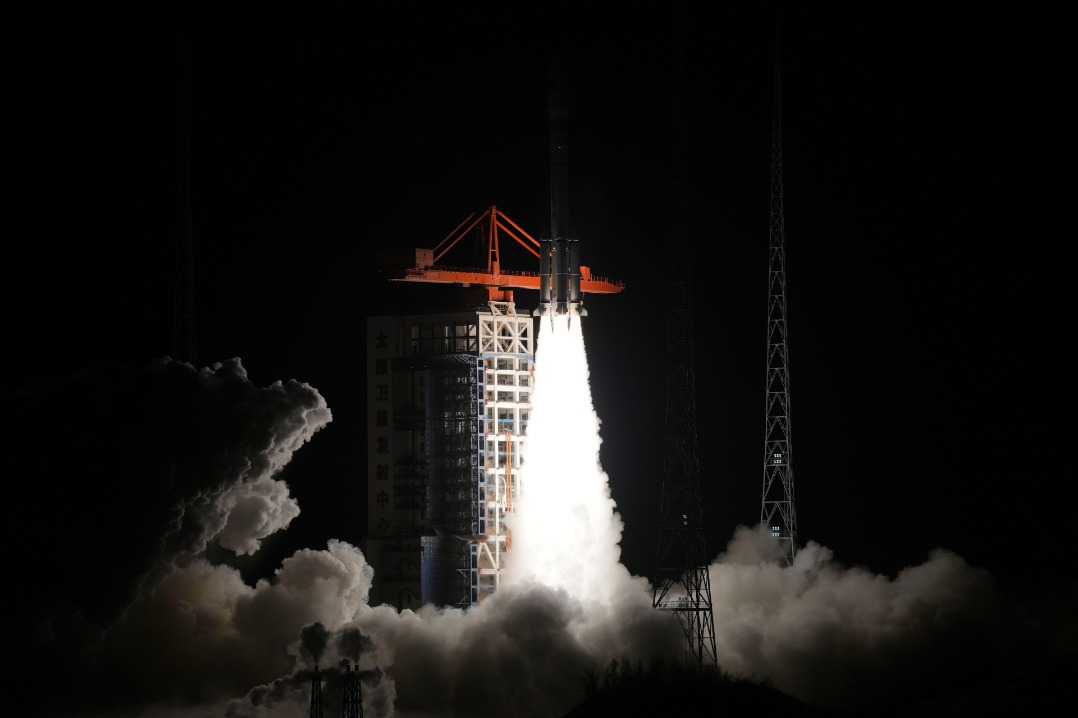
China has successfully launched its fifteenth cluster of low-orbit internet satellites, marking another significant advancement in its ambitious space-based connectivity initiative. The deployment occurred at 6:11 am Beijing Time on December 9, 2025, utilizing a modified Long March 6A carrier rocket from the Taiyuan Satellite Launch Center in Shanxi province.
The China Aerospace Science and Technology Corp (CASC), the nation’s primary state-owned space contractor, confirmed the satellites successfully reached their predetermined orbital trajectories shortly after launch. This latest batch of satellites was engineered and manufactured by the China Academy of Space Technology, a Beijing-based subsidiary of CASC.
With this successful mission, China’s state-operated mega constellation now exceeds 110 satellites in orbit, substantially enhancing the network’s coverage and capacity for global internet services. The Long March 6A medium-lift launch vehicle, developed by the Shanghai Academy of Spaceflight Technology, features a sophisticated design incorporating a 50-meter liquid-propelled core booster augmented by four solid-fuel side boosters. Weighing 530 metric tons at liftoff, this versatile rocket platform is capable of delivering payloads to various orbital configurations including sun-synchronous, low-Earth, and intermediate circular orbits.
This launch represents multiple milestones: the 81st Chinese space mission of the year and the 613th overall flight for the Long March rocket series. Notably, this mission marks the fifth utilization of the Long March 6A variant specifically dedicated to expanding China’s orbital internet infrastructure, demonstrating the country’s growing proficiency in frequent and reliable space deployments.