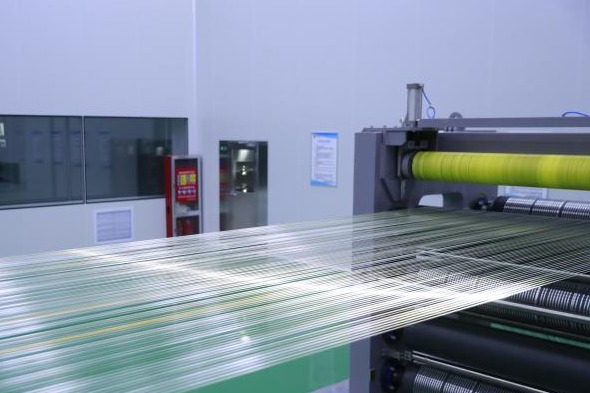
China has achieved a monumental technological breakthrough with the successful launch of its first domestic large-scale production facility for T1000-grade carbon fiber in Datong, Shanxi province. This development marks a significant milestone in materials science, ending decades of foreign dominance in high-performance carbon fiber manufacturing.
The newly operational facility, resulting from collaboration between the Institute of Coal Chemistry (ICC) under the Chinese Academy of Sciences and Huayang Carbon Material Technology Co., Ltd., produces carbon fiber with exceptional properties. With a tensile strength exceeding 6,600 MPa and density just one-quarter that of steel, the material demonstrates strength-to-weight ratio capabilities more than five times superior to conventional metals.
Carbon fiber, often called ‘black gold’ for its value and appearance, contains over 90% carbon while maintaining textile-like flexibility. This combination of lightweight durability, heat resistance, and corrosion immunity has established it as the ‘king of modern materials’ with critical applications across aerospace, renewable energy, transportation, and sporting goods industries.
The breakthrough culminates decades of research dating to the 1960s when ICC first pioneered carbon fiber studies in China. Previous limitations in mass production capabilities had maintained a market stranglehold by American and Japanese firms, which controlled over 90% of the global high-end carbon fiber market.
Dr. Zhang Shouchun, ICC deputy director who led the development team, described the painstaking process: ‘Every step was like feeling for stones while crossing a river. Maintaining production stability required extraordinary effort—we shuttled among workshops exceeding 40°C and others as cold as 5°C, checking every parameter until we achieved consistency.’
The project’s success stems from a fully indigenous innovation chain that translated laboratory research into industrial production. The resulting product not only matches international standards but surpasses comparable foreign products in application performance, positioning China firmly among global leaders in advanced materials technology.
With an initial annual capacity of approximately 200 tonnes, this breakthrough ensures China’s self-sufficiency in critical materials for national security and advanced manufacturing sectors. The achievement is expected to drive development across industrial supply chains and support emerging technologies during China’s 15th Five-Year Plan period (2026-2030).