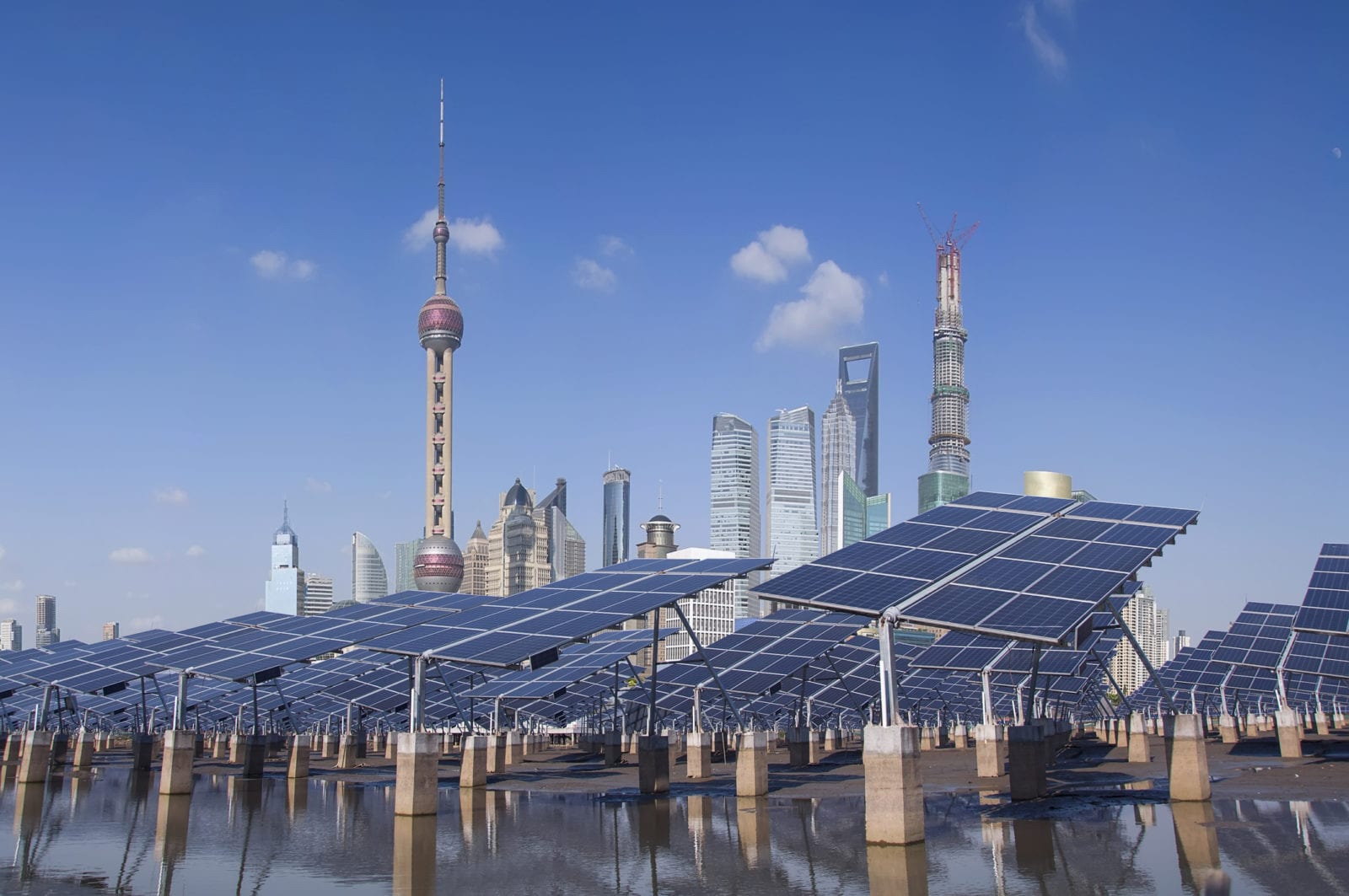
While U.S. President Donald Trump dismisses climate action as a ‘con job’ at the UN, China has strategically positioned itself as a ‘responsible power’ with modest emission reduction targets. Chinese President Xi Jinping’s pledge to cut greenhouse gas emissions by 7-10% from peak levels by 2035 marks China’s first absolute emissions target. However, this falls short of the 30% reduction experts deem necessary to align with 1.5°C pathways. The timing of Xi’s announcement, following Trump’s criticism of climate efforts, underscores China’s intent to contrast its approach with the U.S. retreat from global commitments. Beyond diplomatic optics, China’s real climate strategy lies in its industrial policy: dominating the supply chains of the post-carbon global economy. In the first five months of 2025, China added 46 gigawatts of wind capacity—enough to power 30 million homes—while simultaneously approving 25 gigawatts of new coal plants. This dual approach reflects China’s ambition to lead in renewable energy manufacturing while maintaining energy security through coal. Xi’s promise to scale wind and solar capacity sixfold from 2020 levels cements China’s role as the global supplier of clean energy hardware, producing over 80% of the world’s solar photovoltaic modules. However, China’s climate diplomacy masks a glaring contradiction: it continues to build more coal capacity than the rest of the world combined. In the first half of 2025, China and India accounted for 87% of new global coal capacity, with China alone starting construction on 46 gigawatts. The ‘from peak’ baseline in China’s emission target creates perverse incentives for local governments and firms to increase emissions, weakening the actual impact of the target. Without clarity on when emissions will peak, the 7-10% reduction becomes an accounting exercise rather than a meaningful decarbonization pathway. This ambiguity allows China to claim climate leadership while preserving policy flexibility. Trump’s UN performance, labeling climate change a ‘con job,’ handed China a diplomatic gift by positioning the U.S. as opposing the energy transition. This strategic misstep allowed China to emerge as the default ‘responsible actor’ despite its questionable climate performance. For Asia, the China-U.S. dynamic presents both opportunities and risks, with countries like Japan pursuing dual-track strategies to balance energy security and decarbonization. The real climate story in Asia is unfolding in manufacturing and supply chain decisions, not UN speeches. As China dominates clean energy hardware production, other Asian economies face the choice of technological dependence or building indigenous capacity. Renewable energy components, like fossil fuels before them, have become a strategic resource that can be weaponized. China’s climate gambit succeeds by operating in the realm of perception rather than performance, positioning itself as a reliable partner while maintaining a problematic emission trajectory. The unorthodox reality is that neither superpower treats climate as an existential crisis requiring economic transformation. China pursues industrial dominance through green technology exports while maintaining coal dependence; the U.S. abandons climate cooperation to protect fossil fuel interests. Both strategies prioritize short-term competitive advantage over long-term climate stability. For Asia, the lesson is clear: climate diplomacy has become a subset of industrial policy and technological competition. The countries that will thrive in the coming decades are those that treat decarbonization as an economic and strategic imperative, not a moral obligation. China’s climate pledge may be modest, but its manufacturing strategy is anything but—and that is where the real climate leadership will be decided.